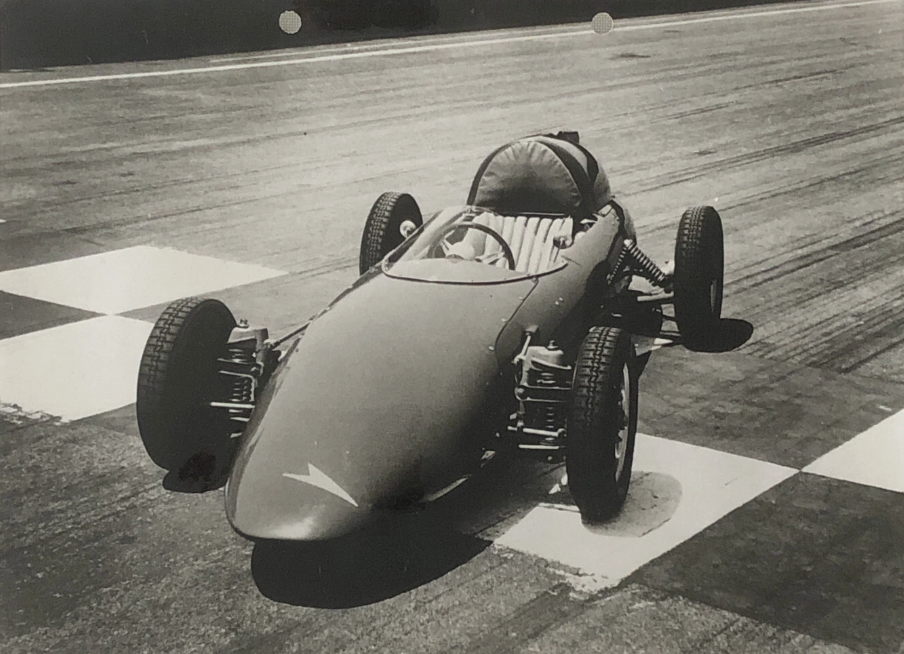
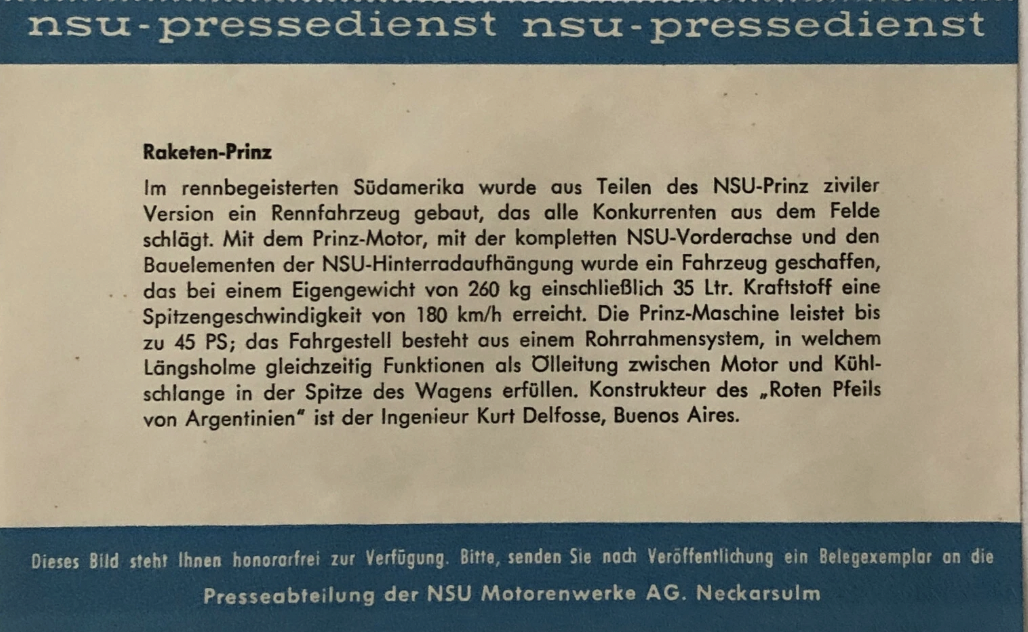
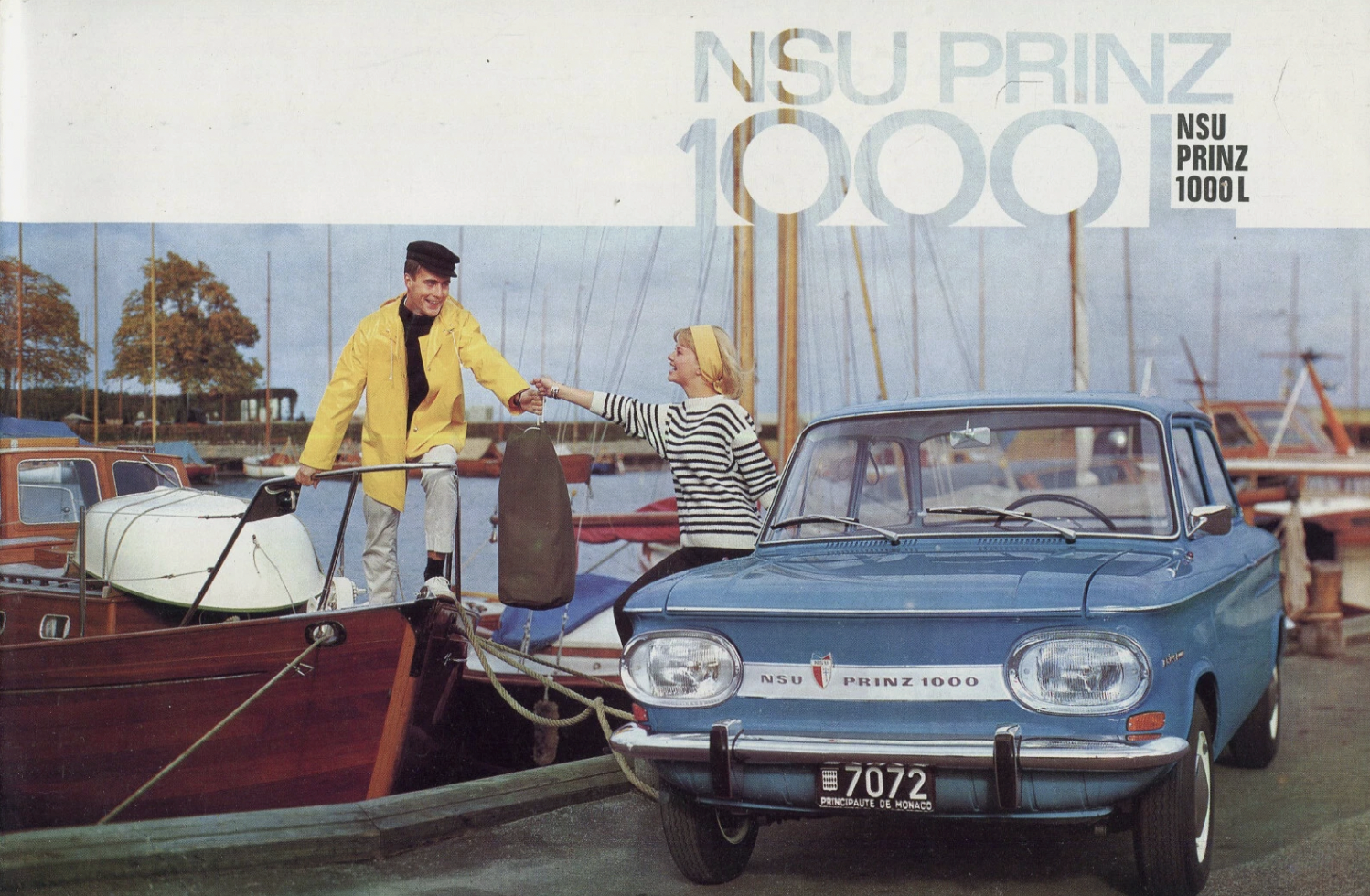
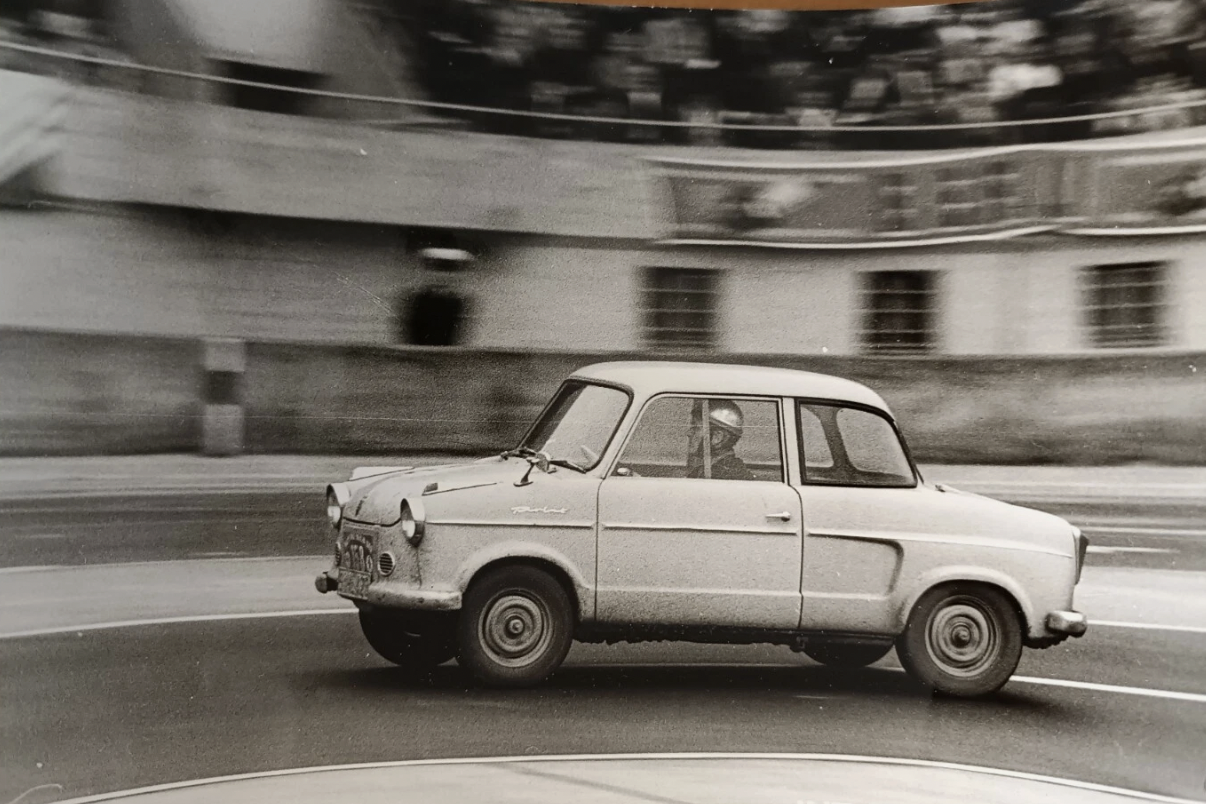
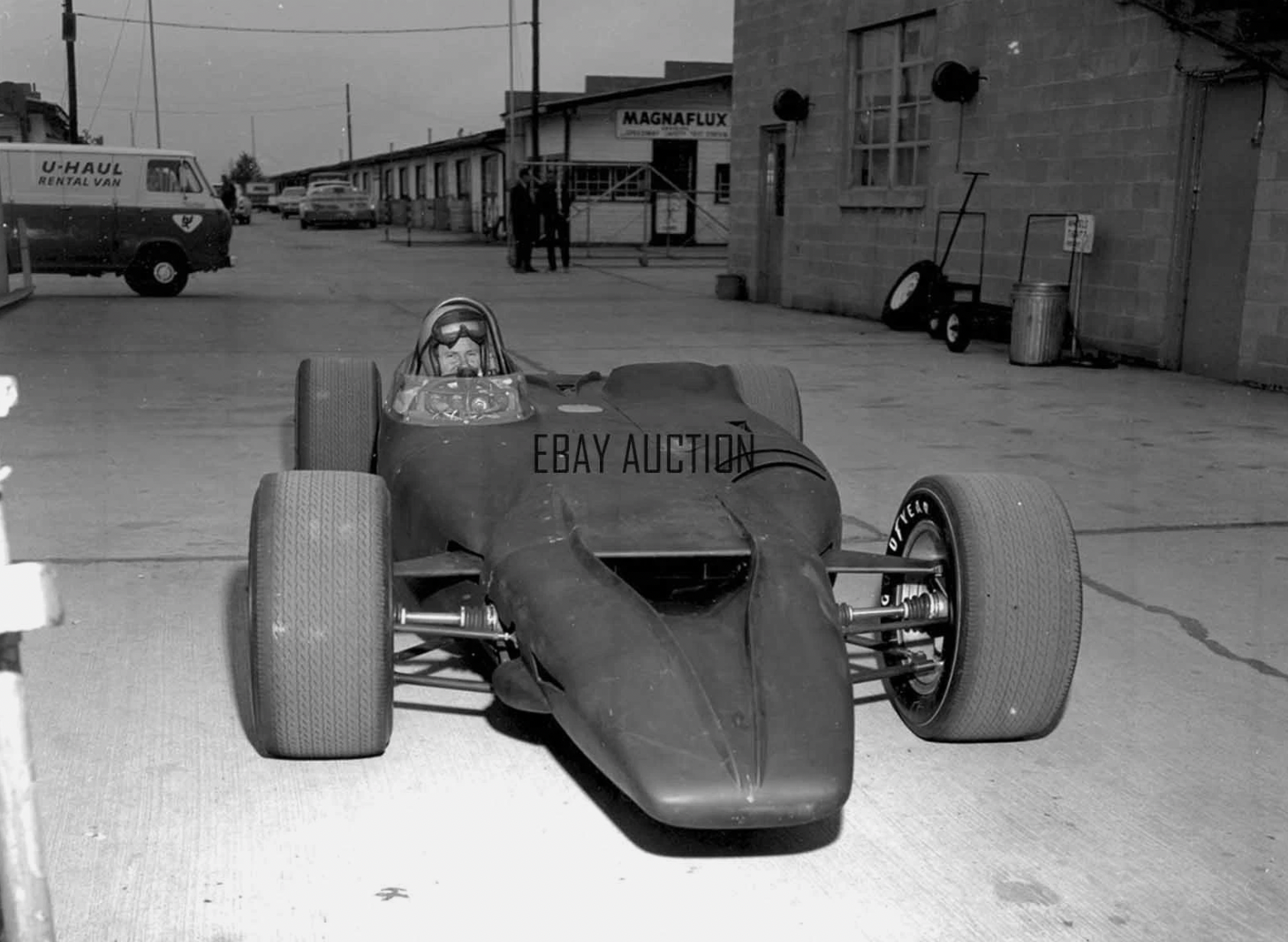
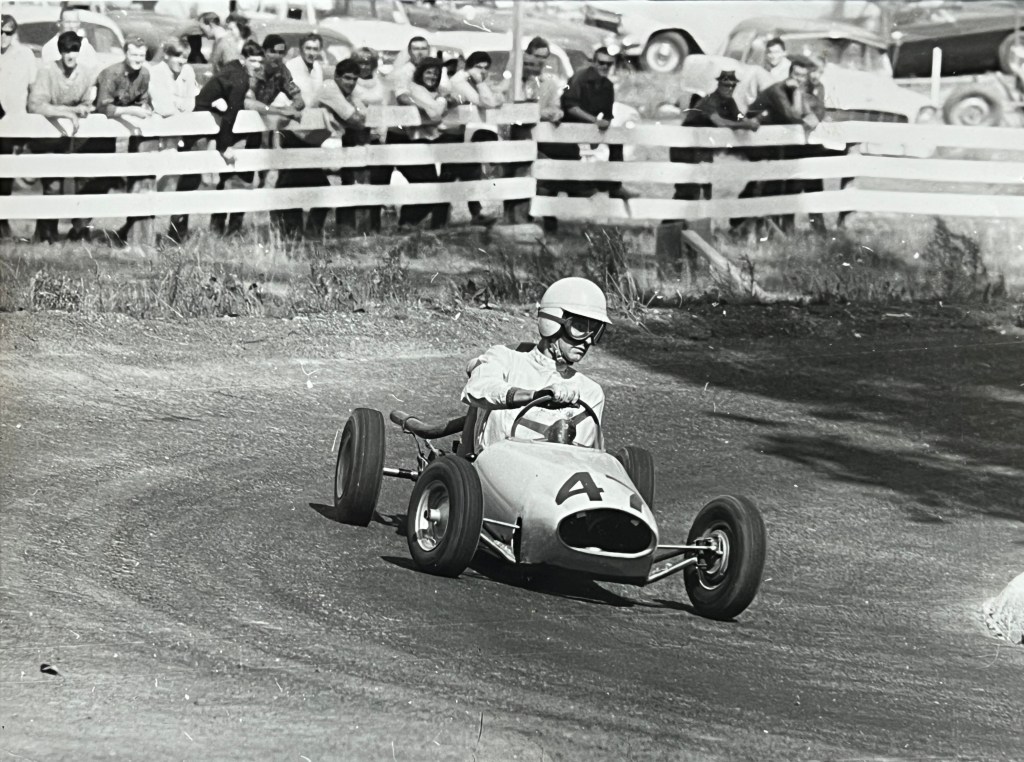
‘In South America – a region with a passionate racing culture – a race car was built using parts from the civilian version of the NSU Prinz, a machine that consistently outpaces all its competitors. By incorporating the Prinz engine, the complete NSU front axle, and components from the NSU rear suspension, the builders created a vehicle that weighs just 260 kg (including 35 litres of fuel) and reaches a top speed of 180 km/h.’
‘The Prinz engine produces up to 45 hp; the chassis consists of a tubular frame system, in which the longitudinal members also serve as oil lines, connecting the engine to a cooling coil located in the nose of the car. The designer of this “Red Arrow of Argentina” is the engineer Kurt Delfosse, based in Buenos Aires.’
Eukie wrote on The Nostalgia Forum that, ‘A German book on NSU features some interesting pages on the Delfosse Formula 4 cars: Gerhard Geiling: NSU – Fahrzeuge, Prototypen und Eigenbauten. Eschborn 1997, pp 60-64.’
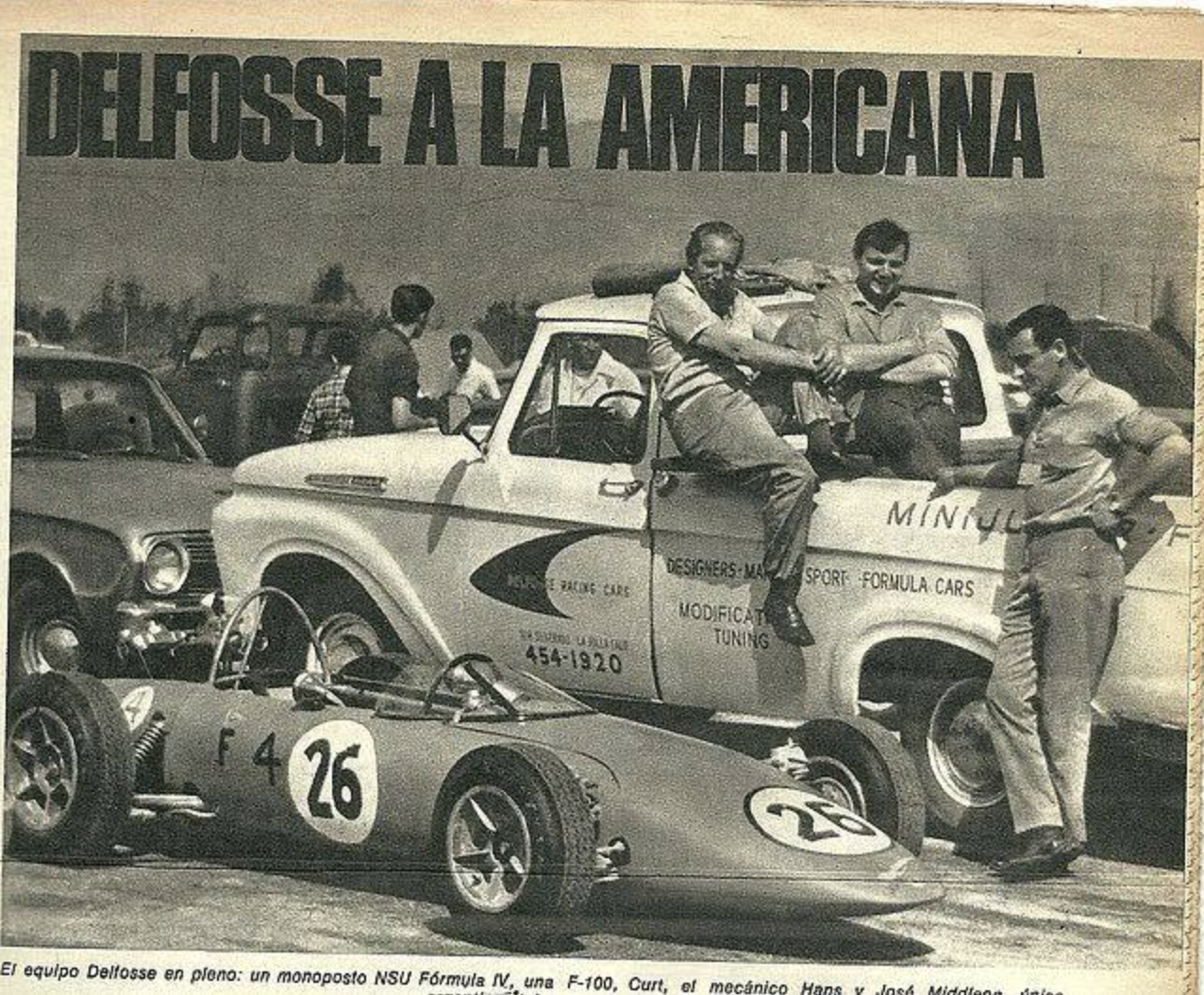
‘In 1960 Delfosse built seven, maybe as much as 13 formula cars in Argentina, tested and promoted by greats like Fangio, Gonzalez and Mieres, that raced in a local series, with the intention to bridge the gap and find a niche between Formula Junior and Go Karts. The cars were based on NSU Prinz technology.’
‘In 1963 he tried to expand into the US market with a similar car. Visiting the USA he had realized that his cars more or less fitted into American Formula 4. The text mentions a surviving car first owned by one Carter “Buddy” Penley from San Diego who raced it intensively in California during the 1960s. Afterwards it was used in a racing school.’
The Mail Tribune in Orgegon published Delfosse’s obituary in July 1998,
‘Curt August Delfosse, 86, of Ashland, died Tuesday (July 21, 1998) at Ashland Community Hospital. A private service will be held. Mr. Delfosse was born May 30, 1912, in Cologne, Germany. On Feb 12, 1955, in Argentina, he married Ana I. Hartenau, who survives. They moved to the Rogue Valley 21 years ago from San Diego, Calif.’
‘He earned a degree in engineering from the university in Stuttgart, Germany. He was a race car driver for European car makers, including Porsche. He built and raced Grand Prix-type cars; he designed the international Formula 4 race car. In Ashland, he owned a B.P. gas station.’
‘His father’s automobile factories built Rohr and Helios cars and also built Germany’s first airplanes.’
‘During World War II, Mr. Delfosse served in the German air force. He was a member of the International Federation of Automobiles and the Sports Car Club of America. He also enjoyed designing boats. Survivors, in addition to his wife, include a sister, Edita Vanderlyn, Arkansas.’
Race Prinz in Stuttgart, date and driver unknown (Unattributed)
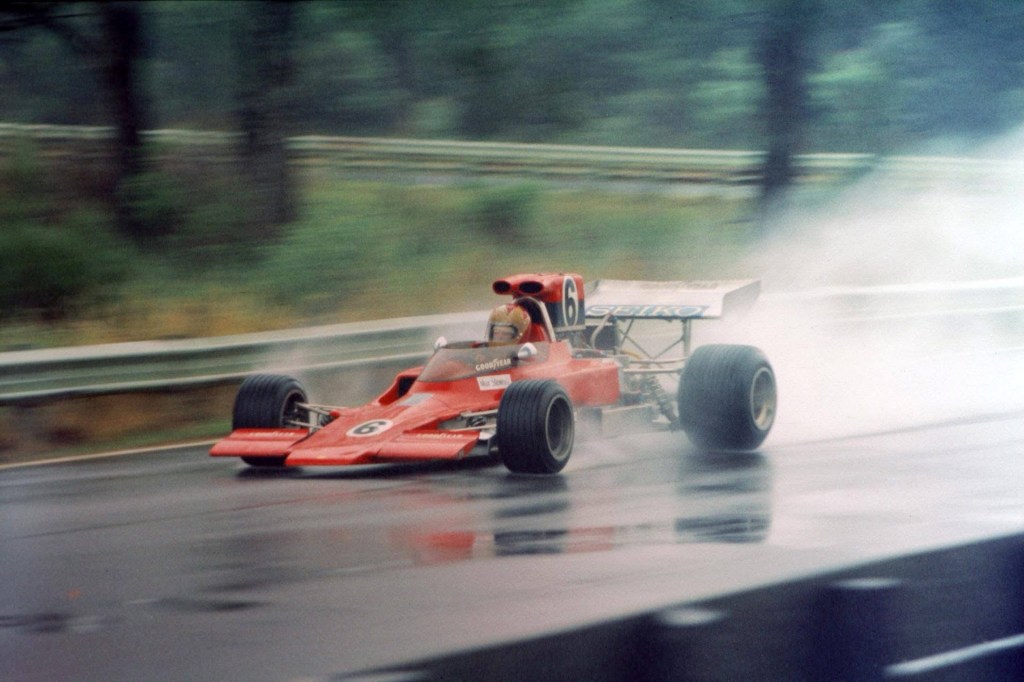
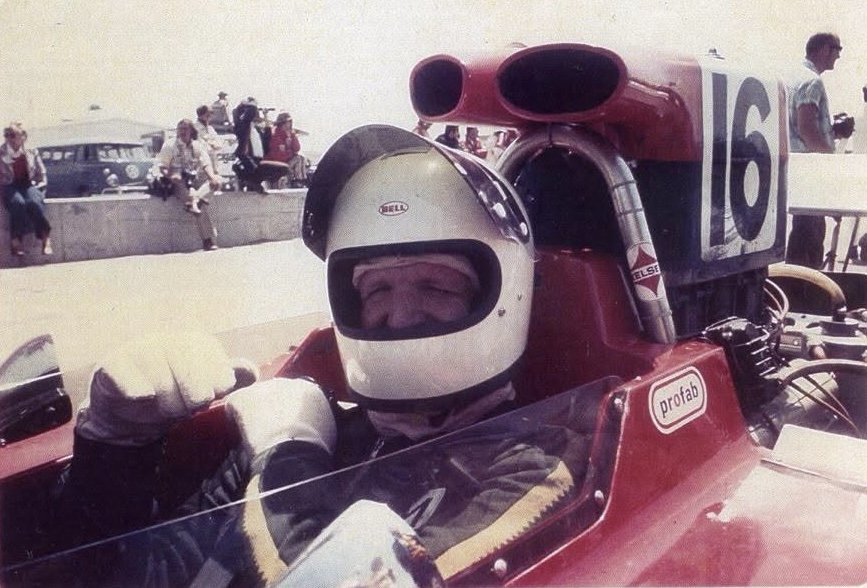
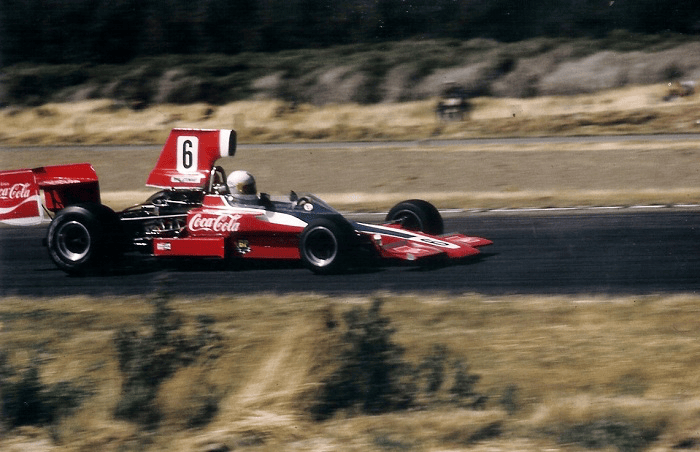
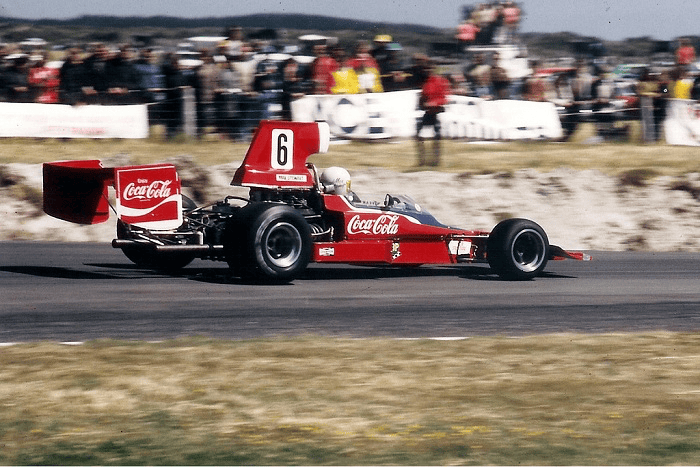
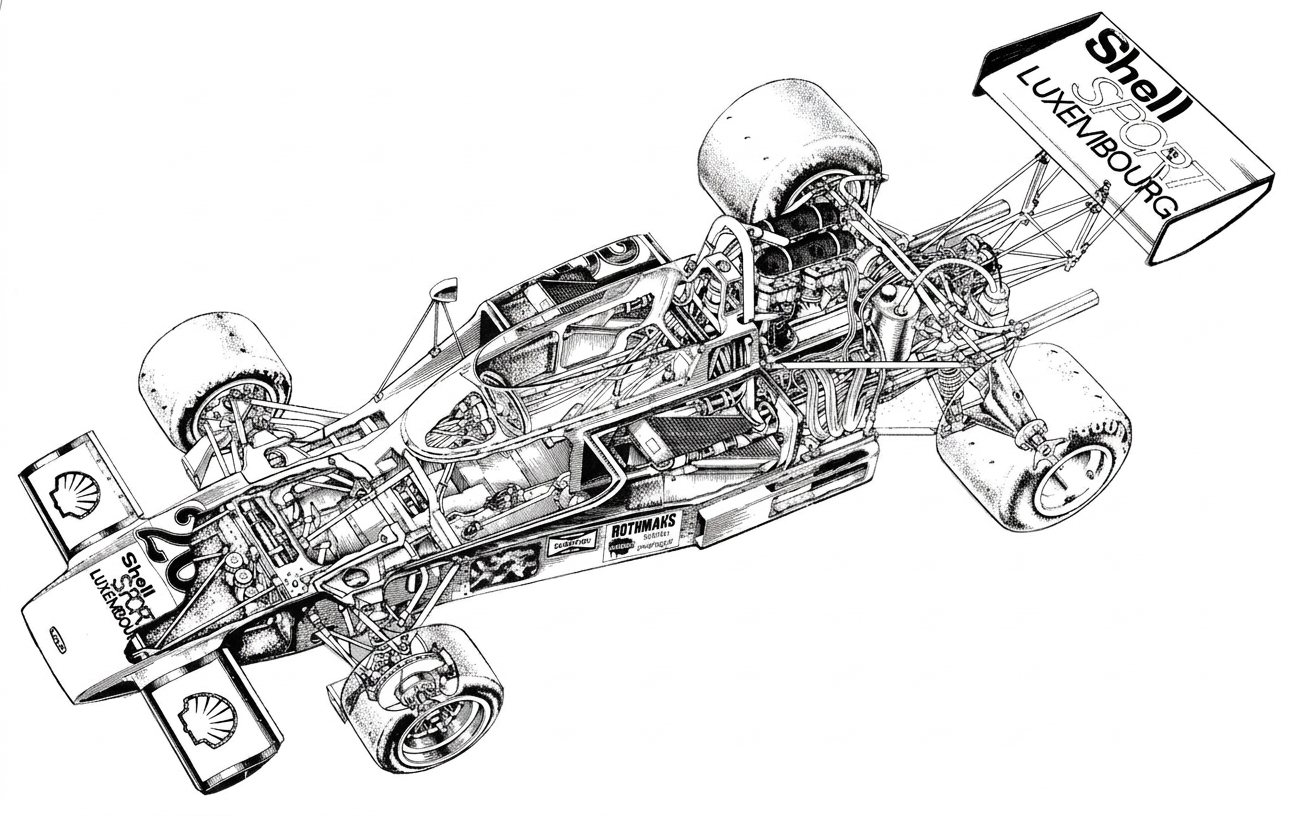
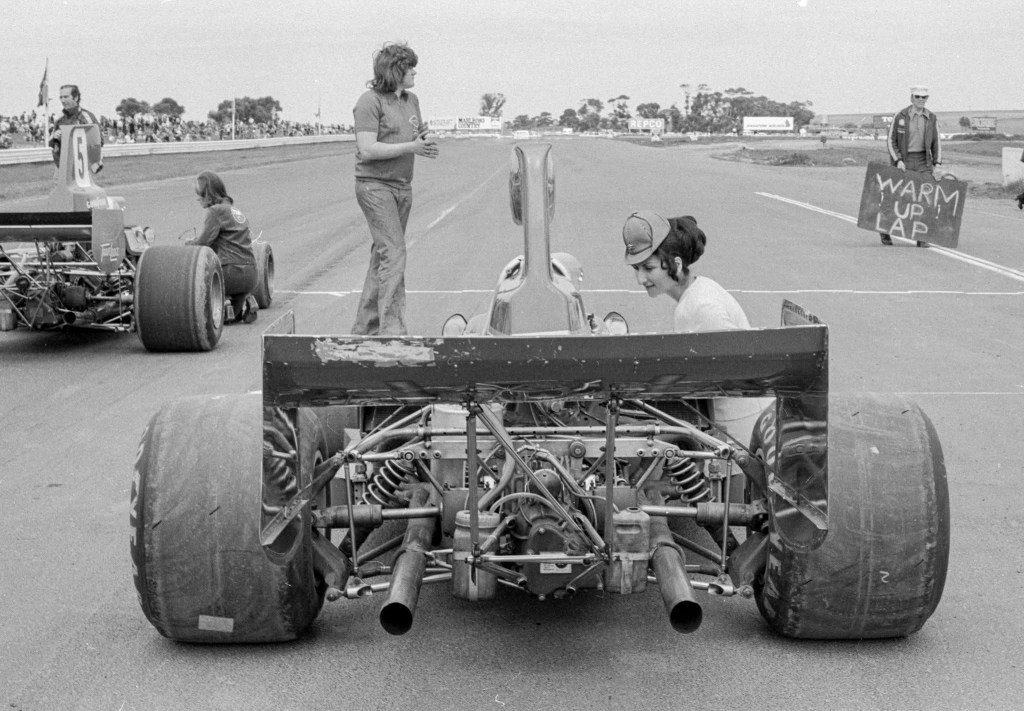
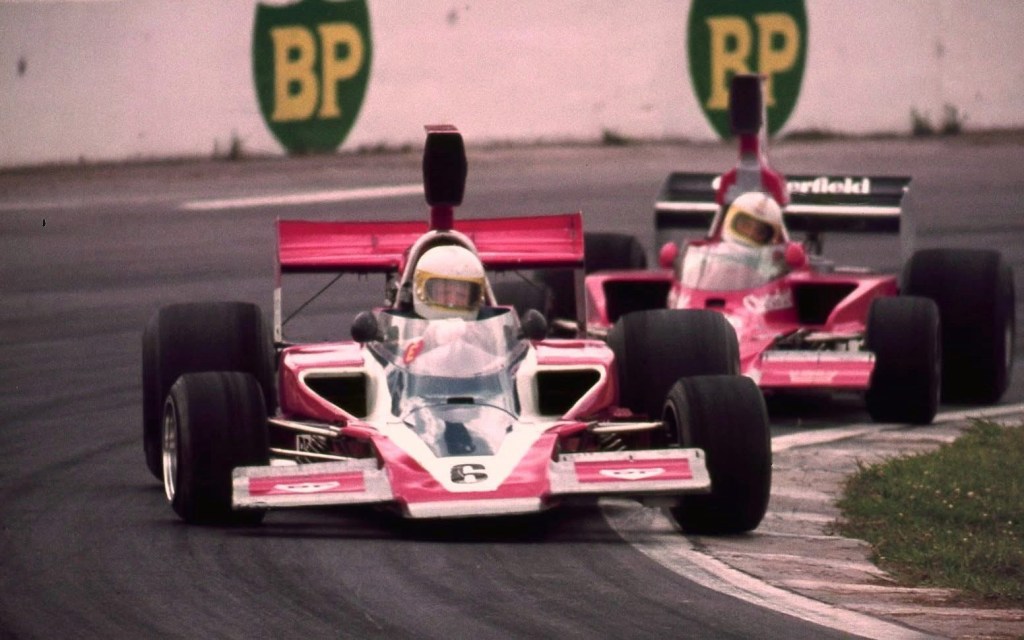
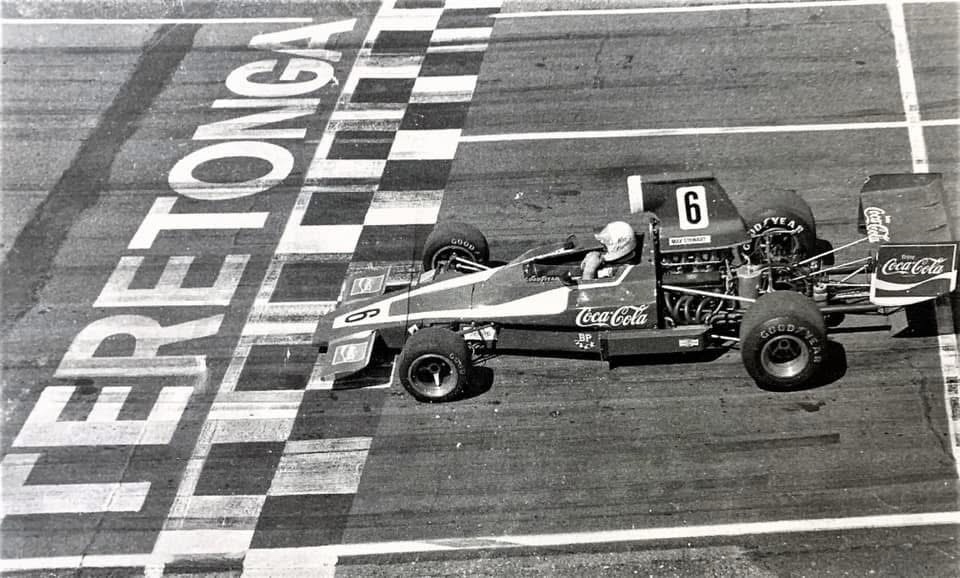
Wonderful evocative shot taken by Tony Glenn of Max Stewart’s Lola T330 Chev #HU1 during the 1973 Warwick Farm 100 Tasman Cup round in the final months of motor racing at the late, lamented ‘Farm circuit. Q3 and fifth in the race won by Steve Thompson’s Chevron B24 Chev.
(unattributed)
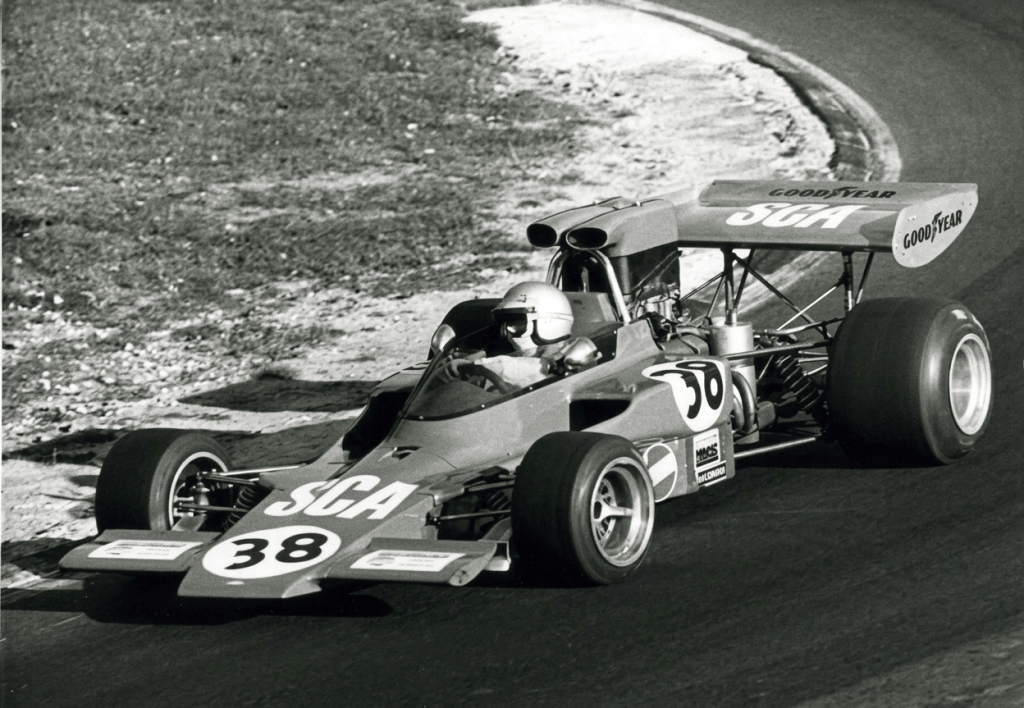
Frank Gardner raced Lola’s prototype HU1, in his capacity as the Huntingdon outfit’s development driver in the final round of the 1972 F5000 Championship at Brands Hatch on October 21, finishing third behind Brian Redman’s Chevron B24 and Graham McRae’s McRae GM1, both cars also Chevrolet powered.
FG keeps tabs on Stewart’s changes made to HU1 at Pukekohe in 1973 (B Homewood-MBisset-Wordpress)
The following day, he entered the World Championship Victory race, also at Brands, which comprised a mix of F1 and F5000 cars. FG qualified 13th of 36 cars. Although he didn’t take the start, it was another marker of the T330’s pace straight outta-the-box.
Practice, Pukekohe in 1973 (B Homewood)
Then the car was sold to Max who had the advantage of Frank’s presence throughout that Tasman summer. Frank had retired from single seaters but raced his Chev Camaro in the Tasman touring car races in order to flog the car, I think ? bought it
Max was sixth in the title chase but he was at the pointy end of qualifying in his new car right from the outset , his best finishes were third placings at Teretonga and Surfers Paradise
(C Parker-MBisset-Wordpress)
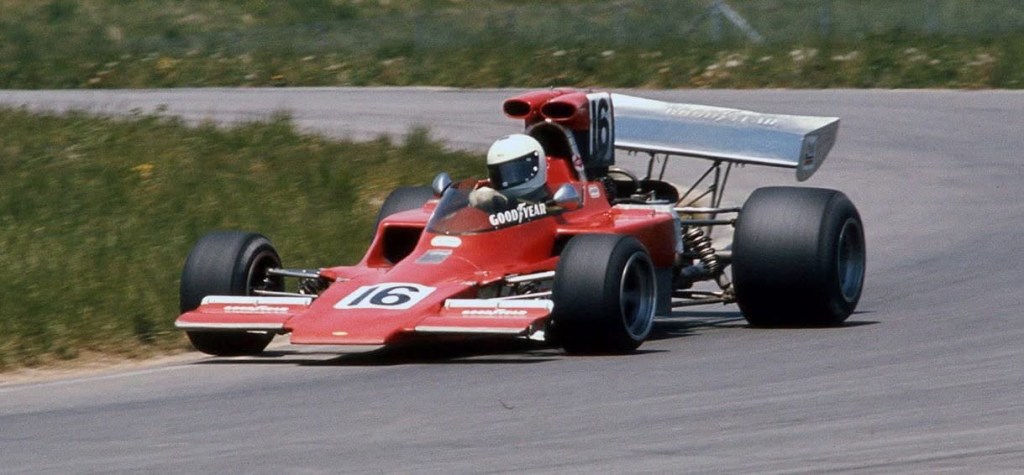
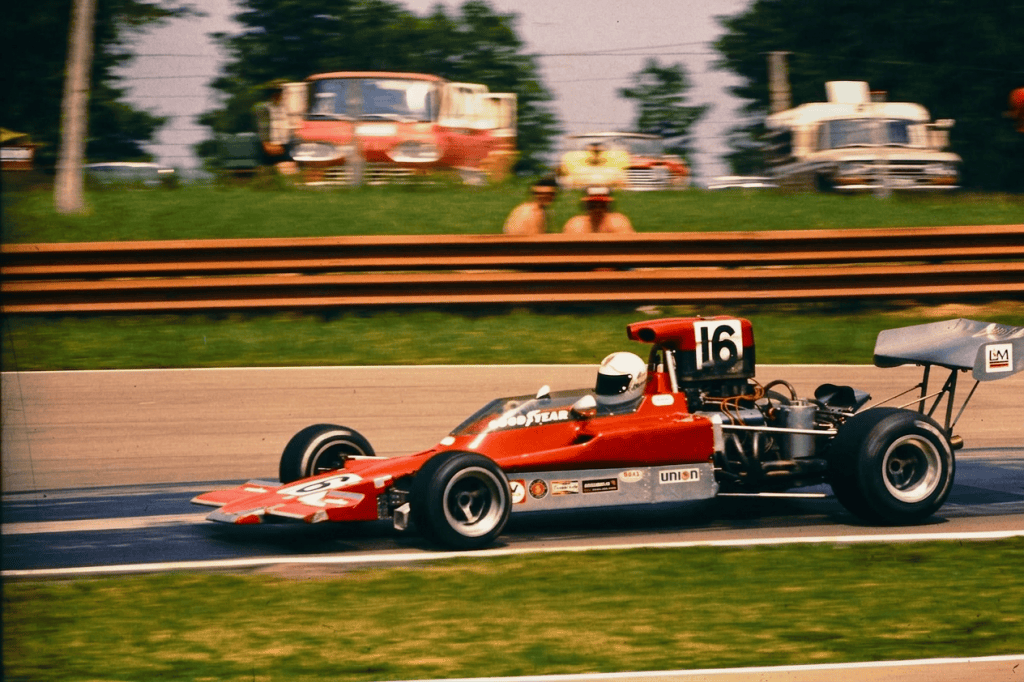
Stewart took in US L&M F5000 Championship rounds in 1973 before a broken wrist intervened, at Michigan (above) and Mid Ohio (below).
(C Parker-MBisset-Wordpress)
His best results: Riverside second in heat 2/seventh in the final, Laguna Seca fourth in heat 1, Michigan second in heat 2, fourth in the final.
(J Inwood)
Max in front of the VDS Chevron B24 Chevrolets of Peter Gethin and Teddy Pilette at Pukekohe during the 1974 Tasman Cup.
He was right on the pace throughout, finishing second in the championship behind Gethin, both of whom took two wins, Max’s were at Teretonga and Surfers Paradise
Teretonga 1974 (K Thomson)Teretonga 1974. Note the very far to the rear mount of the rear wing in fashion at the time, which was banned shortly thereafter (K Thomson)(A Radley)
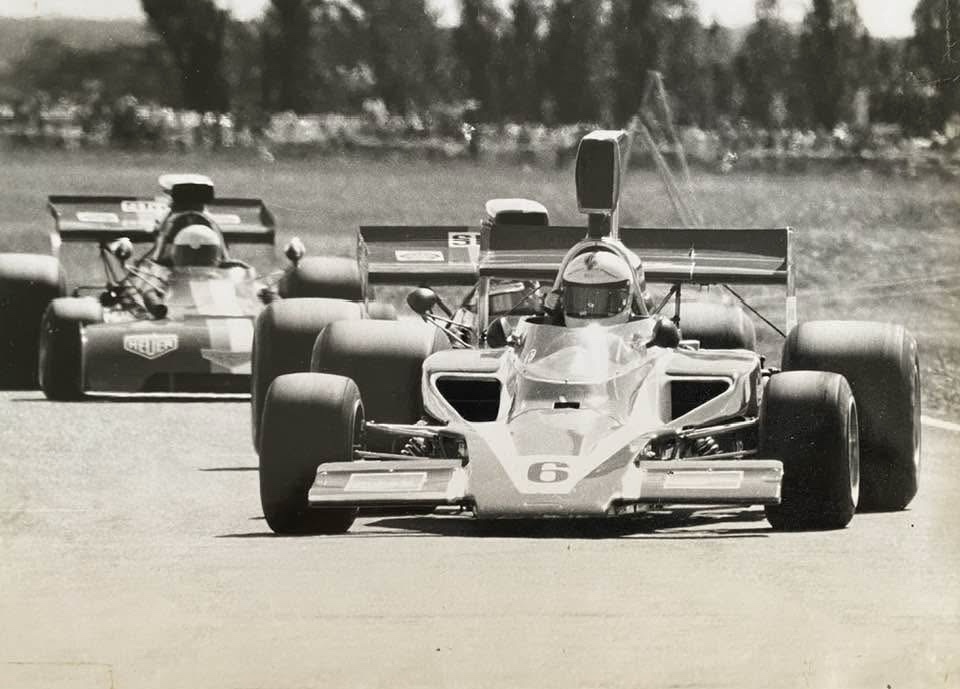
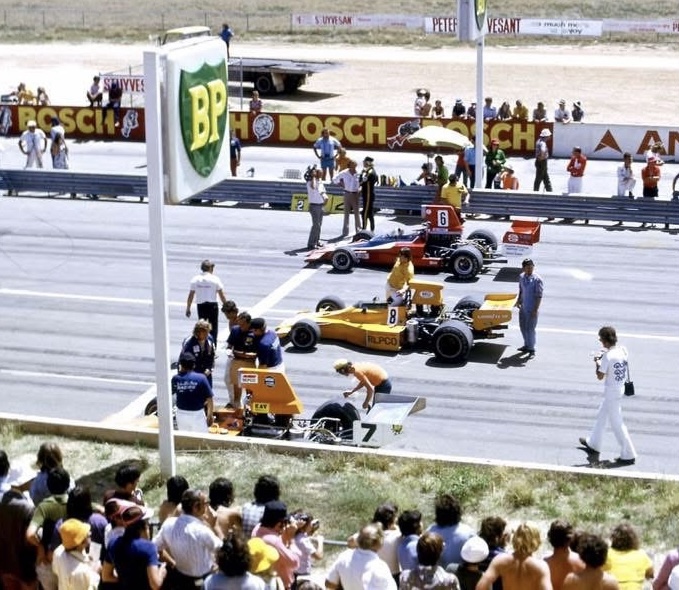
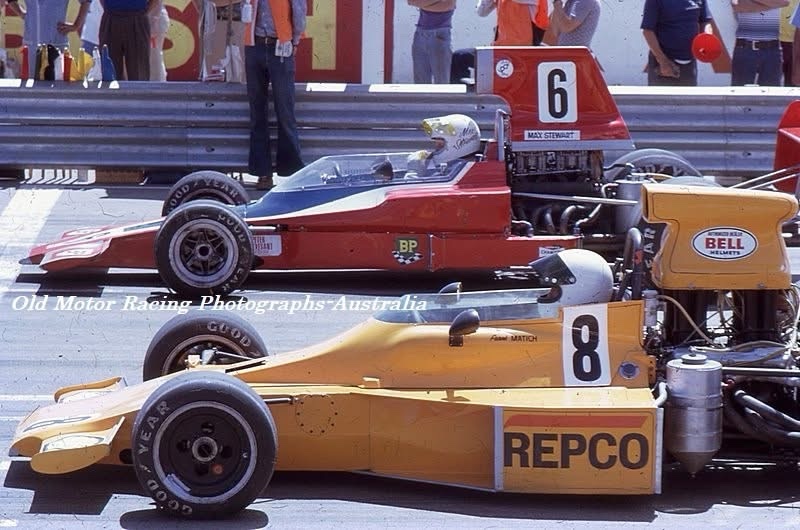
John Walker, Frank Matich and Max on the front row at Adelaide International in 1974, the February 24 Adelaide 100: Lola T330 Repco-Holden, Matich A53 Repco-Holden and Lola T330 Chev. None featured in the results of the race won by Warwick Brown’s Lola T332 Chev, HU27, the first T332.
That’s Kevin Bartlett’s T332 up front, Max won this October 20, 1974 Gold Star round from KB. He won the championship too, several rounds hence, 51 points to KB’s 25.
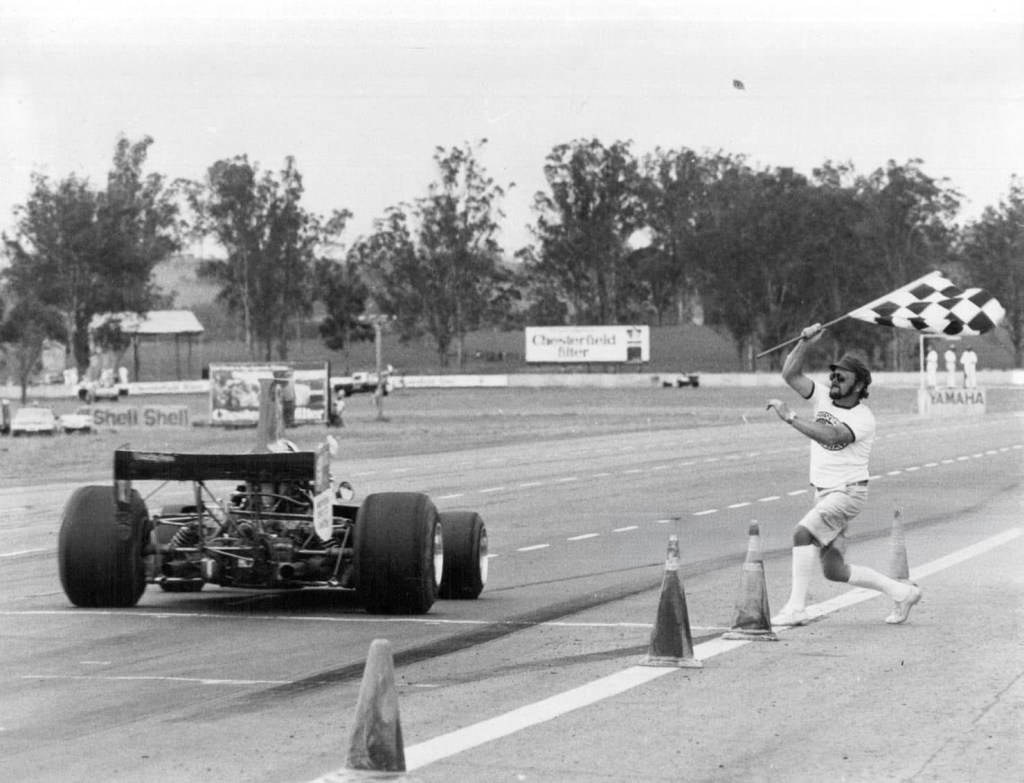
Either, and Warwick Brown, could have won but in a race of changing fortunes, Stewart takes the chequered flag below. He back to backed it with AGP wins in 1975 at Surfers Paradise aboard a T400 Chev in conditions every bit as grisly as at Warwick Farm in the opening shot.
(Lola Heritage)
Lola Cars claim 54 victories for the T330 across three continents ‘in the day’.
(unattributed-MBisset-WordPress)
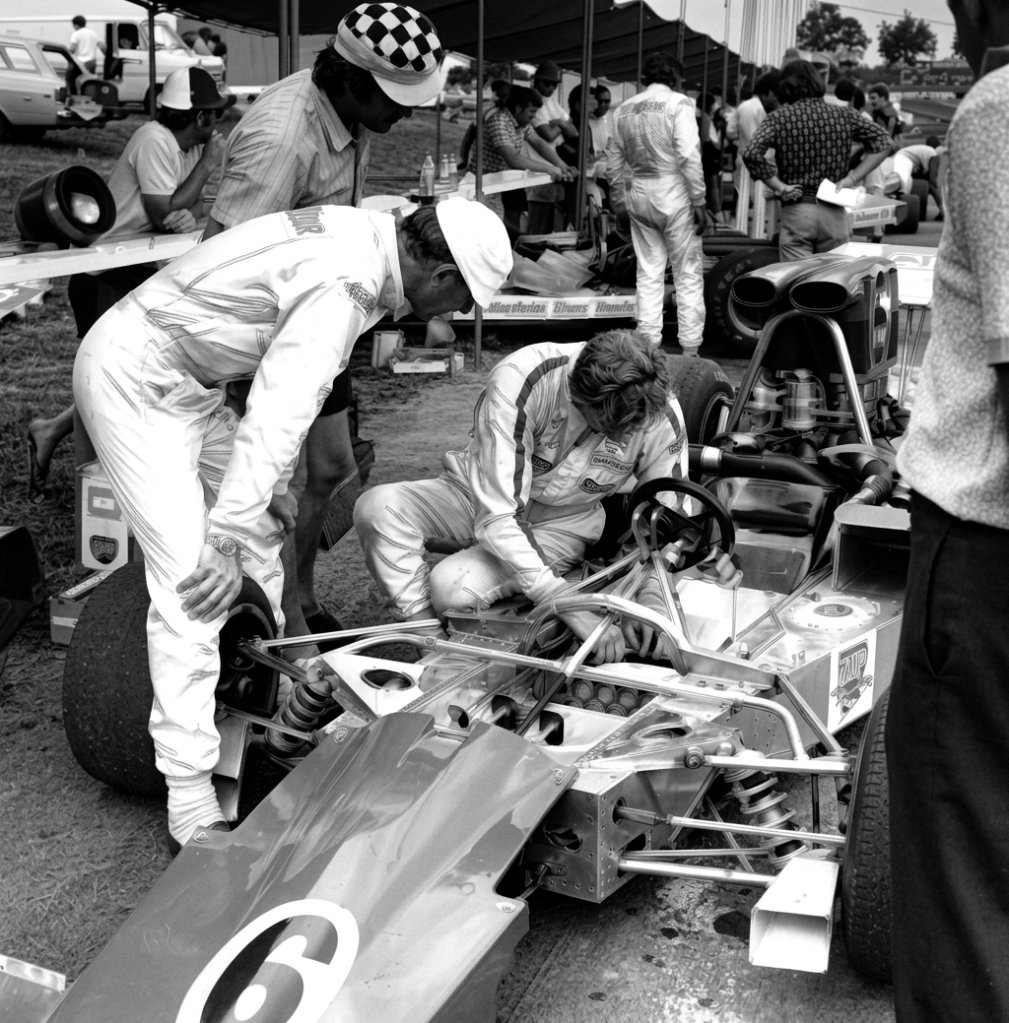
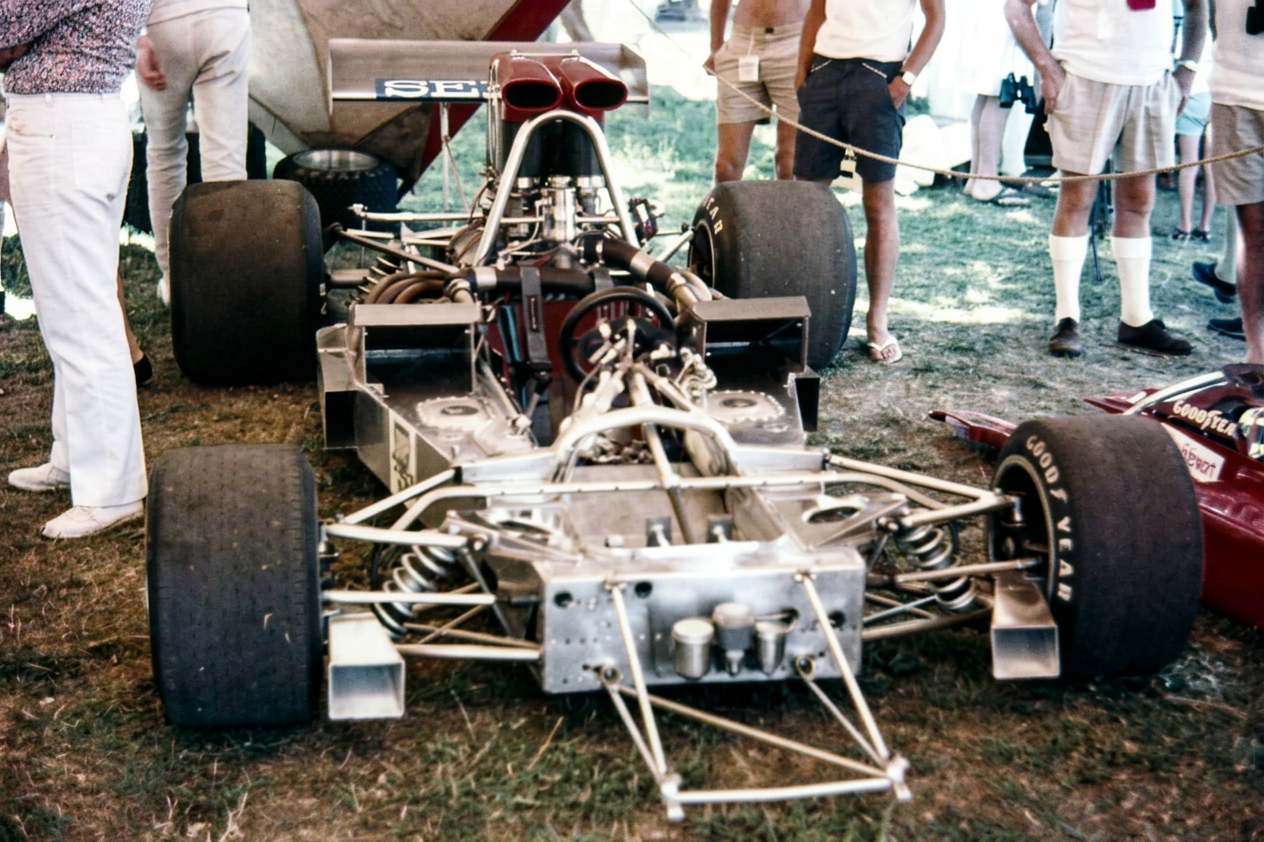
That a driver’s legs were part of a car’s progressively deformable structure in bathtub aluminium monocoques – make that all aluminium monocoques – of this period is readily shown by the first of T330 HU1s tubs in an NZ 1973 Tasman paddock…was Graeme Lawrence the first member of the Lola Limper Club?
Credits…
Tony Glenn, Bob Homewood, Chris Parker, Alan Radley, Lola Heritage, Tony Matthews, Brian Stratton, Kevin Thomson, Jack Inwood
Two six-cylinder Formula 2 cars lead the practice pack at Thruxton over the April 19, 1976 Jochen Rindt Memorial Trophy Euro F2 round weekend.
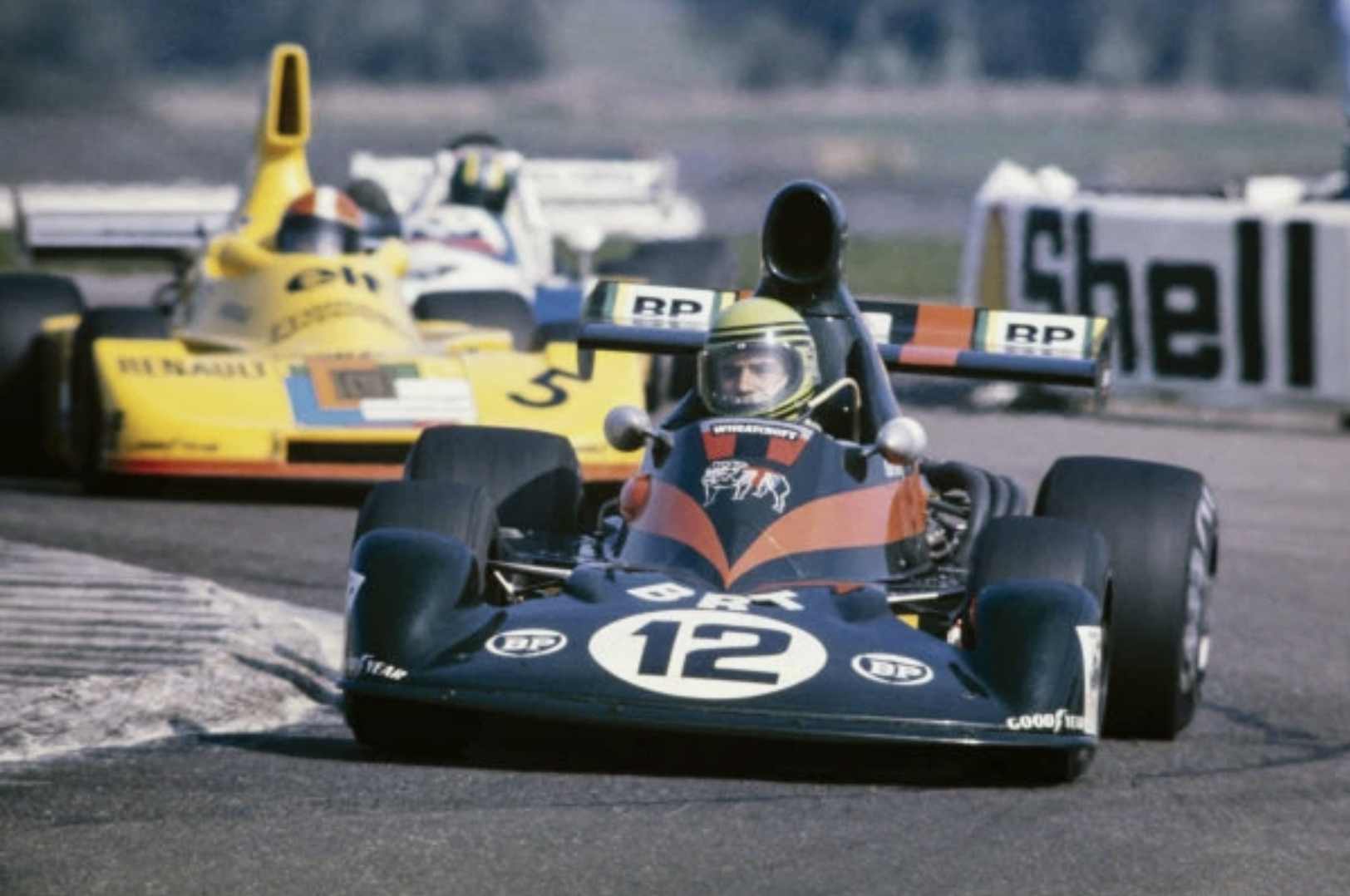
Brian Henton in the Tom Wheatcroft Racing Wheatcroft Pilbeam R26 Abarth-Holbay Tipo 260 straight-six leads Jean Pierre Jabouille, Elf Jabouille 2J Renault V6 through the chicane; the latter was a rather successful car, the former was not!
The Wheatcroft was so hopelessly slow that Henton – the 1980 European F2 Champion – didn’t start the race won by Maurizio Flammini’s works March 762 BMW M12/7.
The Abarth-developed engine was a factory design led by ex-Ferrari engineer Stefano Iacoponi. The Fiat-Abarth L6-260 was a twin-cam, four-valve, fuel-injected alloy 1986cc straight-six with a bore/stroke of 86/57mm. The engine developed a claimed 316bhp at 10,400rpm. Holbay took over development of the engine after Fiat abandoned the project.
Fitted to the Mike Pilbeam-designed Wheatcroft R26 chassis the engine had crankshaft problems, persistent reliability troubles, and handling quirks due to the top-heavy design.
While making plenty of noise, the Wheatcroft managed little more than practice/early-season appearances before Tom Wheatcroft’s team abandoned the experiment and switched to Hart 420R power.
Mike Pilbeam designed and built R23/24/26/27 Formula Atlantic and Formula Two cars for Tom Wheatcroft in 1976. The R23 F Atlantic was never made. R24 – BMW-engined F2. R26 – Abarth-Holbay 6 cyl-engined F2 (only appeared in public at Thruxton practice). R27 – Hart-engined F2, driven by Bob Evans.
(BAllison-MBisset-WordPress)
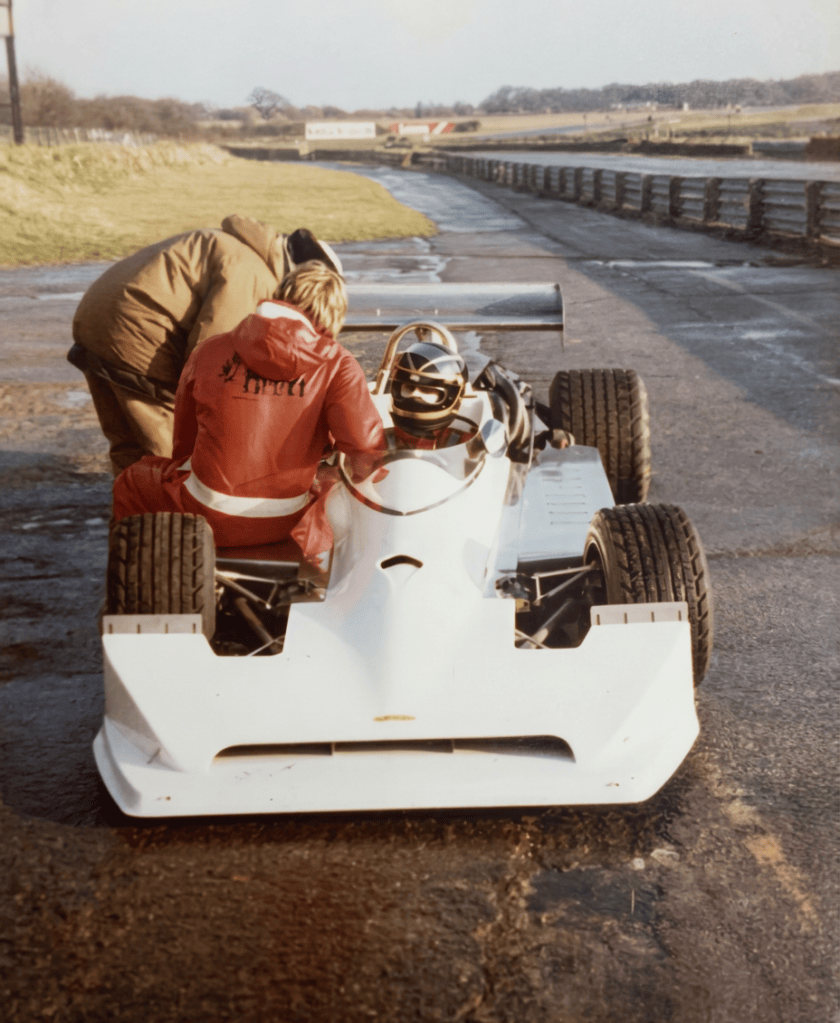
The prelude to the Wheatcoft Abarth exploration was the Lola T450 derived Lola T550 (HU2) built for Roberto Marazzi by Lola in 1977. Entered in the March 6, 1977 Silverstone International Trophy, he qualified 19th of 26 cars ‘but did not start as it blew both of its Holbay-tuned Abarth engines in the two days of practice.’
Aussie Bruce Allison was impressing in the UK at the time and jumped aboard the car at Snetterton to test T550 HU2 before a proposed entry in the April 9, 1978 Hockenheim Euro F2 round…but he bailed out of that. Alo Lawler was entered in the car at the Donington Euro F2 round that year, but he too jumped ship before the event. More about Lola’s also abortive race program with the engine here:https://www.lolaheritage.co.uk/type_numbers/t550/t550.html
Credits…
Ercole Colombo, MotorSport, Bruce Allison Collection, Mike Pilbeam-MotorSport, Lola Heritage
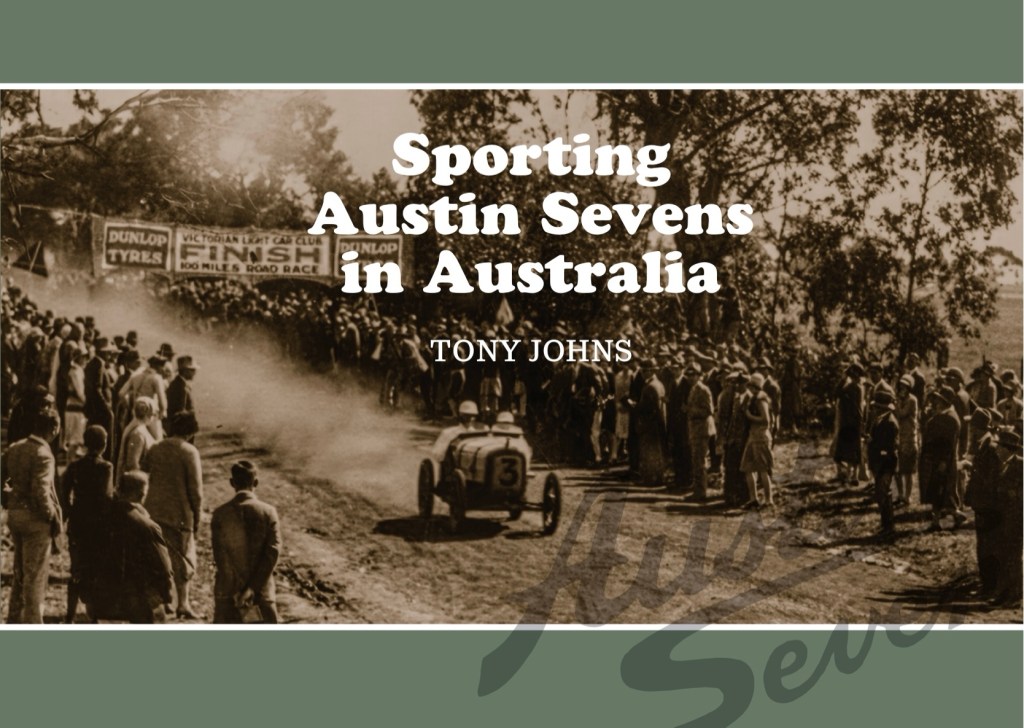
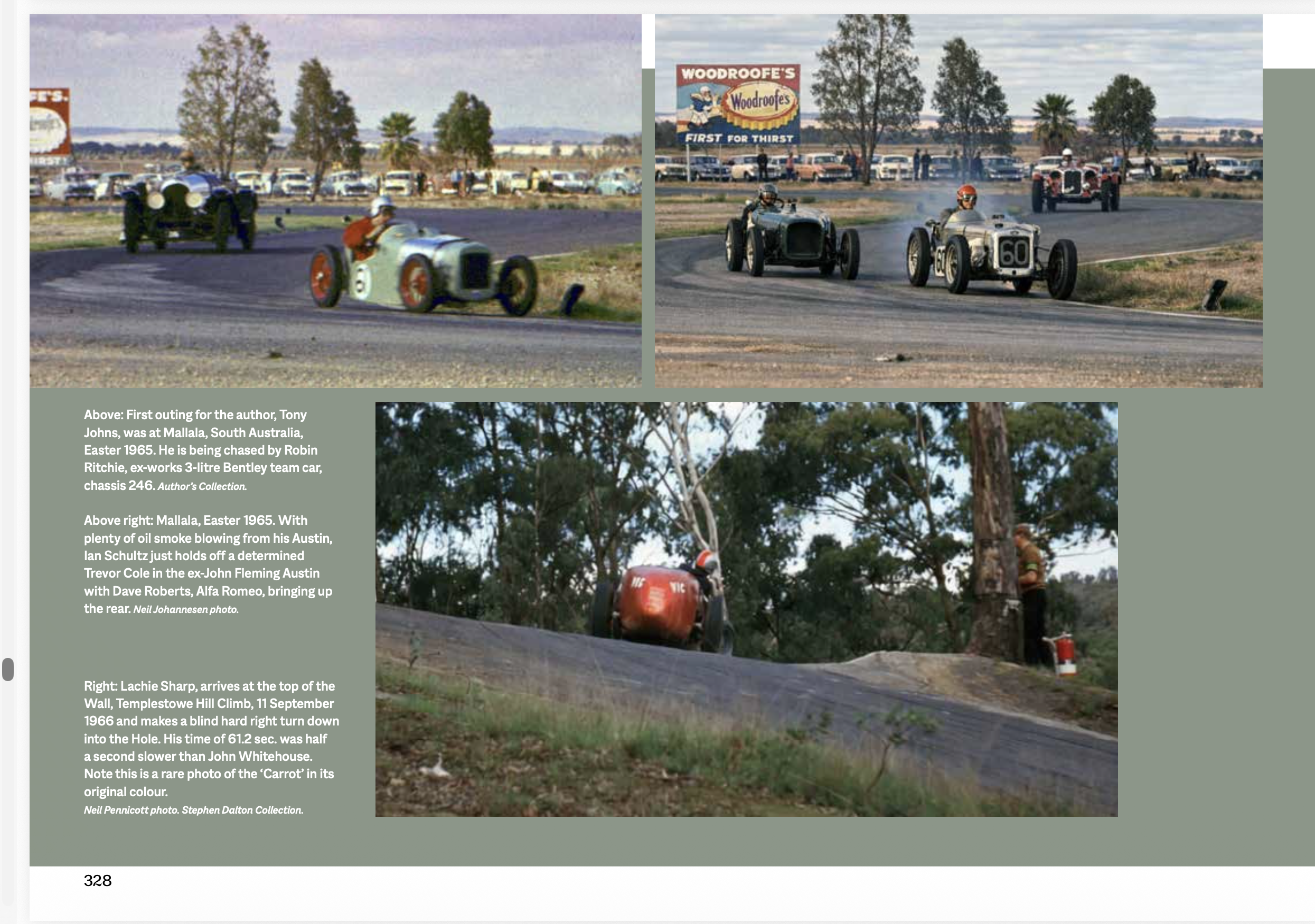
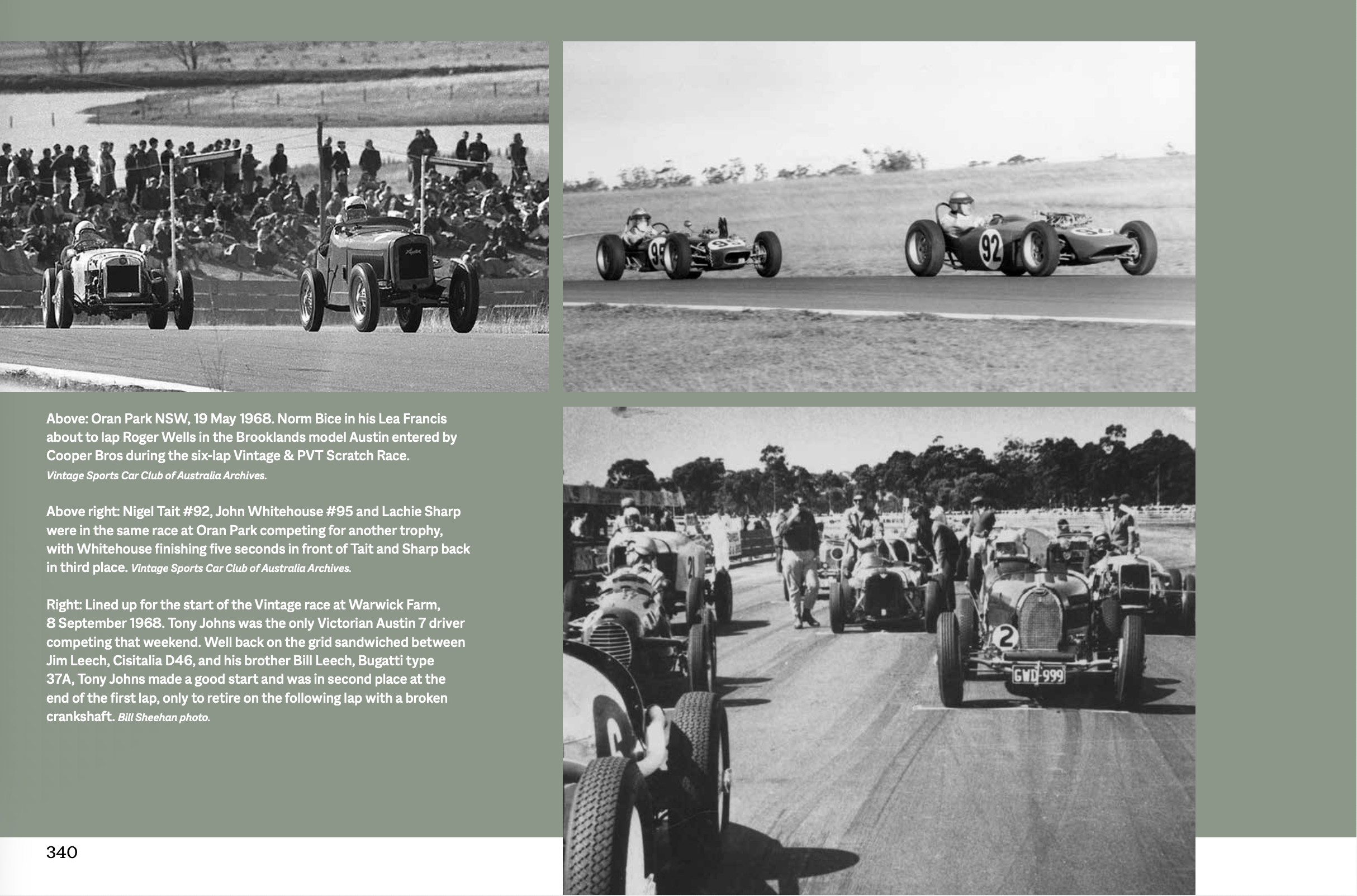
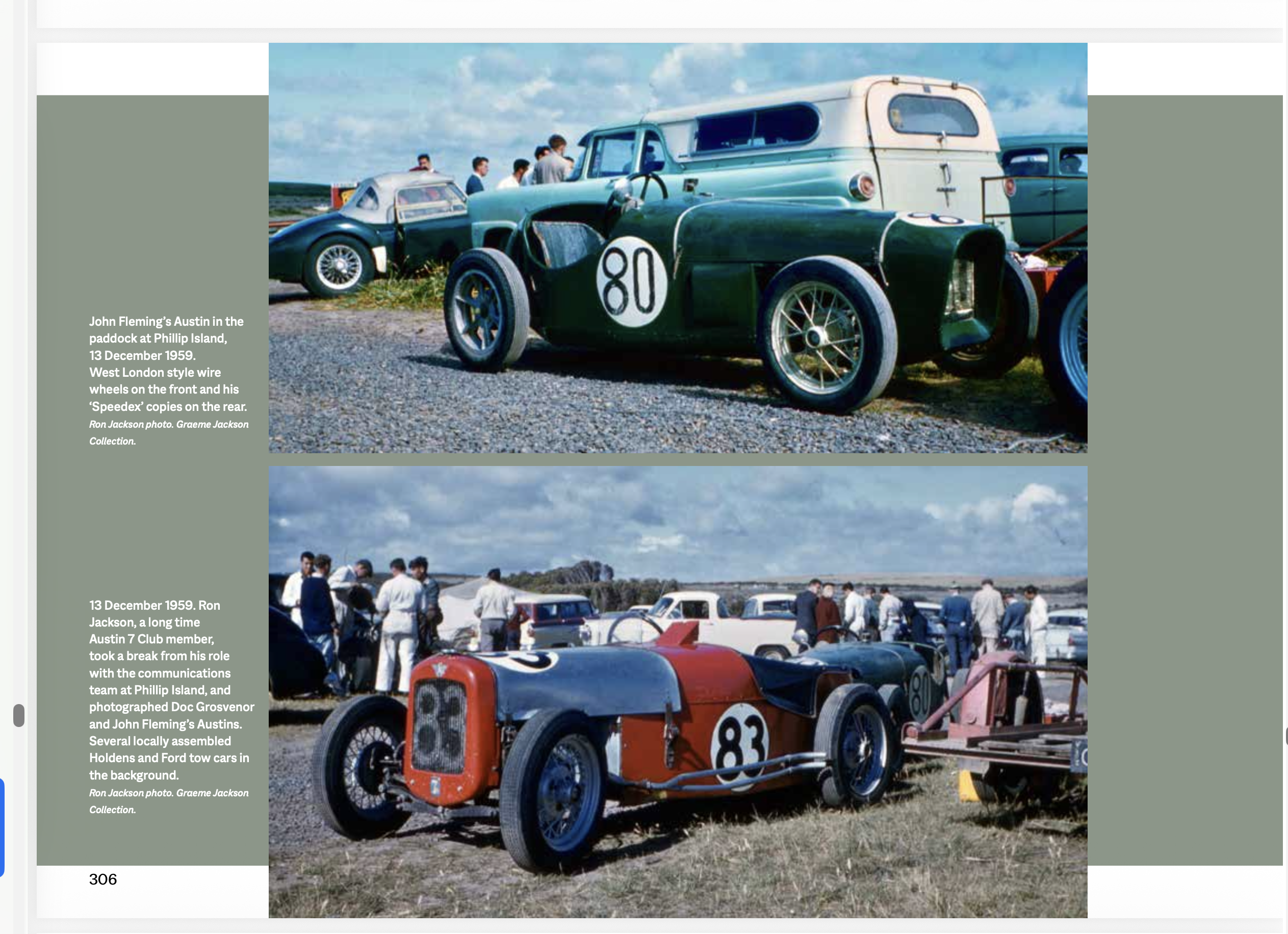
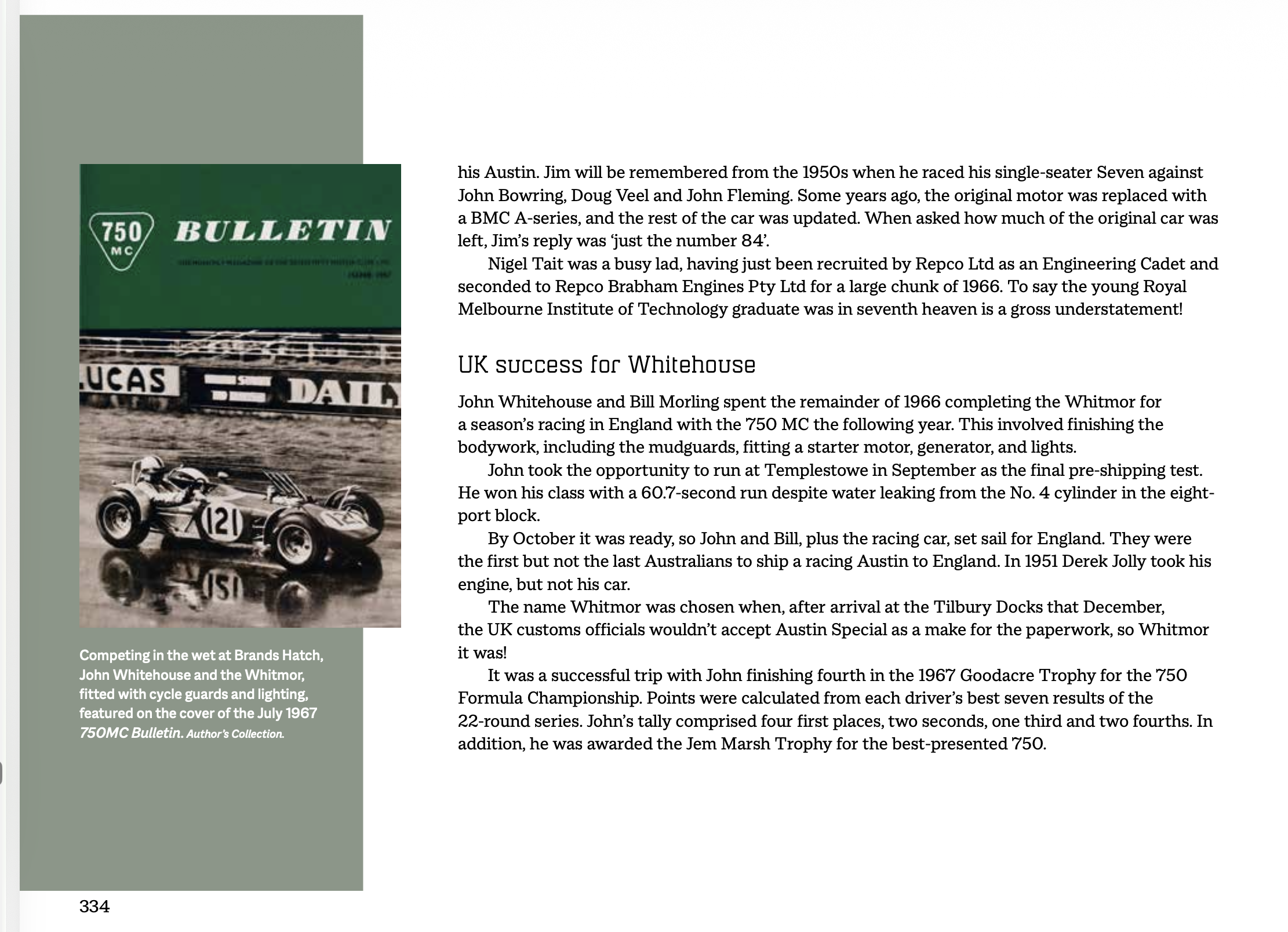
This century-old story has finally been told by lifelong Austin 7 enthusiast, car-builder and racer Tony Johns. Austin 7s have been around since 1922, first arriving in Australia in 1923.
Johns’ dab hand as a storyteller was first demonstrated in ‘Vintage Bentleys in Australia’, written with three colleagues.
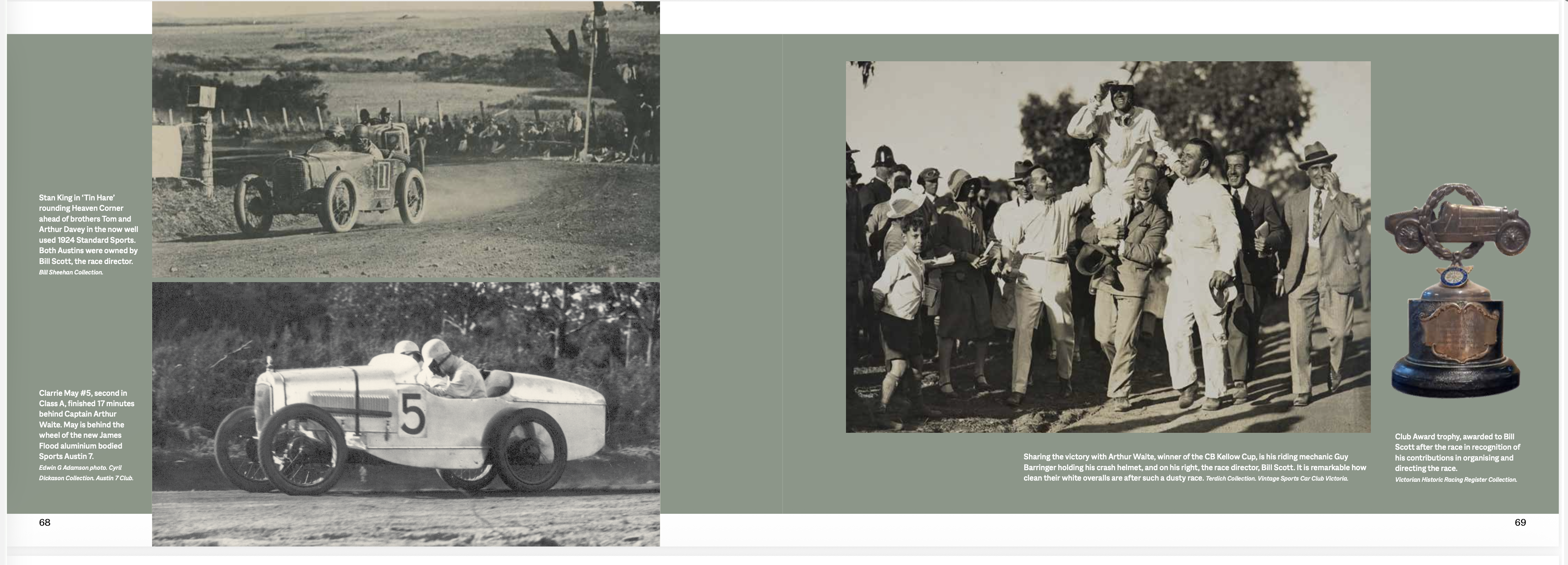
This book relates their important role in the history of Australian motor sport compellingly, from the early days of amateur owner-drivers competing in trials and hillclimbs to Captain Arthur Waite’s victory in the 1928 Australian Grand Prix at Phillip Island aboard a factory supercharged Austin 7 ahead of a classy field including Bugatti, Alvis and Amilcar.
Drawing from historical documents, including original programs, the pre-war era is well researched. The post-war special-building and club racing sections draw on drivers who participated in those events, including the author’s own experience.
Herbert Austin’s most important formative years were spent in Australia from 1882-93. He did his engineering apprenticeship in Melbourne before working for the Sydney-based Wolseley sheep-shearing machine company, an opportunity that led to Austin designing the first Wolseley car in 1891.
Johns relates that the first Austin was built in 1906 and covers the design and development of the epochal Austin Seven in 1922; the boardroom battles to get it built are fascinating.
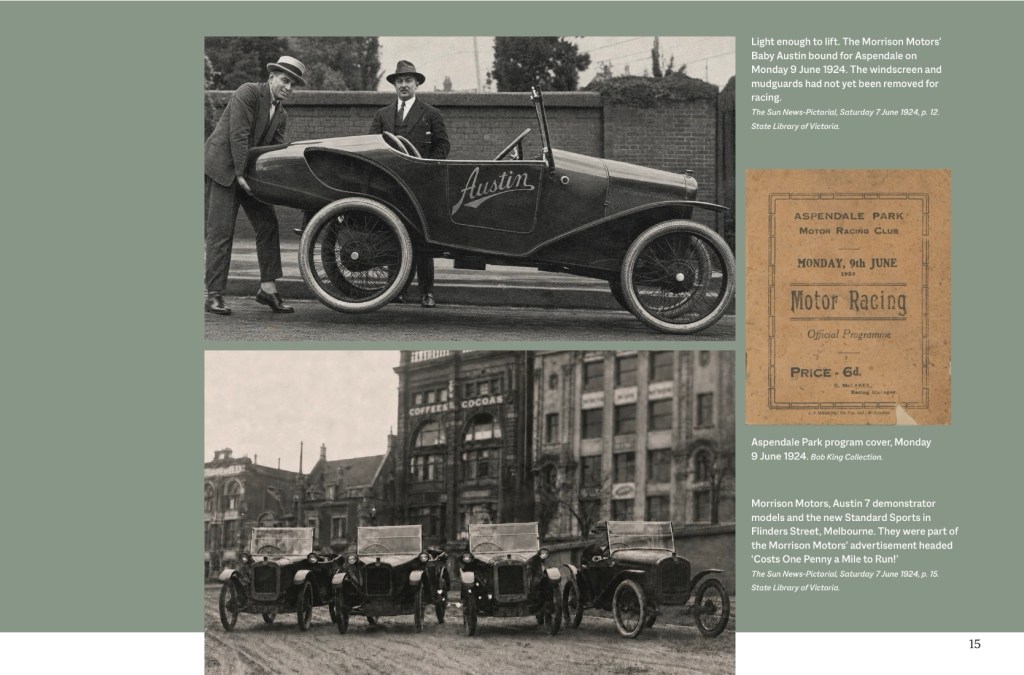
By the time the Austin 7 became a mainstay of the 1928-35 Phillip Island Australian Grand Prix era, the 7 was already an established competitive car via its performances in the Australian hills and reliability trials that radiated from the various state capitals, on the speedways at Aspendale and Claremont, and on the firm sand of Sellicks and Gerringong beaches.
While Arthur Waite’s – the Aussie was Herbert Austin’s son-in-law – ’28 win is well known, less so is Cyril Dickason’s victory in an supercharged Ulster in 1931. Cyril got the cup, the babe, and the plaudits of the crowd, but the Victorian Light Car Club committee decided overnight that while Dickason won on handicap, the winner of the AGP was the bloke who did the fastest time, Carl Junker in a Bugatti Type 39. Johns notes that more than half the committee were Bugatti owners then and that Clarrie never handed the cup back! God bless him for telling ‘em to get-rooted or the 1931 equivalent thereof…
Like ‘Professor’ John Medley’s Bathurst and John Snow books, Johns’ manuscript is rich with marvellous industry, locational, economic, people and event tangents, the most significant of which are dealt with by way of breakouts. A decent index allows these gold nuggets to be mined.
Tony has amassed a colossal motor racing archive in a six-decade obsession. It’s reflected in stunning period material and photographs, most of which haven’t been published before. The photo content alone is worth the ridiculous, low $A99 price. Plus postage, of course.
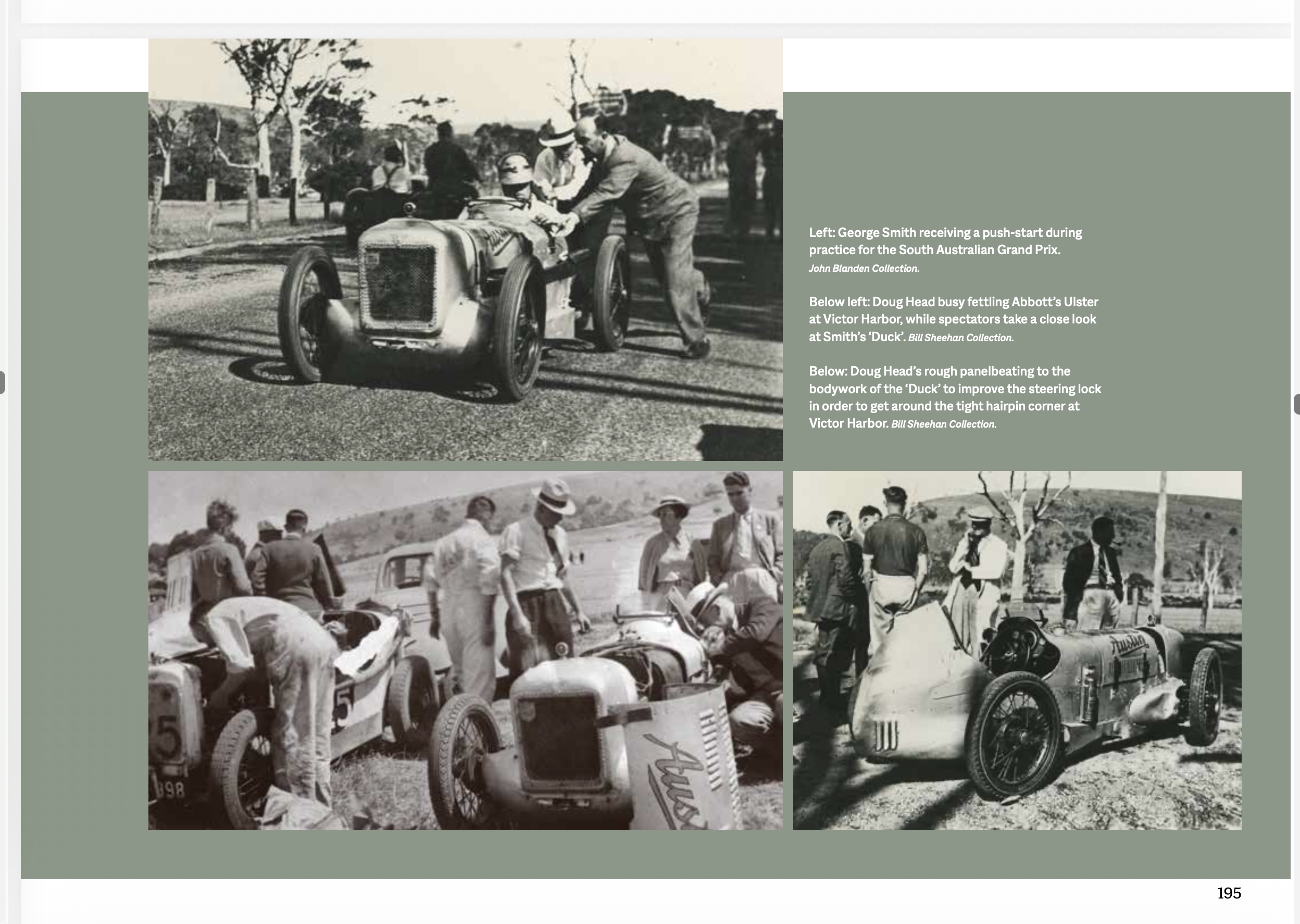
There are some fabulous tales; Ron Uffindell features prominently in a couple of them. Driving from Adelaide to Bathurst and back and finishing the 1938 AGP at Bathurst, won by Peter Whitehead aboard ERA R10B, is impressive. Perhaps more influential on motor racing history are the secrets in the Austin 7 engine owned by Derek Jolly and given to Colin Chapman for use in his Lotus Mk3 in 1951; the brilliant machine got its Unfair Advantage with those engine tricks.
Austin 7s competed in the support races at Grand Prix meetings until 1958. The Austin 7 Club, formed in Melbourne in 1950, and the publishers of this book, still have over 400 members and have marshalled the troops down the decades to recraft the rules and keep competitor numbers up.
Johns cites the first race for vintage racing and sports cars as perhaps The Argus Trophy held at Fishermans Bend on February 2, 1956. The point being that as Formula Vee, Formula Ford and particularly Clubmans – the latter very much of the A7 owner-builder mindset – grew in popularity as entry-level categories, Austin 7s always got a run in ‘Division 3’ events and then provided a critical grid mass as Historic Racing got underway; the ’78 AGP Golden Jubilee at Phillip Island, ’76 First Amaroo All Historic and ’77 Winton meetings (organised by the Austin 7 Club) are all covered.
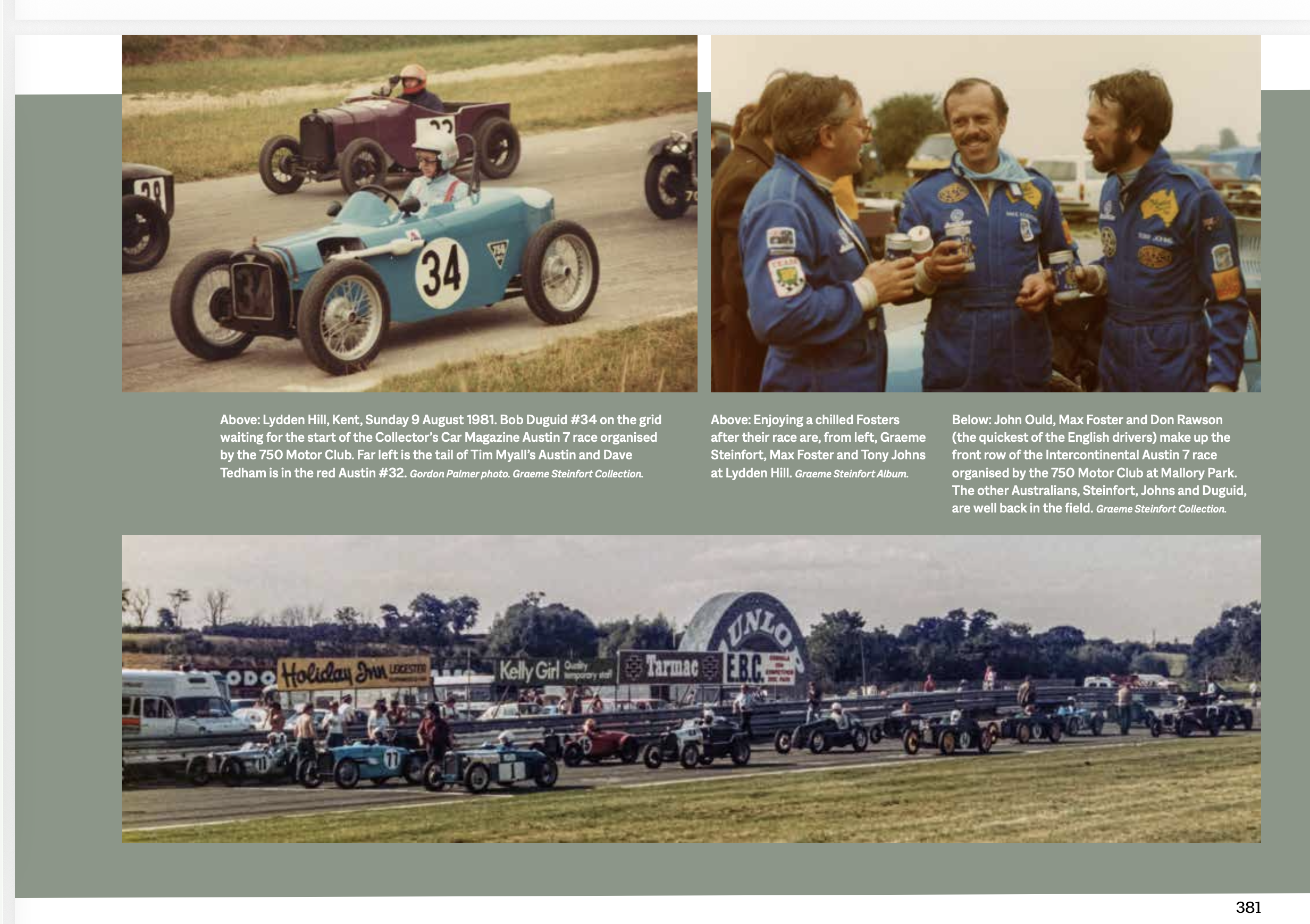
The story ends with the 1981 UK Raid, when five racing ‘Australian Austins’ and their owners spent a month racing the Poms on their home turf in a hard-fought series of races akin to The Ashes! The Brits thought they understood ‘their creations’ better than any other A7 racers on the planet, but they found the colonials’ ahem, interpretation of English was at the very literal end of things…
I need to declare an interest in this project, having worked with Tony, a mate of 30 years, to cut and polish his manuscript. With over 400 pages and nearly 500 photos/images, Sporting Austin Sevens in Australia – professionally written, edited, sub-edited, designed and printed – deserves a place on the bookshelves of Austin 7 enthusiasts, motor racing readers and automotive historians.
The 500 individually numbered books – there won’t be second edition – are on schedule to arrive in Melbourne in mid-November and will be mailed to purchasers then. It’s one to have and hold, love and cherish, folks, email this Austin Seven Club address to secure your copy: mailorderparts@austin7club.org
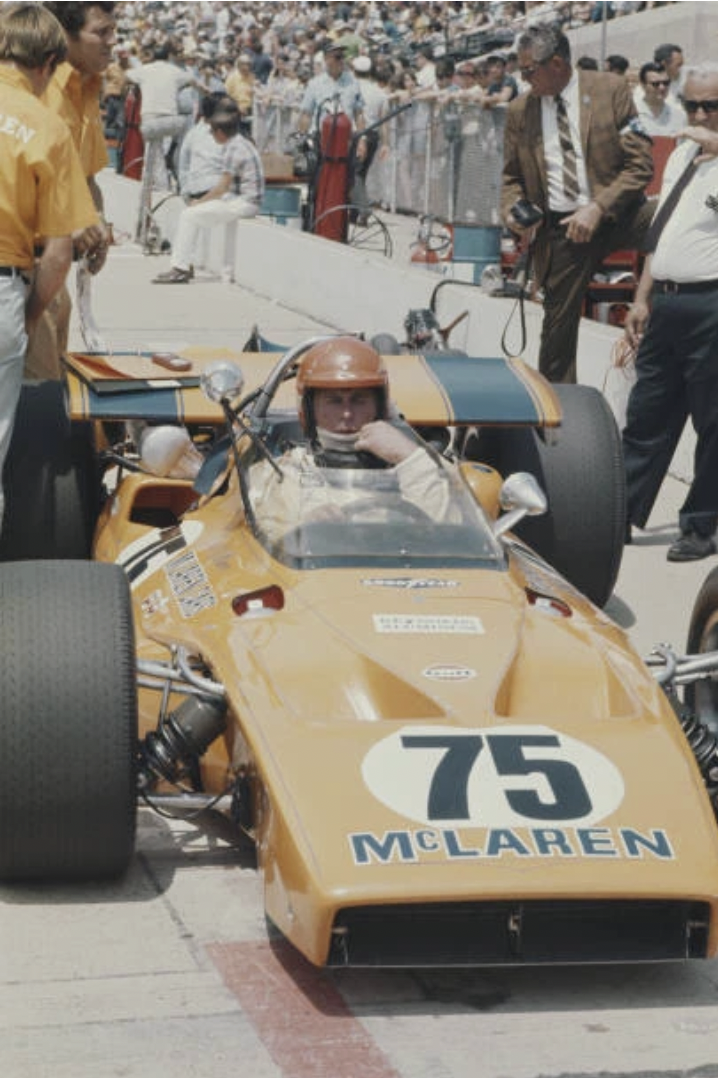
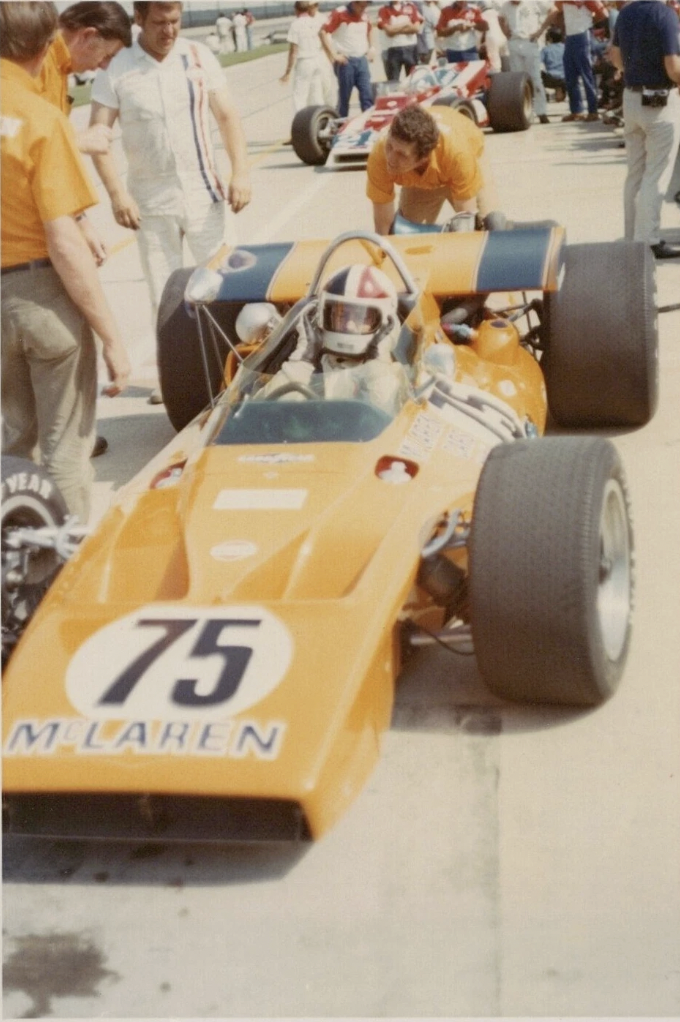
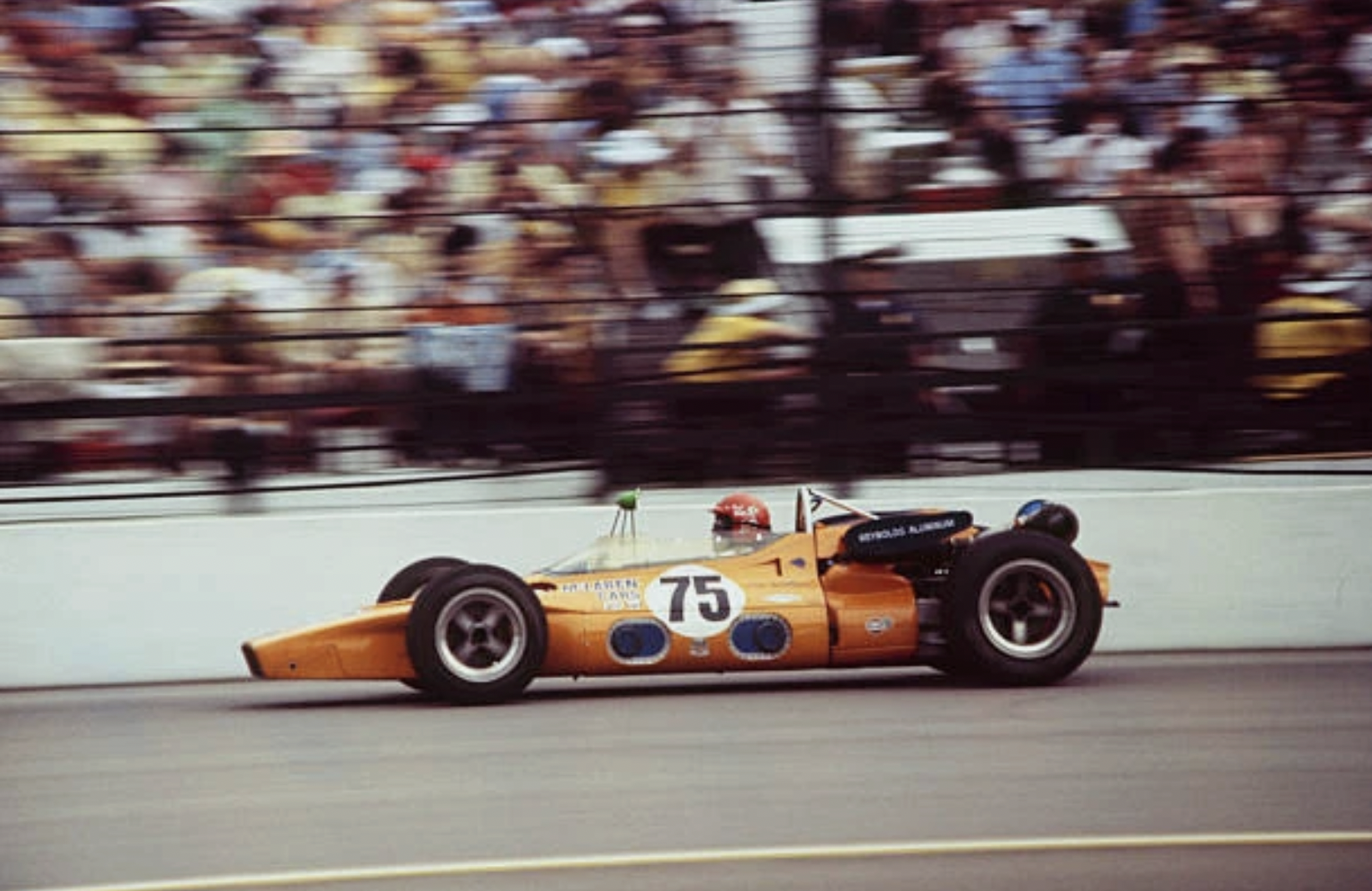
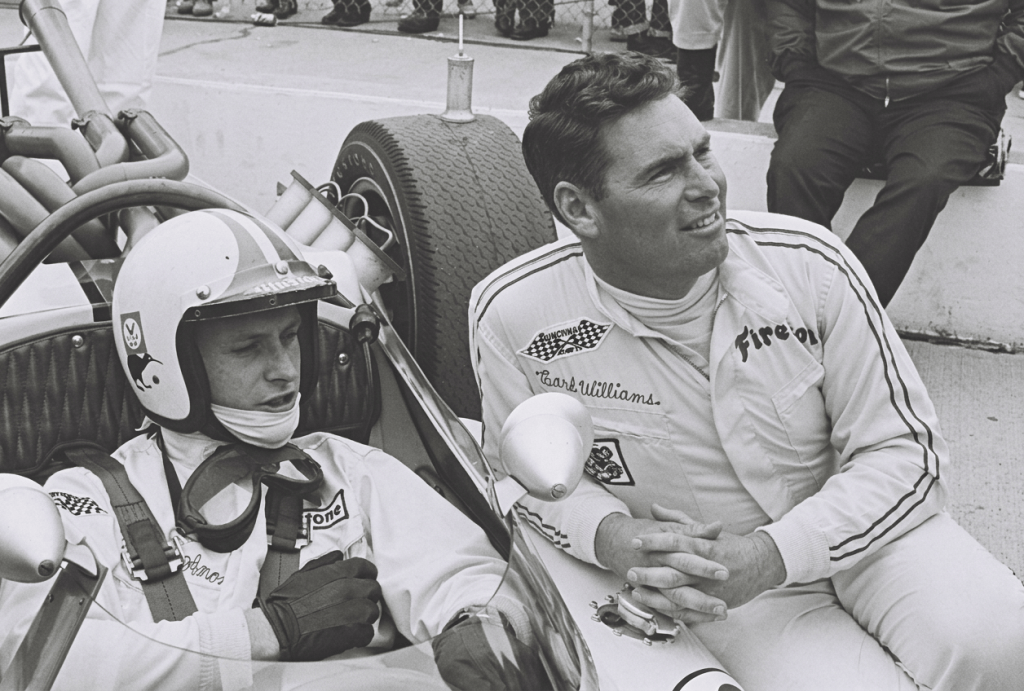
Carl Williams, McLaren M15A/3 Offy on raceday at Indianapolis in 1970 (Unatt-MBisset-WordPress)
I tripped over the shot above on that internet thingy and thought I know who that is! By the same token Carl Williams is far from the first name that would pop into my head if I was asked for a list of McLaren Works Pilots since day one; an obscurity, I love em!
Bruce McLaren and Teddy Mayer laid solid financial foundations for Bruce McLaren Motor Racing Ltd during 1964-65 not least by signing with Firestone in time for Bruce’s Tasman Cup defence in the summer of ’65. Not far away in New Haw, Jack Brabham did a deal with Goodyear; Dunlop battened down the hatches as the Tyre Wars got underway right about then.
McLaren switched to Goodyear for 1967 and made rock stars of themselves by obliterating the Can-Am Cup in papaya coloured McLaren M6A Chevs steered by Bruce and Denny Hulme. The Bruce and Denny Show was underway.
Bruce McLaren is about to practise his Shelby 68 GE T58 turbine at Indianapolis in May 1968. It looked the goods! (IMS)
In 1968 Goodyear’s support of the papaya boys extended to F1, Can-Am and USAC racing…
Goodyear tipped Bruce and Denny into Carroll Shelby’s Indy 500 project in which British engineer Ken Wallis evolved the 4WD edgy-turbine-wedge concept that came within seven and a half laps of winning the 1967 500. The General Electric T58 helicopter turbine powered Shelby 68 ended up being under-developed and too little too late, hampered as all the turbines were that year by a change in USAC regs that reduced the permitted inlet area, measured at the first compression stage, from 23.999 to 15.99 sq. inches which nobbled their power.
Then Wallis got a bit cute with the regs and created a variable inlet device that made the car a bit quicker – but not enough – but magnified the throttle lag, and had various team members, not least the drivers and sponsors – Goodyear had underwritten the venture to the tune of $1 million – soiling their undergarments with fear about running a blatantly dodgy car. So the team did a midnight-flit from the speedway – literally – and didn’t attempt to qualify.
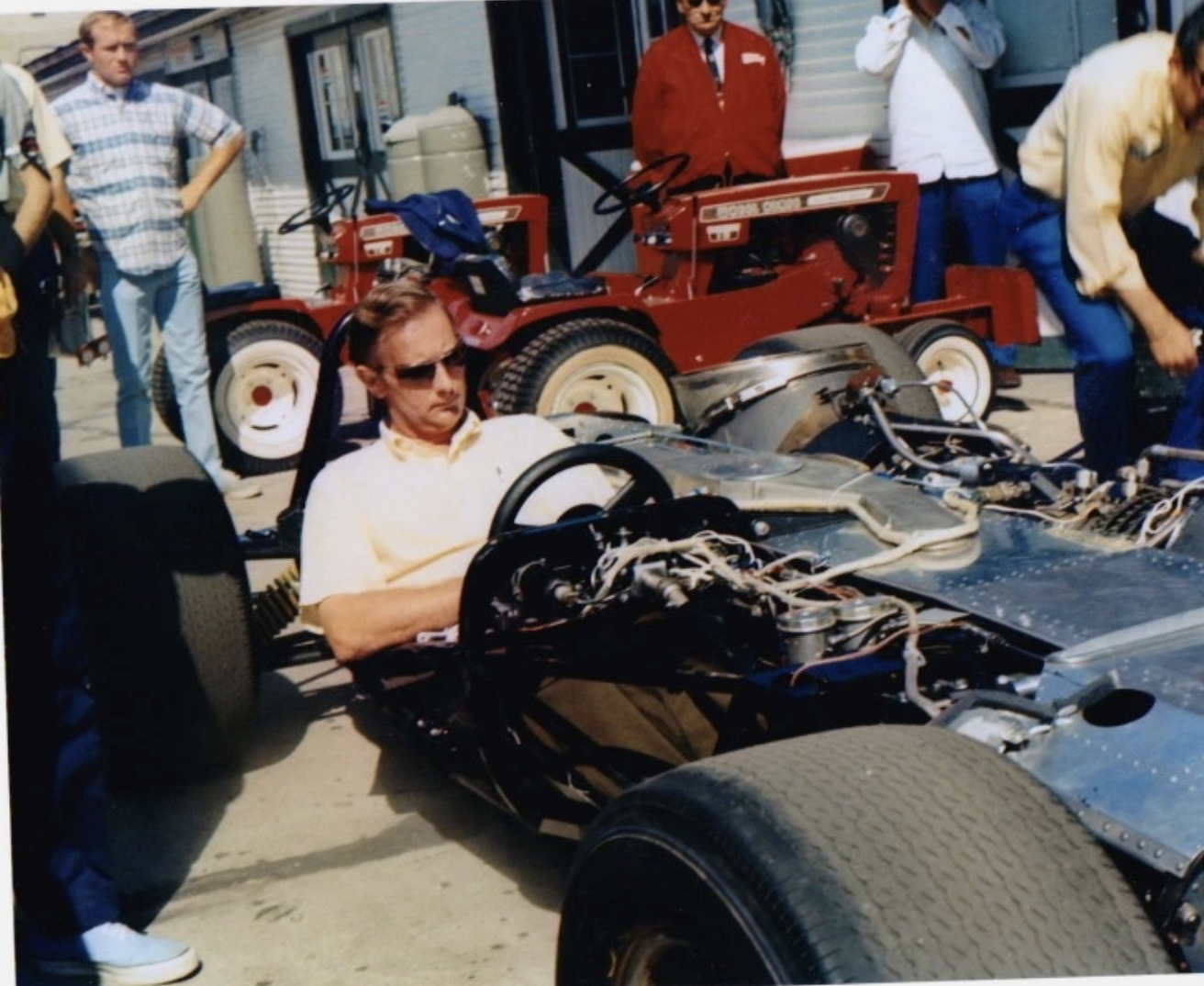
Ken Wallis contemplating what next? Uber rare colour body-off shot of the Shelby 68 GE chassis. Wasn’t variety a fantastic thing, let’s not think too hard about side intrusion protection. Being offered drives in stuff like this – well remunerated, as Bruce and Denny would have been – must have had an Eastern Front factor about it (Unattributed)
But Bruce could see the benefit of McLaren being involved in USAC racing, he cooled his jets in early 1969, and then via the usual McLaren communal design process tasked Gordon Coppuck to come up with a car for 1970.
Coppuck raided the parts bin to bolt onto the chubby, front radiator, aluminium monocoque chassis. The rear suspension was Can-Am M8 derived, and the 2.65-litre Offy turbo-engine’s power hit the road via Hewland’s four-speed LG500 trasaxle.
McLaren Cars at IMS in November 1969. M15A/1, Teddy Mayer at left; Bruce is on the RF with Tyler Alexander kneeling on the right. Is it Chris Amon at the wheel? (BCahier-MBisset-WordPress)
The first M15 was completed in November and was then shipped to McLaren Engines Inc, in Livonia, Detroit before being taken to Indianapolis and was immediately quick; Denny did 168mph, and Bruce 162. Three cars were built, see Allen Brown’s summary here:https://www.oldracingcars.com/mclaren/m15a/
McLaren’s campaign got complex when Chris Amon decided racing on closed speedways wasn’t his thing and decamped in favour of his March F1 and Can-Am, and Ferrari sports car commitments.
Poor Denny Hulme, while showing plenty of speed was outted from racing for weeks after a USAC mandated fuel filler mechanism failed and discharged methanol over its Kiwi driver and Offy engine, both of which went up in flames. That Denny was wearing leather rather than nomex gloves compounded his problems…
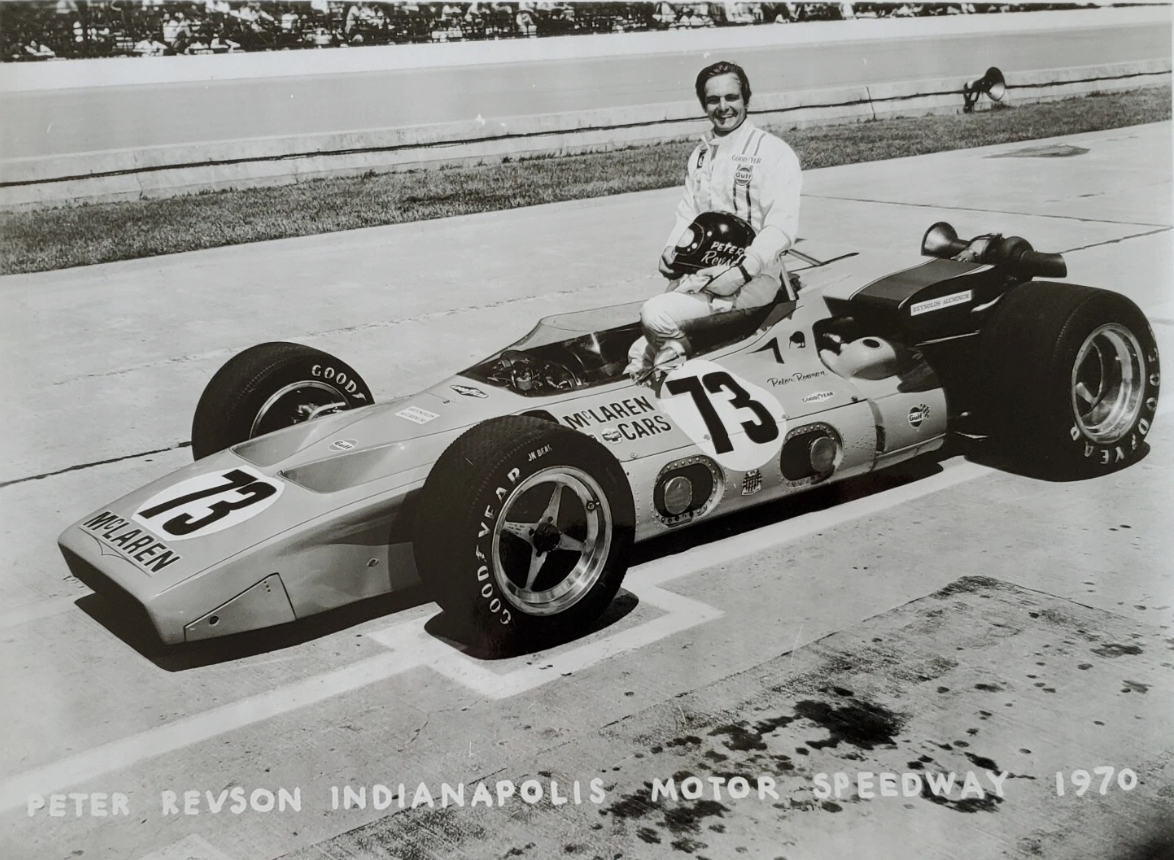
Amon aboard M15A/3 at Indy in May 1968. He’d been to Indy before in 1967? but decided it wasn’t for him (Unatt-MBisset-WordPress)Peter Revson poses for the standard IMS mugshot aboard M15A/2. Note the neat, far-forward rear wing installation, doubtless to accommodate the massive turbo-wastegate (IMS)
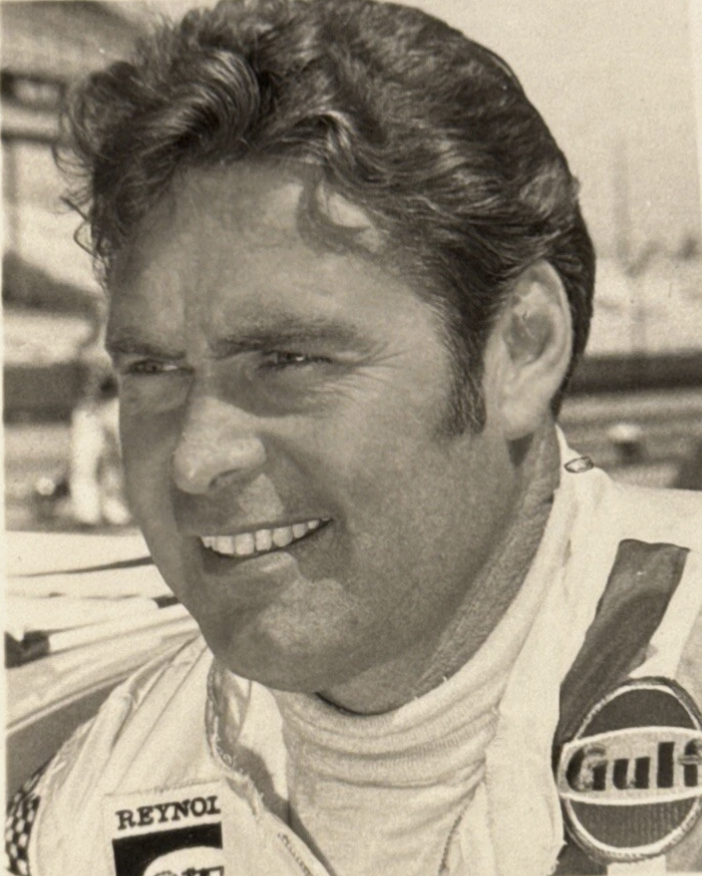
So Carl Williams and Peter Revson were drafted into the team as replacements. Both drivers qualified: Q19 and ninth for Carl and Q15 classified 22nd/blown engine for Revvie. Critically, McLaren had a good, close look at Peter Revson who became a key player in the immediate post Bruce McLaren Era; Bruce died testing an M8D Chev at Goodwood on June 2, 1970.
Carl Williams, McLaren M15A/3 Offy, 1970 Indy 500, ninth (IMS)
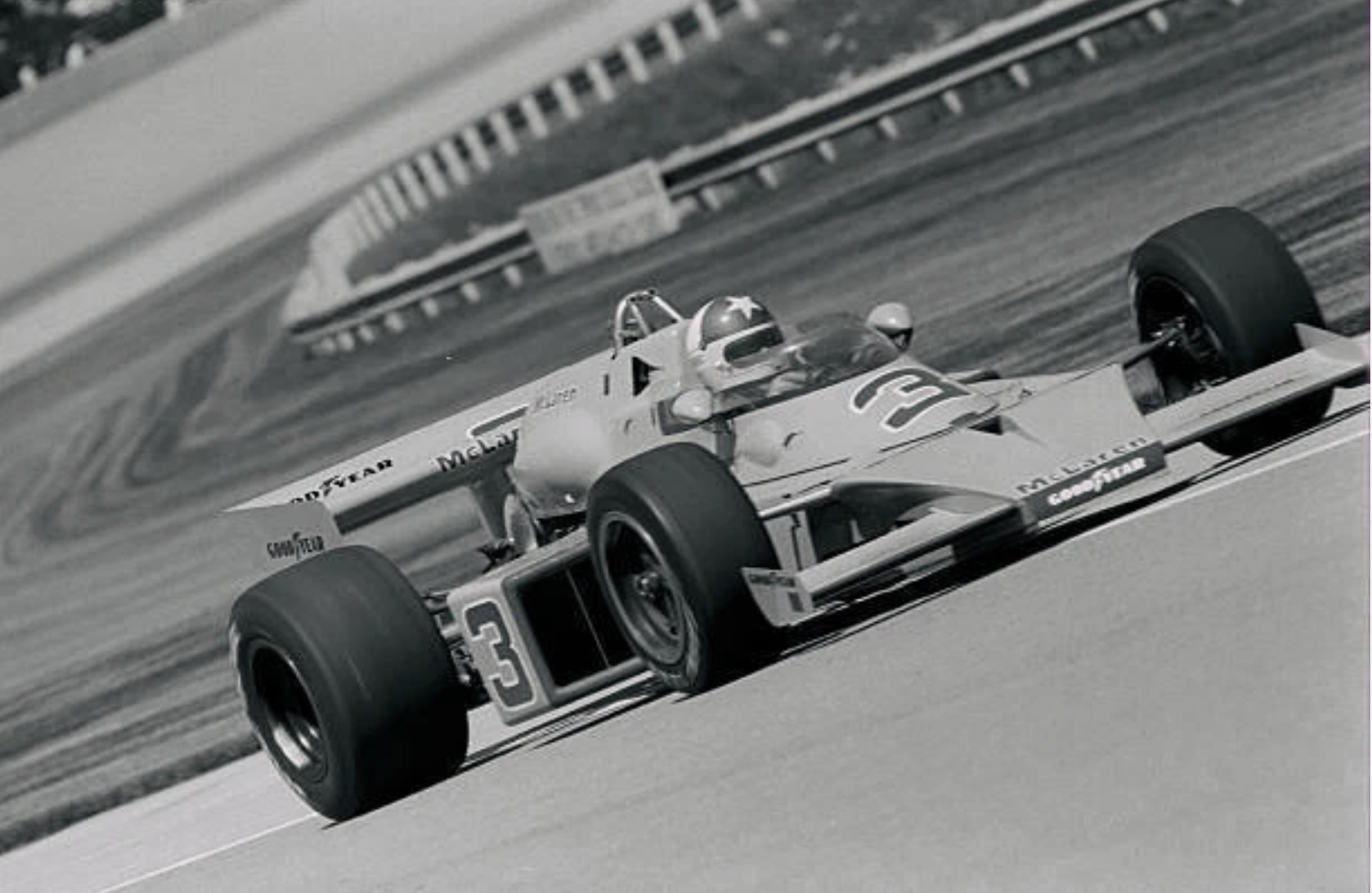
All things considered, it wasn’t a bad result, and critically it gave Gordon Coppuck a good idea about what it took to win in USAC racing, the M16 Offys that followed were rockets! The shot below shows Johnny Rutherford in a works M16C/5 Offy on the way to victory at Indy in 1974
(IMS)
Etcetera…
(McLaren Cars)
Carl Williams (24/8/1930-24/2/1973) in the McLaren Cars 1970 press release material.
An engineer away from racing, he competed in USAC sprint and champcars from 1965-72; 63 starts, 21 top ten placings, his best was a second place at Springfield in 1970, while his ninth with McLaren at Indy in 1970 was his best in six starts. He died in a motorcycle accident in 1973.
(D Friedman)
Chris had a crack at Indy in 1967, attempting to qualify this BRP 65 Ford (BRP-5-65). Allen Brown wrote that ‘Amon…topped 160mph unofficially in practice but crashed on 10 May and the car was “extensively damaged.” Clearly Indy was unfinished business for Chris, hence the second crack in 1970.
You’d think the chances of finding a shot of the original driver of M15A/3 and his replacement – Amon and Williams – would be slim, but never discount the breadth and depth of David Friedman’s Archive! Here they are in the Indy pitlane in 1967.
(D Friedman)
That year both drove BRPs owned by George Bryant. Williams had a cracker of a month in BRP-4-65 that sadly ultimately fell short. From Q23 he was running third in the 500, but then crashed on the final lap, and was classifed tenth. So near but so far to the podium!
I wonder if Chris suggested Williams to McLaren after he pulled the pin and returned to the UK?
(Hemmings)
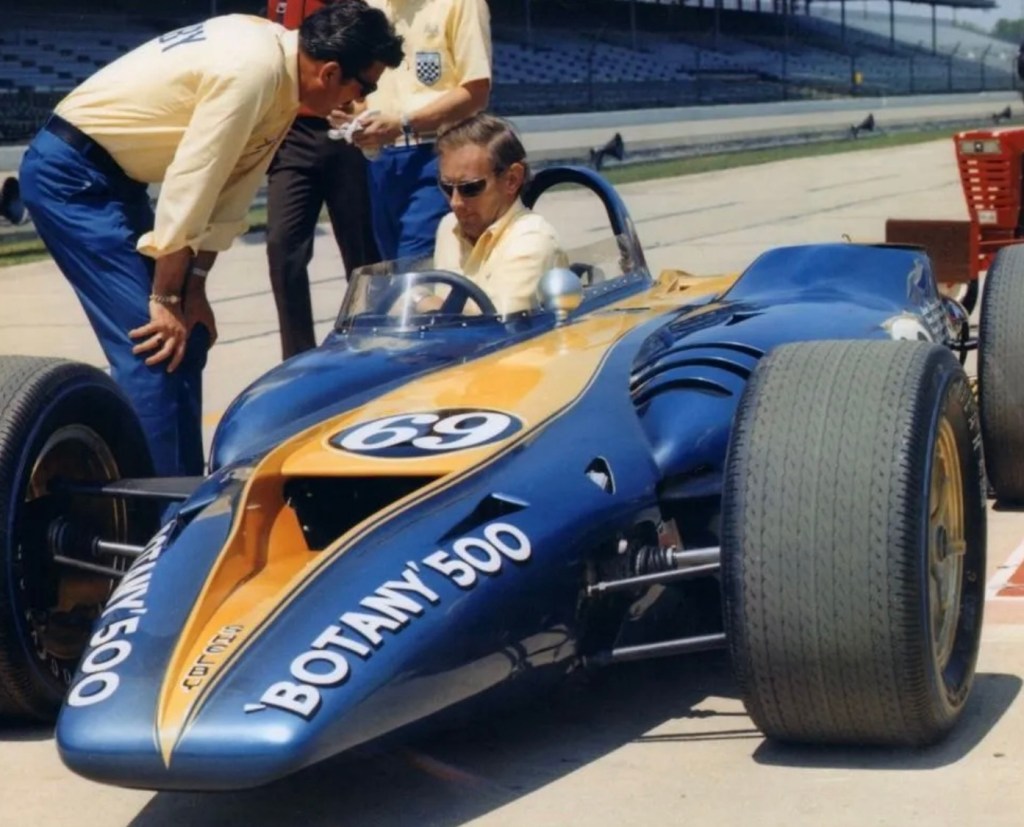
Ken Wallis aboard his creation at Indianapolis in May 1968. Botany 500 was an American menswear manufacturer that went bust in 1973.
(Unattributed)
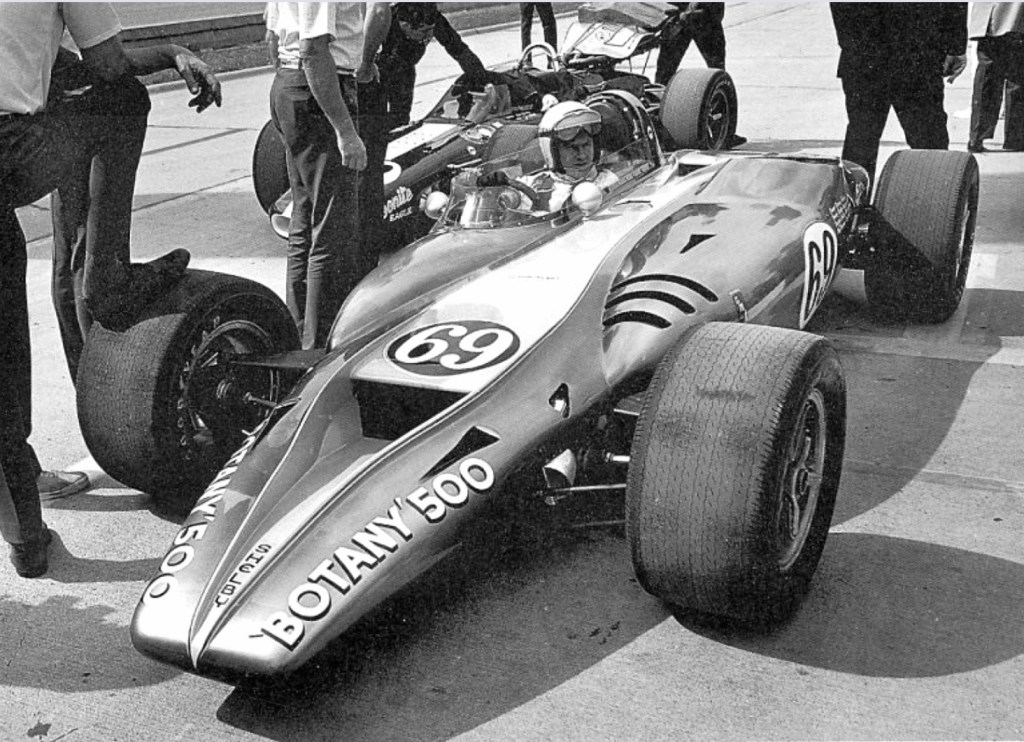
Bruce McLaren shots at Indy aren’t plentiful either. Both Shelby 68s are extant. That’s Dan’s works Eagle Ford behind, second place behind the winning Eagle 68 Offy raced by Bobby Unser.
Indianapolis Motor Speedway, Allen Brown-oldracing cars.com, Ebay, Hemmings, McLaren Cars, Bernard Cahier, David Friedman/David Friedman Archive, MotorSport
Tim Schenken on the way to winning the Australian Hillclimb Championship at Lakeland, Lilydale in Melbourne’s outer-east on March 28, 1965…
Memory tells me the White was a JAP powered home-built device constructed by a neighbour of Tim’s in Melbourne’s North Balwyn.
Brabham BT21X Ford, MRD mechanics and Tim Schenken, Brands Hatch, December 1968 (T Schenken Archive/MBisset/WordPress)
Three years later he was driving works-Brabhams before his ascent to F1 with Frank Williams/De Tomaso Ford in 1970.
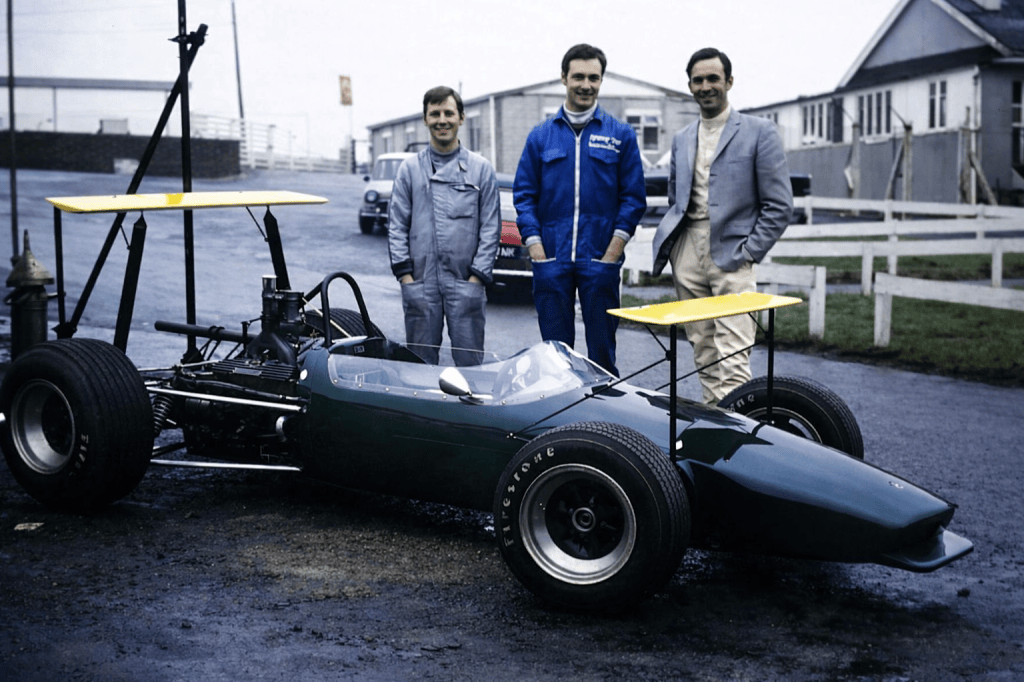
This post is all about the photo above. It’s the names of the MRD mechanics I’m after for my Brabham book project. Who are they guys? I need it for the photo caption.
Schenken blitzed the UK junior formulae in 1968, winning both the British Formula Ford and MCD/Lombank British F3 Championships aboard Merlyn Mk11 and Chevron B9 Ford/Brabham BT21X Ford respectively. He didn’t even join the F3 title chase until round 9 in June!
Given Tim didn’t race his new Brabham BT21X Ford until the final ’68 MCD/Lombank round on December 27 at Brands Hatch (Tony Lanfranchi, Merlyn MK14A won from Tim) I’m thinking this Goodwood testing shot above was, perhaps, just before Brands.
Don’t let the wings fool you, Ron was playing with them in various forms to determine if they had an advantage in 100bhp-screamer-F3, or not. Interesting for some, perhaps, is that the wing set up on BT21X looks a lot like that shipped to Australia attached to BT31 Repco 830 2.5 V8, Jack’s ’69 Tasman weapon of war.
(DLuff/MBisset/WordPress)
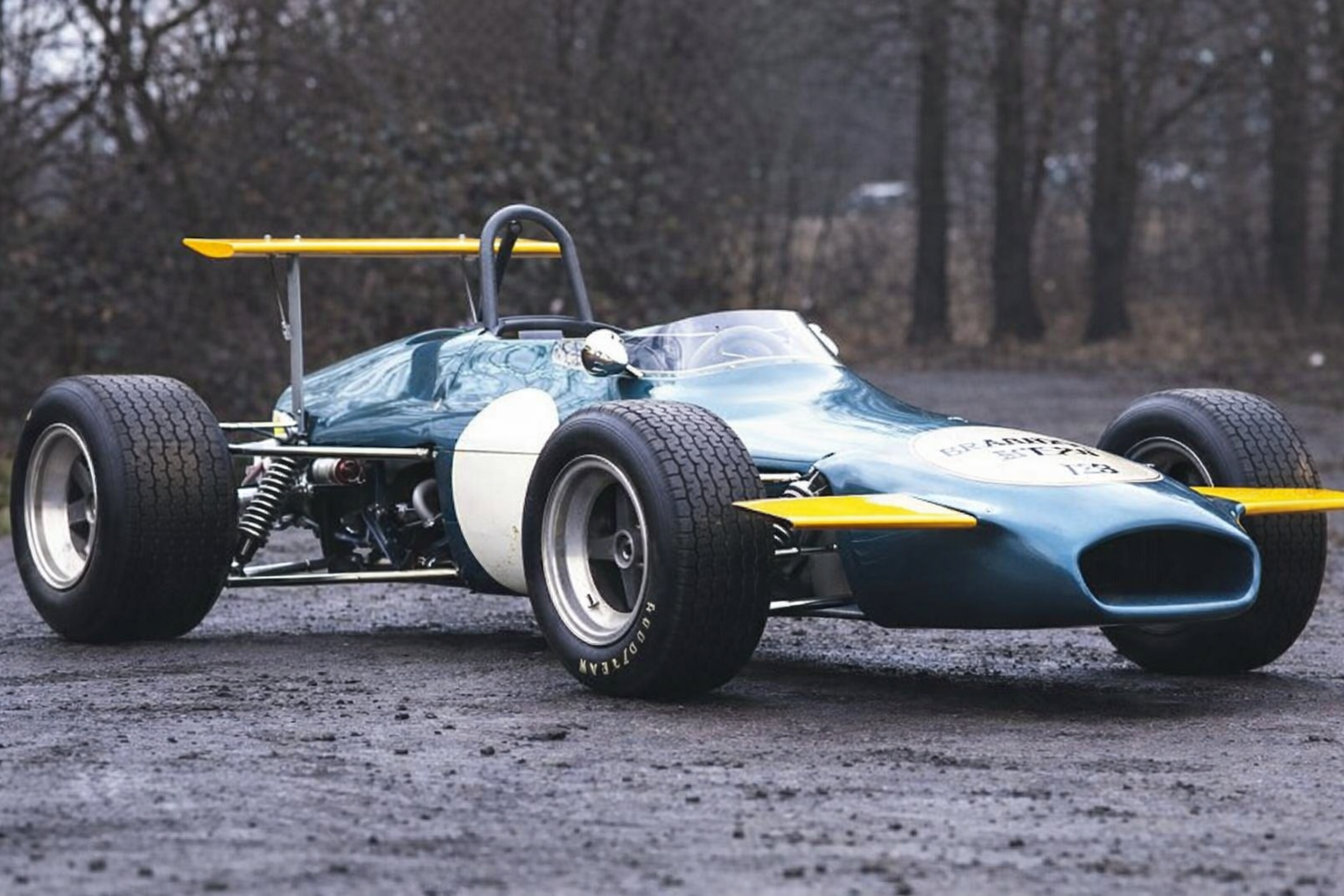
While we are on the topic, this is MRD mechanic, David Luff’s shot of the ’69 model BT28 Ford F3 car in January 1969. Note that Tim’s BT21X was the prototype BT28 and was ultimately tagged BT28/1. Is this BT28/1? I dunno!
And yes, the cars raced with or without wings depending upon driver preference.
(T Schenken Archive)
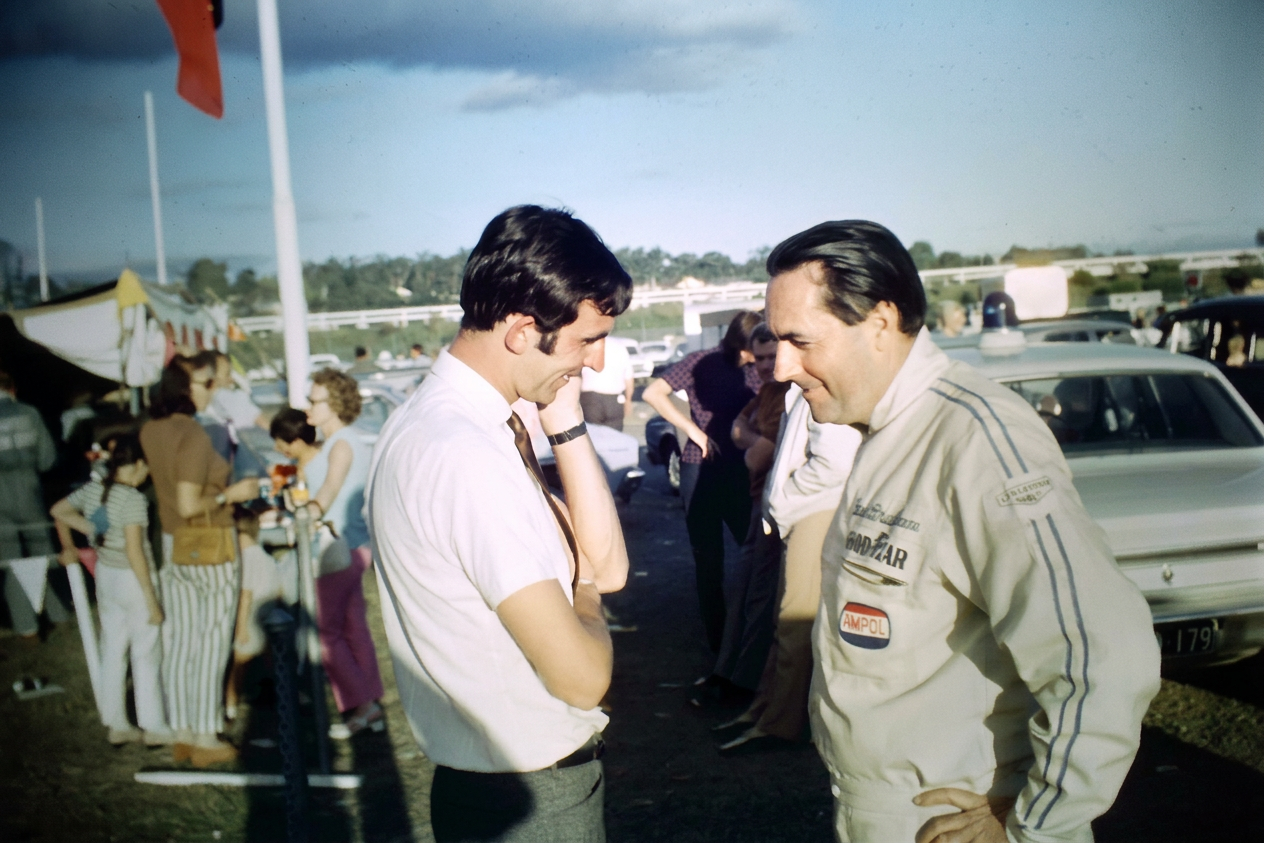
Tim’s all togged up nicely with a collar and tie to meet his new employer during the February 16, 1969 Sandown Tasman Cup round. See here:https://primotipo.com/2026/08/23/brabham-bt31-repco-take-3-by-mark-bisset/ Sandown’s old pits were heaven on a stick for teenage enthusiasts with a capacity to jump fences! My pocket money didn’t extend to such luxuries as pit passes.
Credits…
Tim Schenken Archive, David Luff, Allen Brown’s oldracingcars.com, F2 Register Fastlane
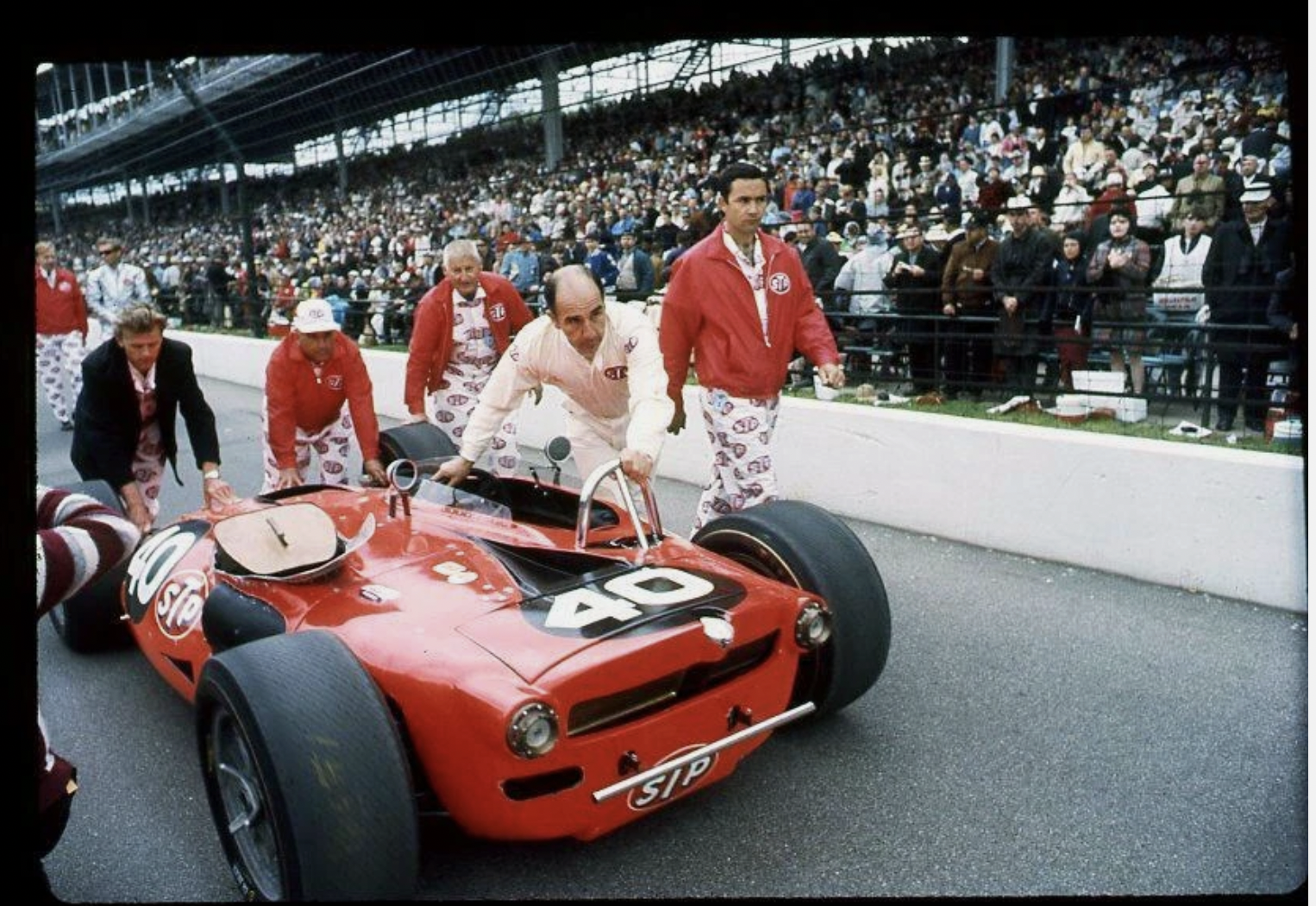
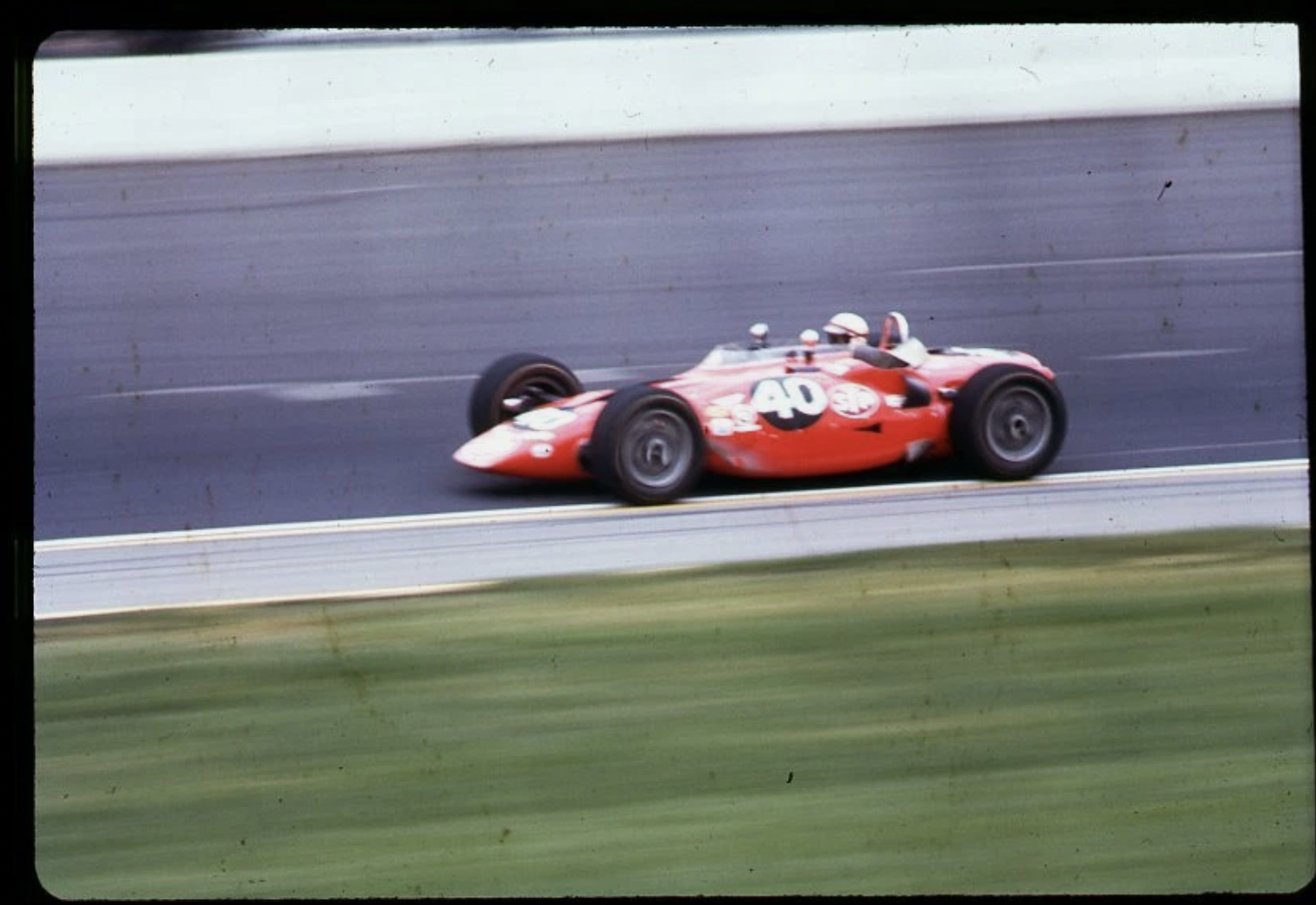
Parnelli Jones and the STP Team push his Granatelli 67 Pratt & Whitney Ferguson 4WD wedge onto the grid of the May 31, 1967 Memorial Day classic at Indianapolis.
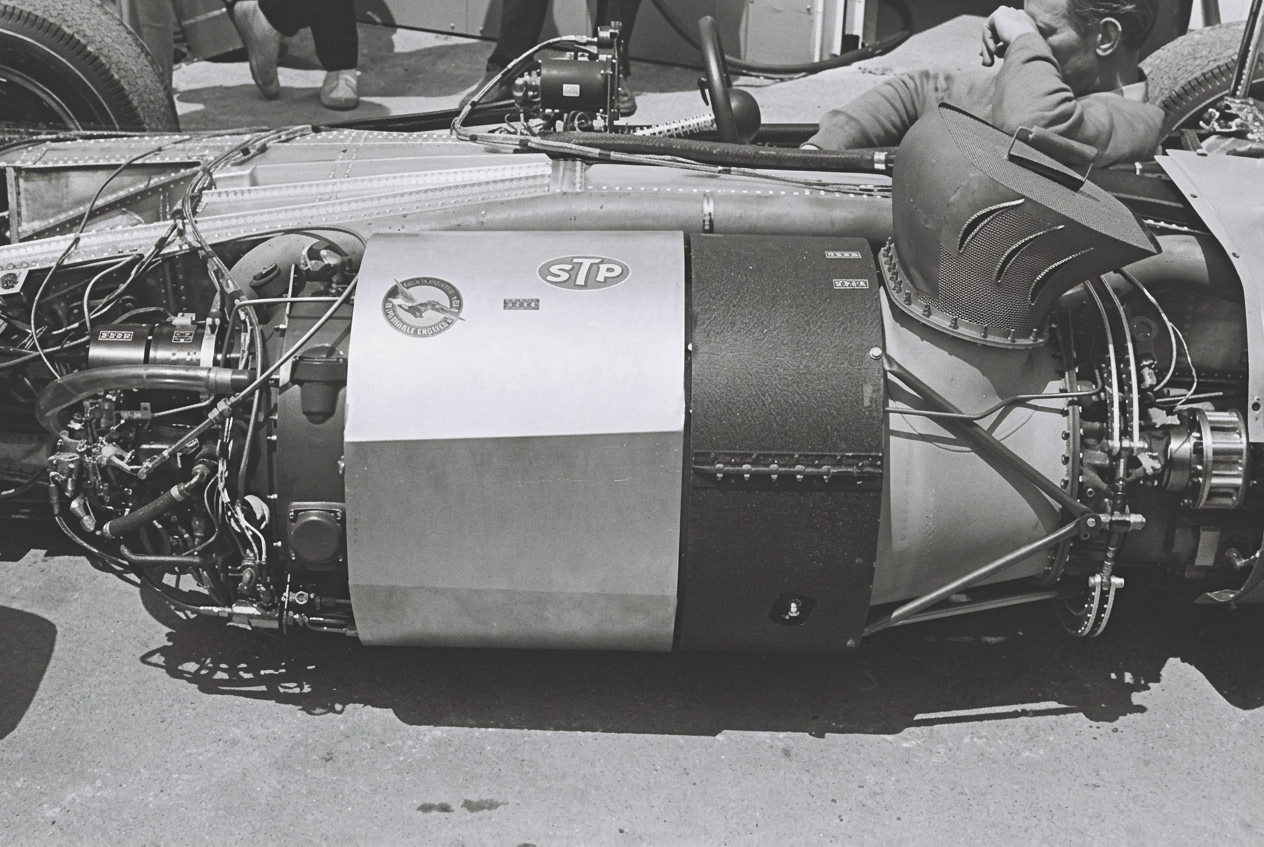
The outrageous Ken Wallis built 4WD ‘Silent Sam’ – P&W ST6B-62 gas turbine on the left of the chassis, driver on the right – completely dominated the race, leading 171 laps but not the critical one. When leading comfortably, a small transmission bearing failed, gifting the victory to AJ Foyt’s Coyote 67 Ford.
(A Granatelli)Business end – make that side! – of Wallis’ magic machine (D Friedman)(Unattributed)
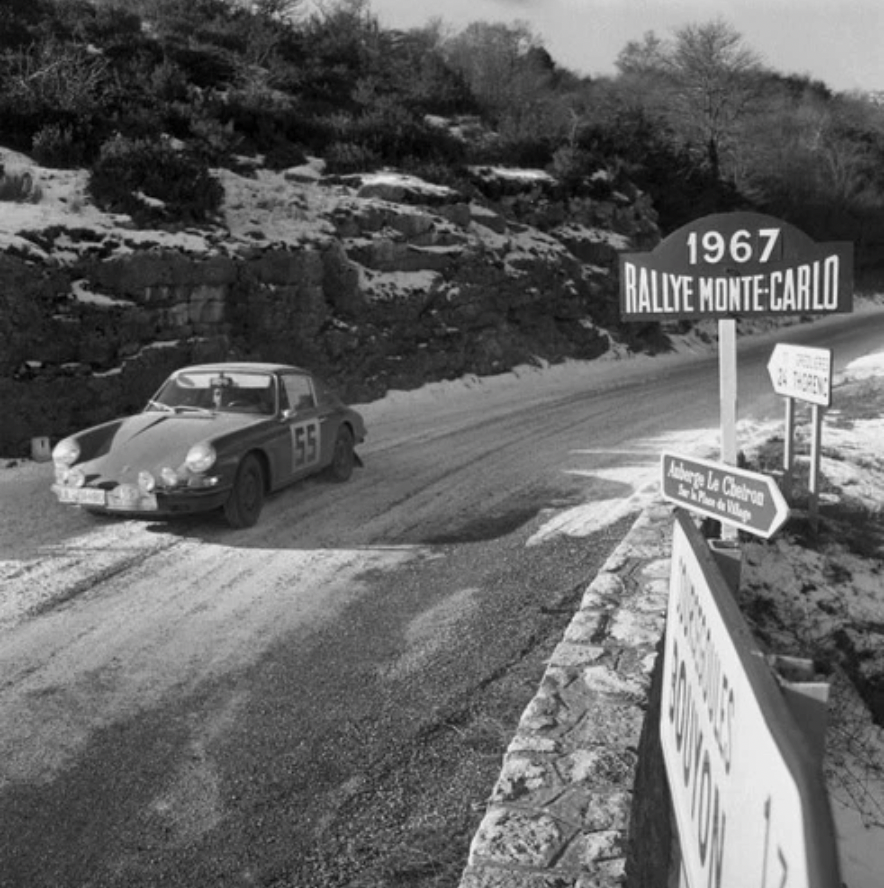
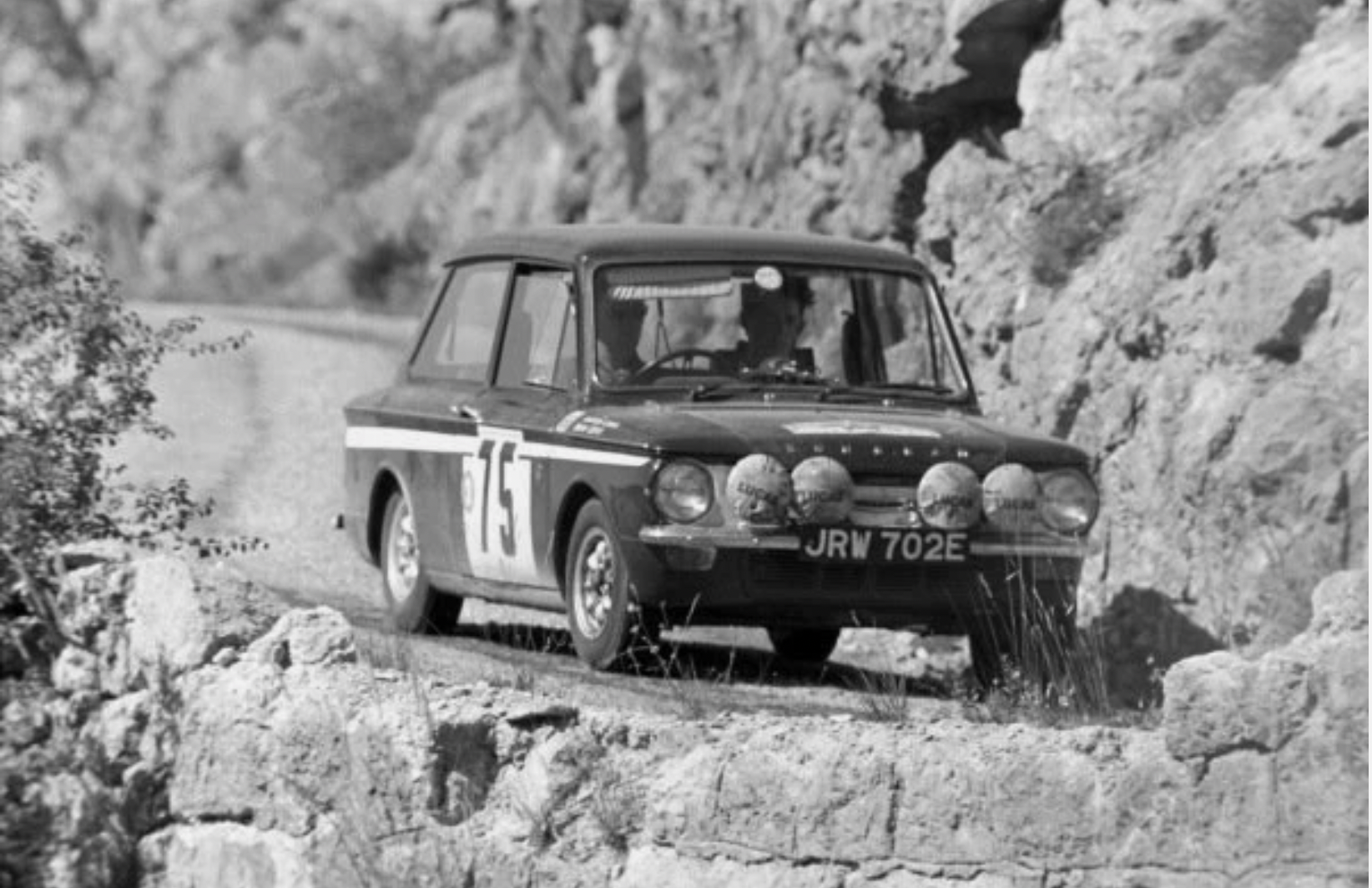
Magic shot of the Dieter Benz/Werner Brendel Porsche 911S on the way to 29th place in the 1967 Monte Carlo Rally.
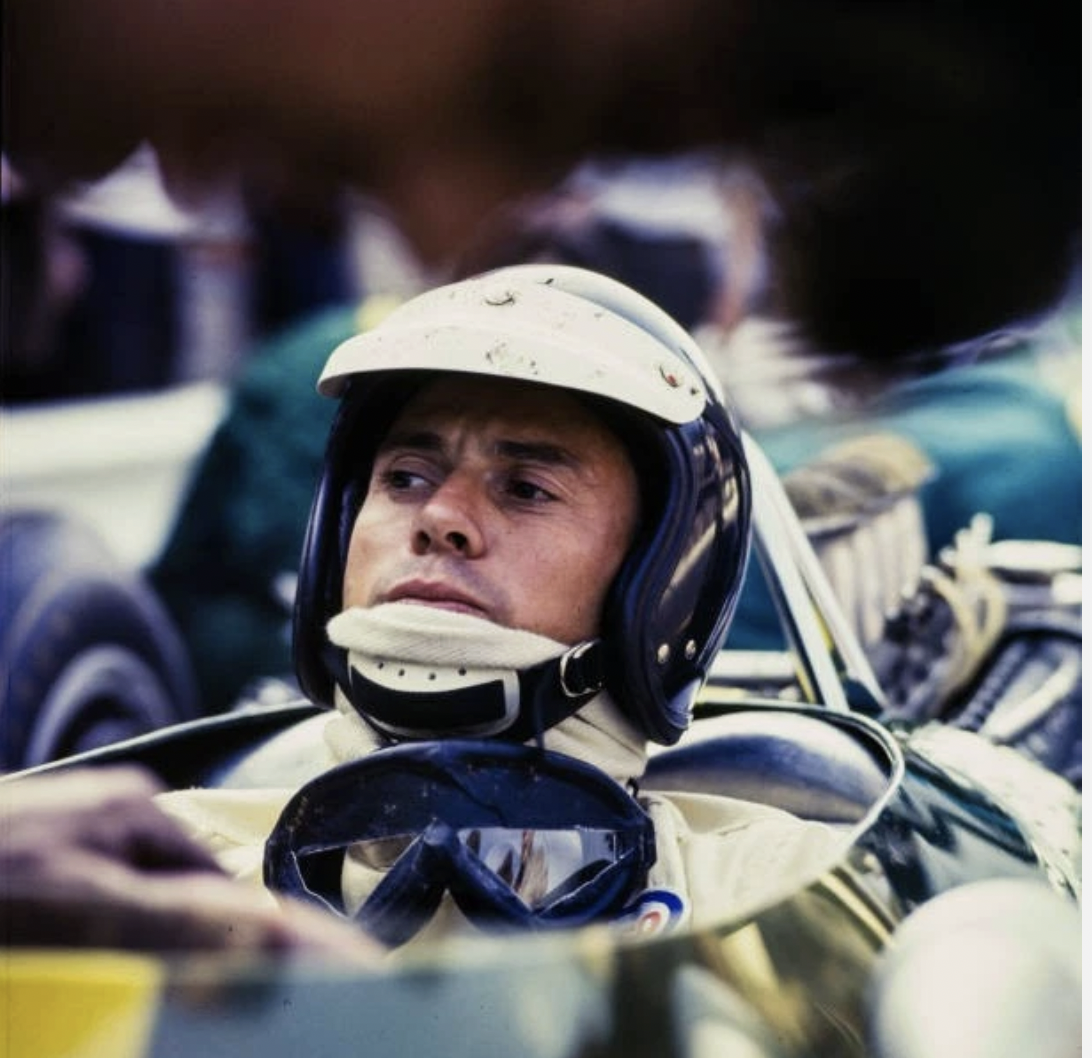
Jim Clark – a wonderful portrait – just before the start of the Belgian Grand Prix at Spa on June 18, 1967.
Clark was sixth in his Lotus 49 Ford Cosworth, while Dan Gurney, in his Eagle Mk1 Weslake, made history up front by becoming a member of the small club of racers who won a Grand Prix in a car of their own construction: Alfieri Maserati (depending upon your definition of a Grand Prix), Jack Brabham, Bruce McLaren and Dan.
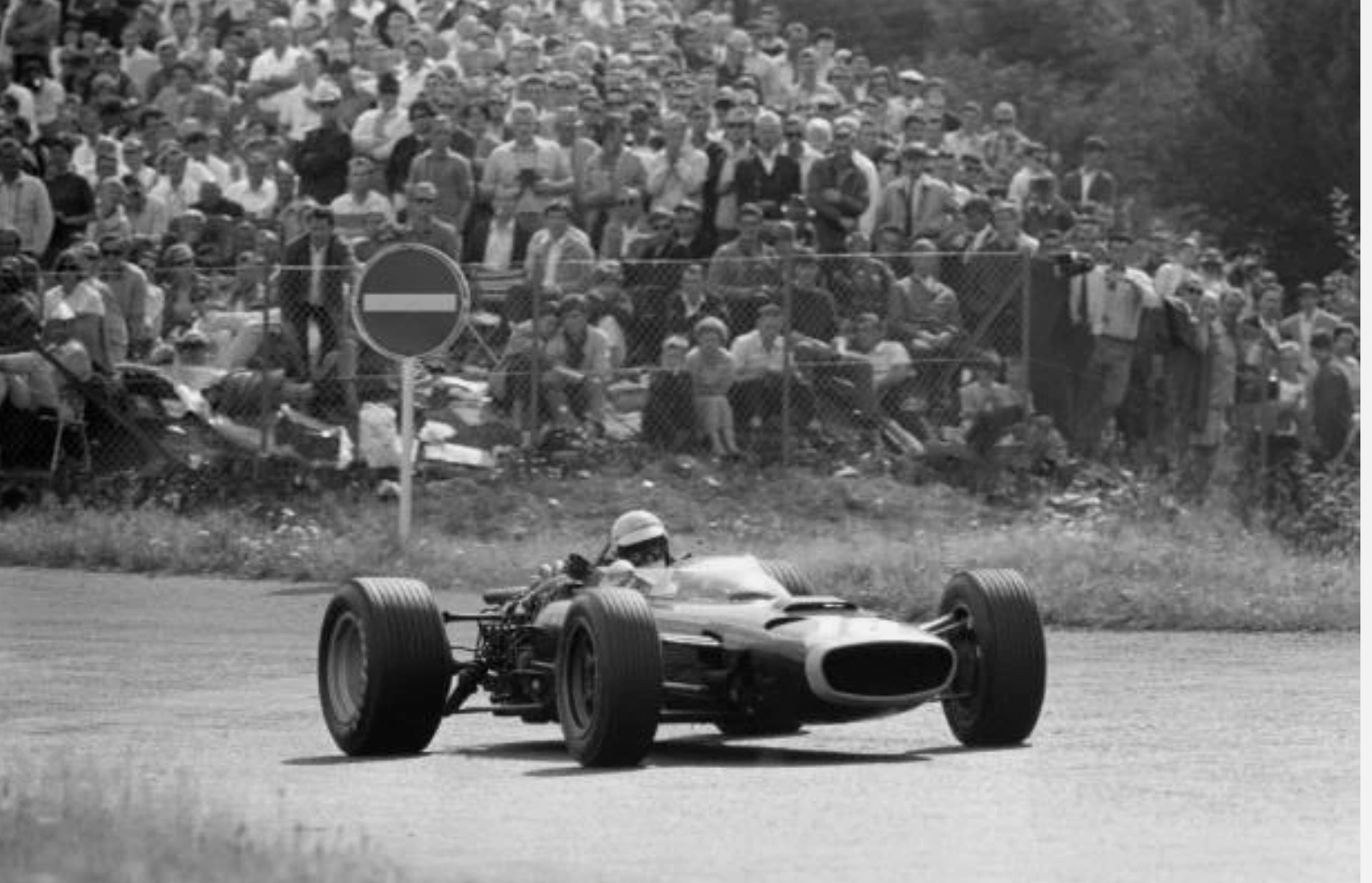
Newbee Chris Irwin wrestles the challenging Reg Parnell Racing BRM P83 H16 around the Nürburgring during the 1967 German Grand Prix, Q15 and a meritorious seventh, albeit two laps adrift of the light and nimble Brabham BT24 Repcos raced by winner Hulme from Team Chieftain, Jack Brabham.
Sadly, it was on the Nurburgring that Chris’s impressive career came to an end during practice for the May 19, 1968 1000 km aboard a Ford F3L, see here: https://primotipo.com/2018/06/21/skin-deep-beauty/
(Unattributed)
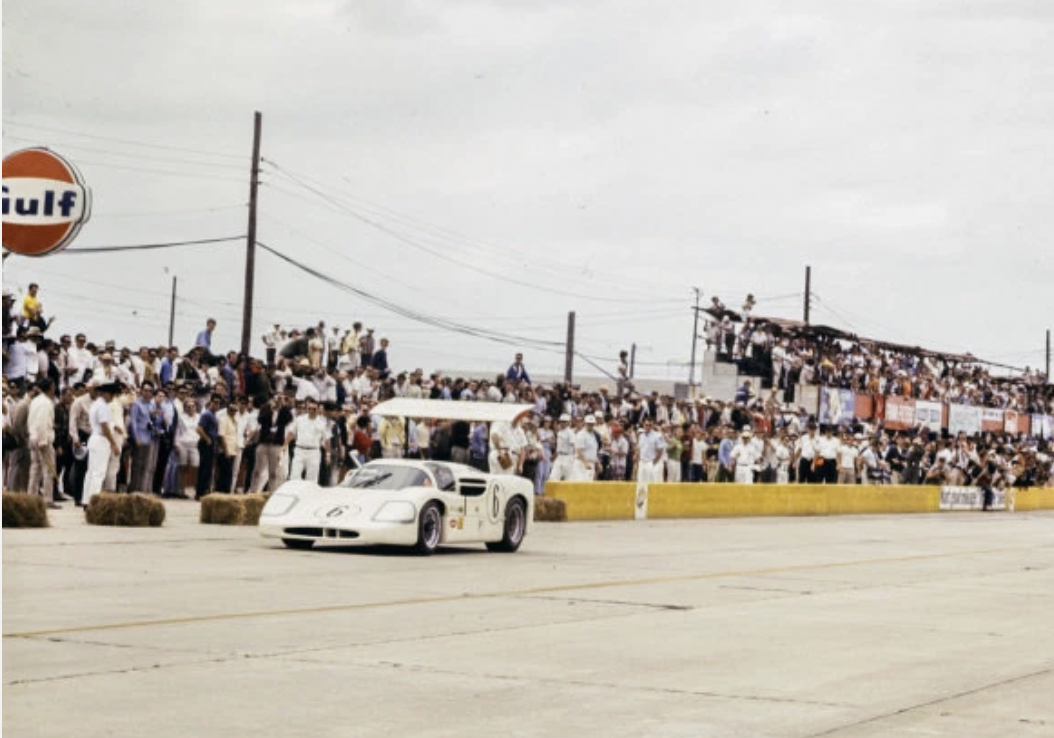
The Mike Spence/Jim Hall Chaparral 2F Chev leaves the pits after a stop in the 1967 Sebring 12-Hours
Below, the McLaren/Andretti Ford Mk4 rumbles its way to an historic victory over the AJ Foyt/Lloyd Ruby Ford GT Mk2 and Scooter Patrick/Gerhard Mitter, Porsche 910.
The Spence/Hall Chaparral 2F Chev was classified 37th but was out after 145 laps with differential failure, while teammates Bob Johnson/Bruce Jennings in a Chaparral 2D Chev were classified 41st after ignition failure after 128 laps. Feature about the 2F here:https://primotipo.com/2014/06/26/67-spa-1000km-chaparral-2f/
(Unattributed)(Unattributed)
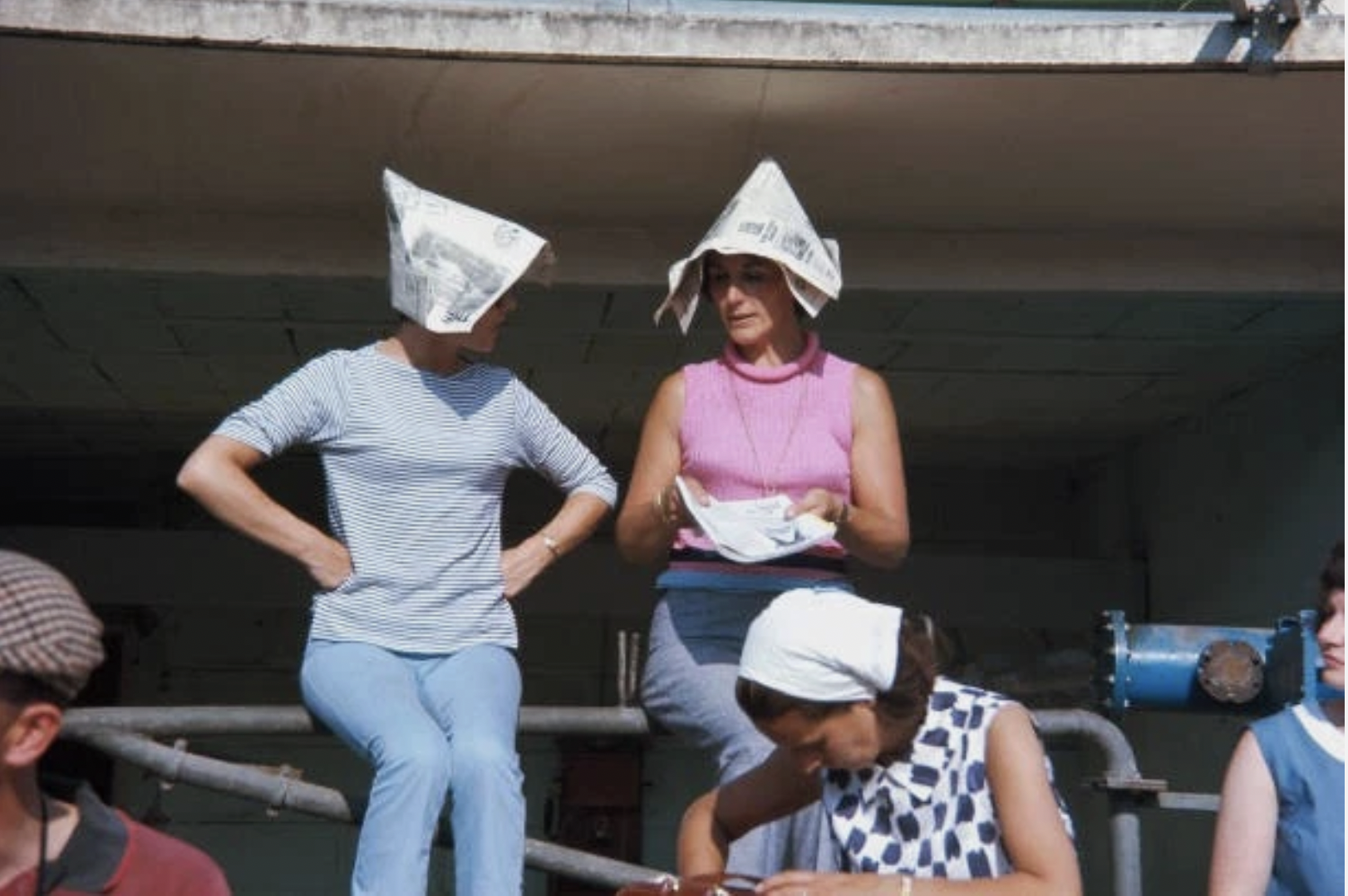
The Owen Racing Organisation in action during the French Grand Prix meeting at Le Mans in July. Helen Stewart and Bette Hill get to work with their copies of The Times to combat the summer sun. More on the meeting here:https://primotipo.com/2016/02/03/le-mans-french-gp-1967-powerrrr/
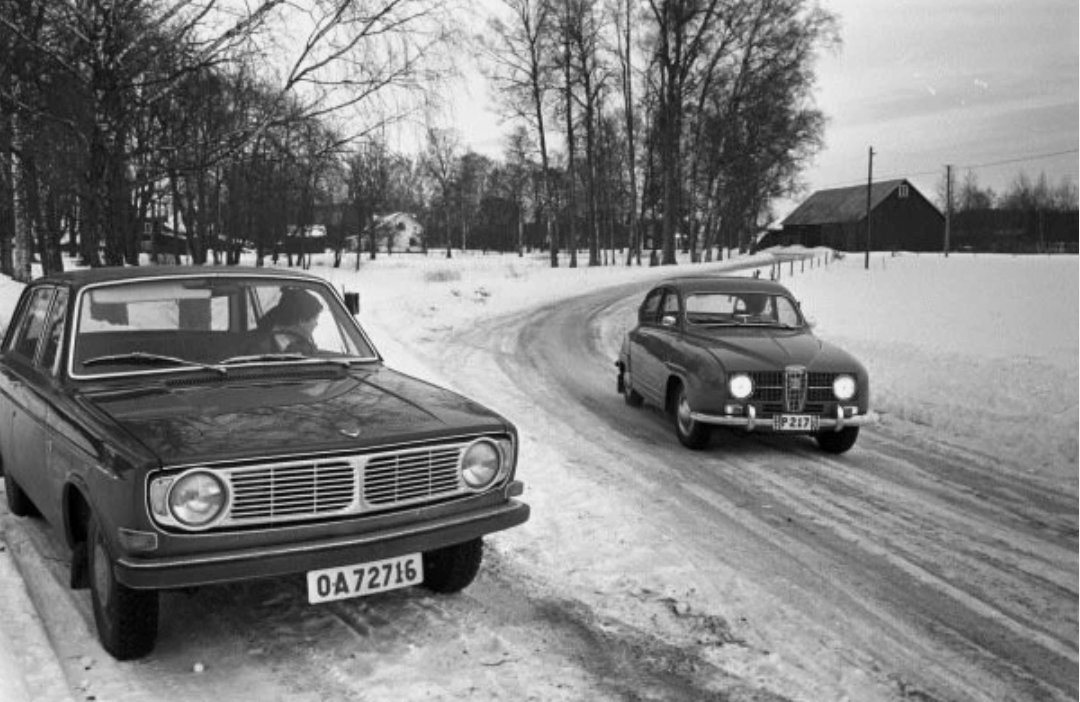
Team Sweden shot of a Volvo 144 and Saab 96 V4 place unknown…
(Unattributed)(Unatt-MBisset-WordPress)
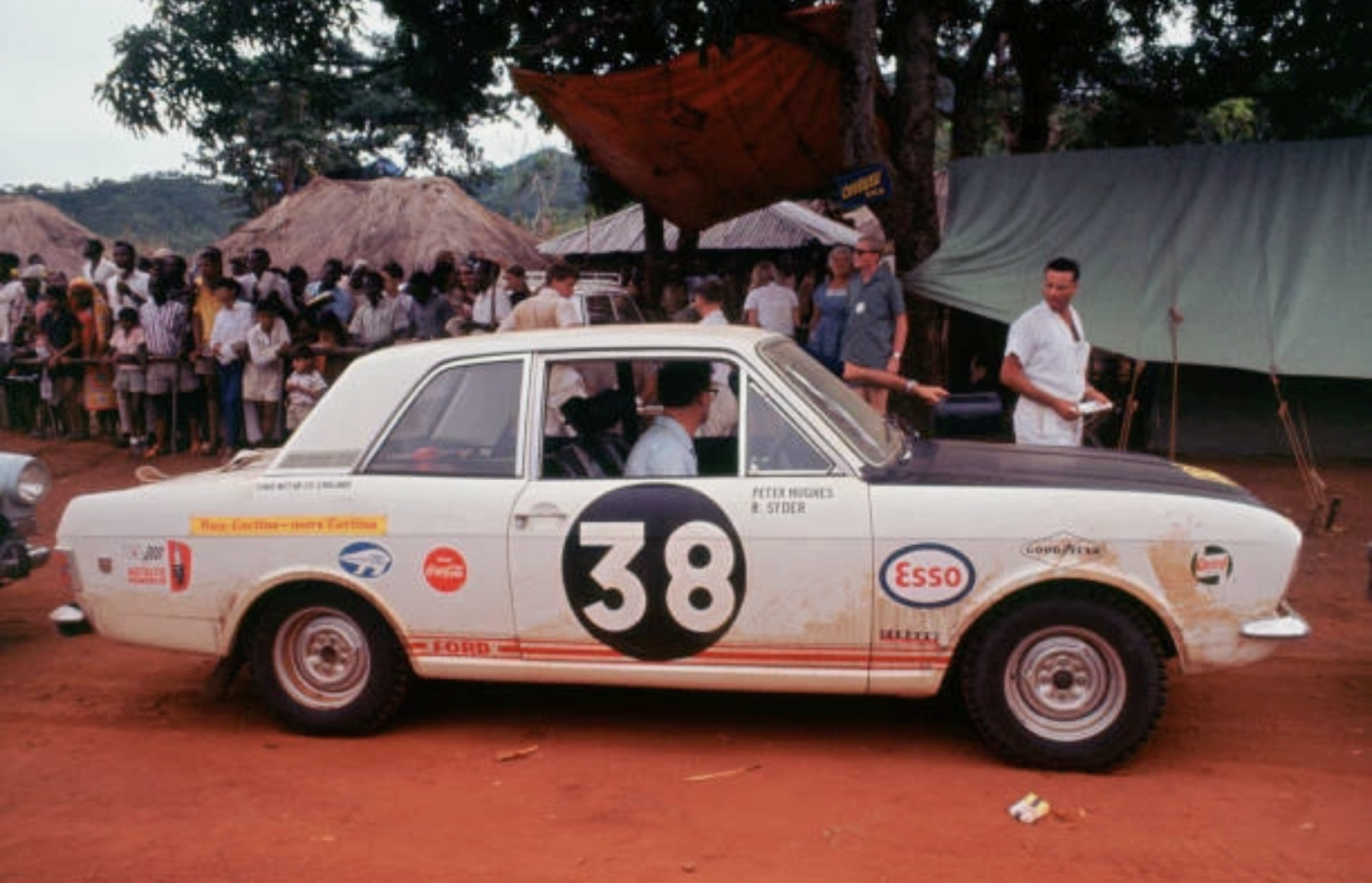
The third-place Ford Cortina GT Mk2 crewed by Peter Hughes and Robert E Syder (yep, WordPress has fudged Syder’s name) during the March 1967 East African Safari. The Bert Shankland /Chris Rothwell Peugeot 404 won with the Vic Preston/R Gerrish Lotus Cortina second.
(Unattributed)
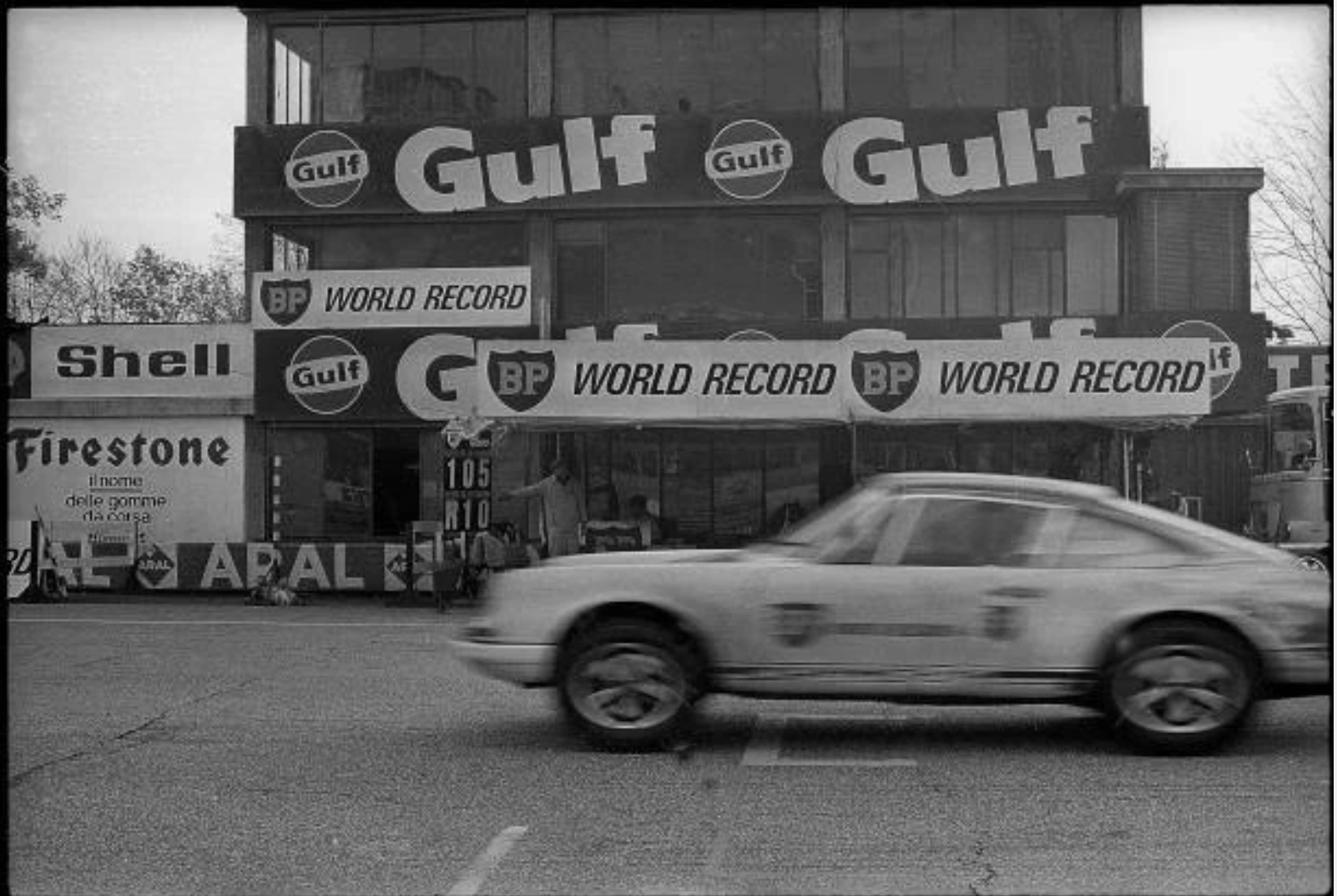
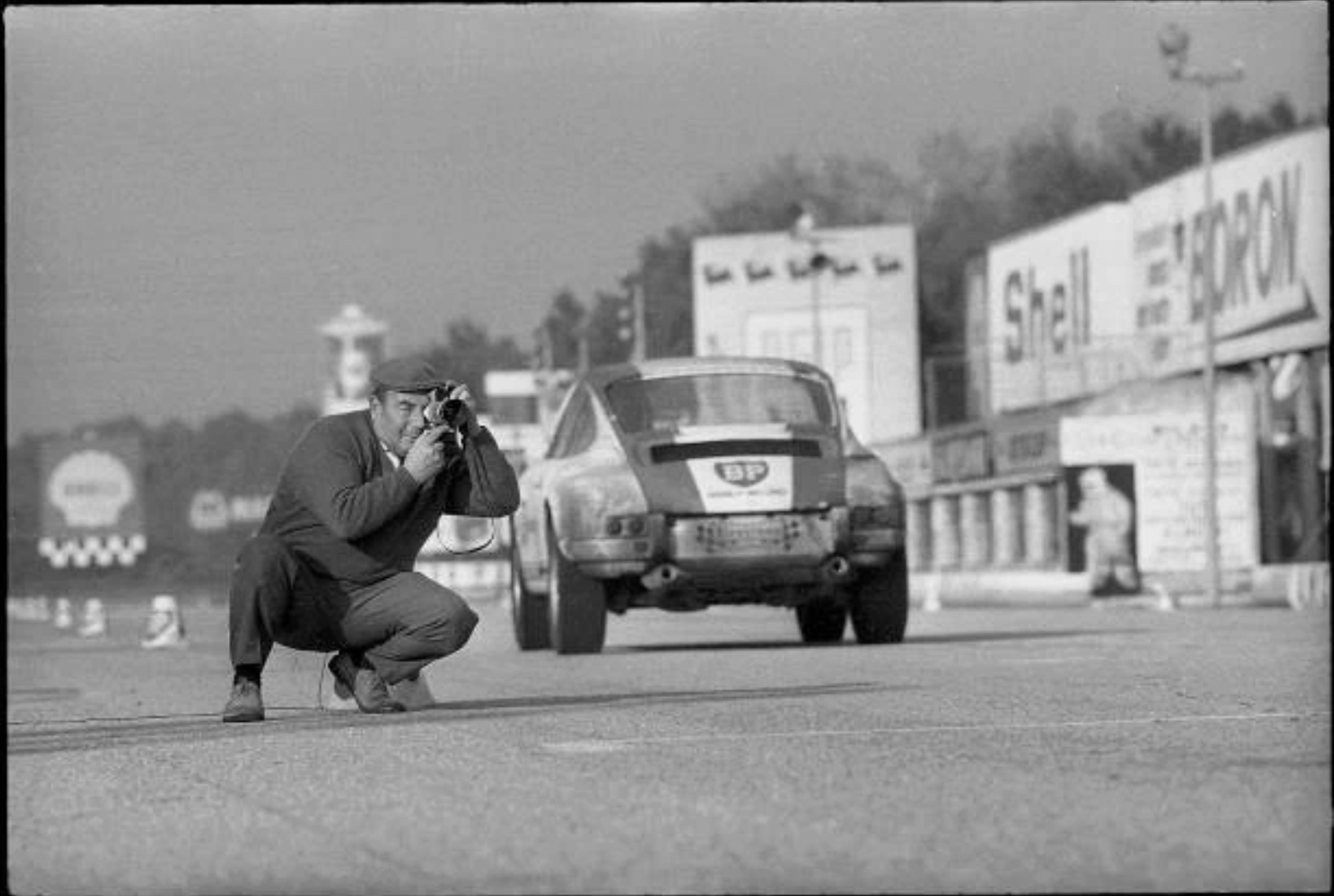
Jo Siffert, Dieter Spoerry, Rico Steinemann and Charles Vogele set five long-distance world records in a Porsche 911R #001R at Monza between 29 October and November 4, 1967: 72 and 96 hours, 15000 km, 10000 miles, and 20000 km, the latter at 130.02mph. They also bagged 14 international class records.
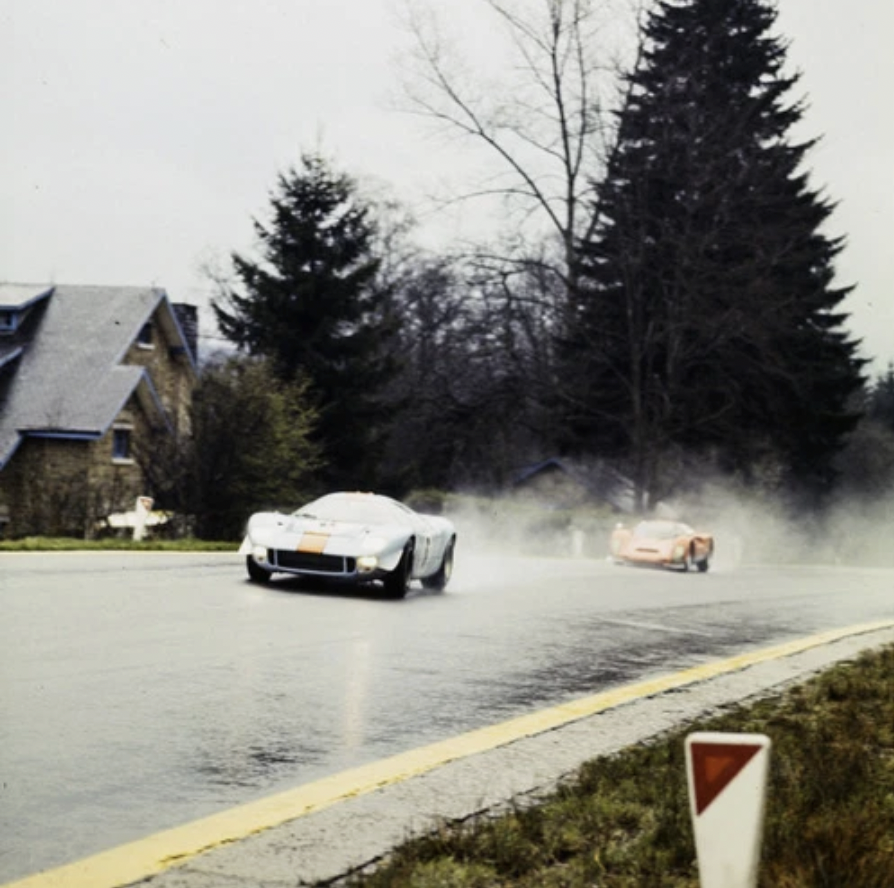
The victorious Jacky Ickx/Dick Thompson JW Automotive Ford Mirage M1 battles the elements of the Ardennes Forest during the May 1 1967 Spa 1000km. The Siffert/Hermann Porsche 910 finished second, and the Attwood/Bianchi Maranello Concessionaires Ferrari 412P finished third (below).
David Fox did some work on identifying the ‘red 906’. It’s one of the Racing Team Holland orange 906s: either the #51 Ben Pon/Gijs van Lennep car which didn’t survive practice thanks to Gij’s misfortune during practice after the car’s rear bodywork parted company with the chassis, or the #54 Gunther Huber/Ben Pon car which was popped on its lid by Huber on the first lap! All good for the Porsche spares dept but sub-optimal for the Dutch team’s budget.
(Unattributed)(Unattributed)
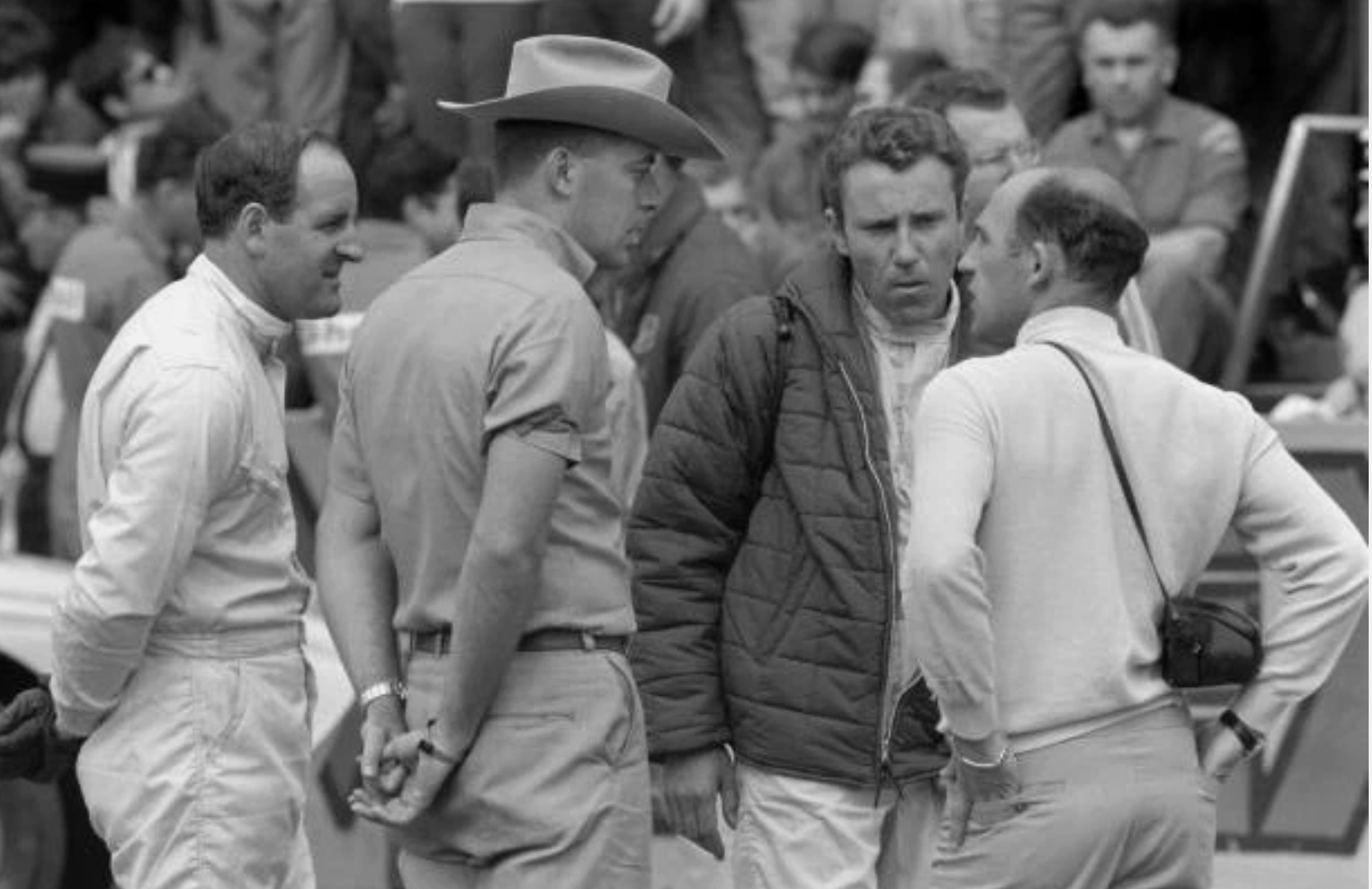
Council of war at Le Mans in 1967: Denny Hulme, Carroll Smith (I think), Paul Hawkins and Stirling Moss.
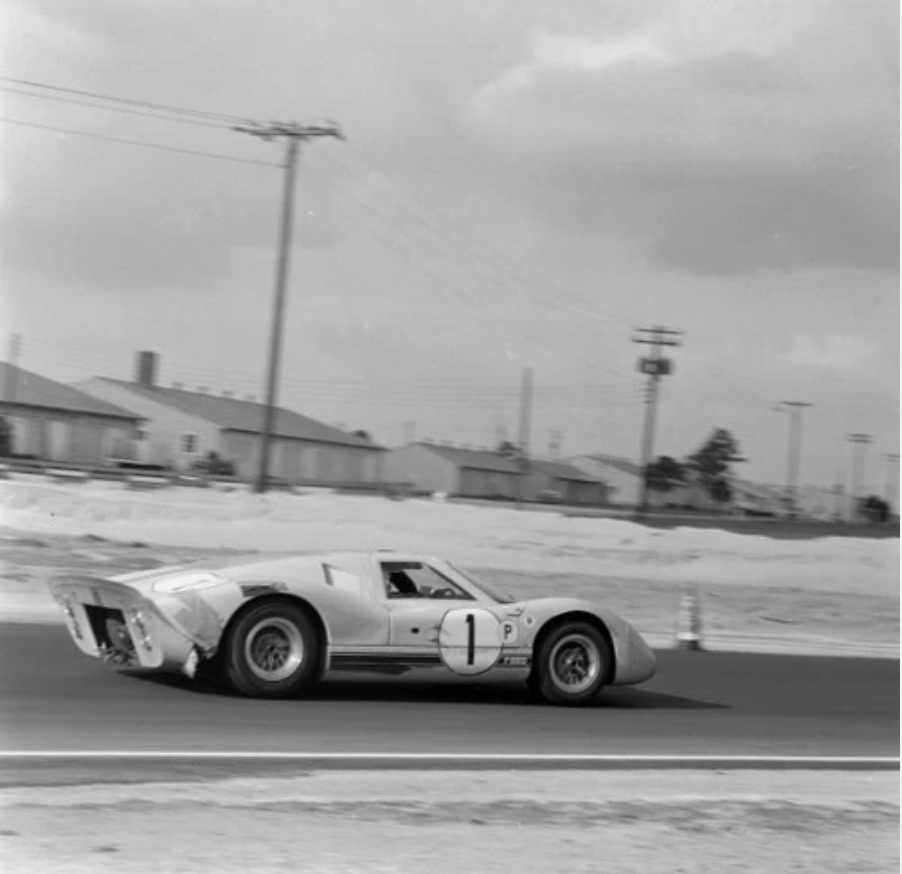
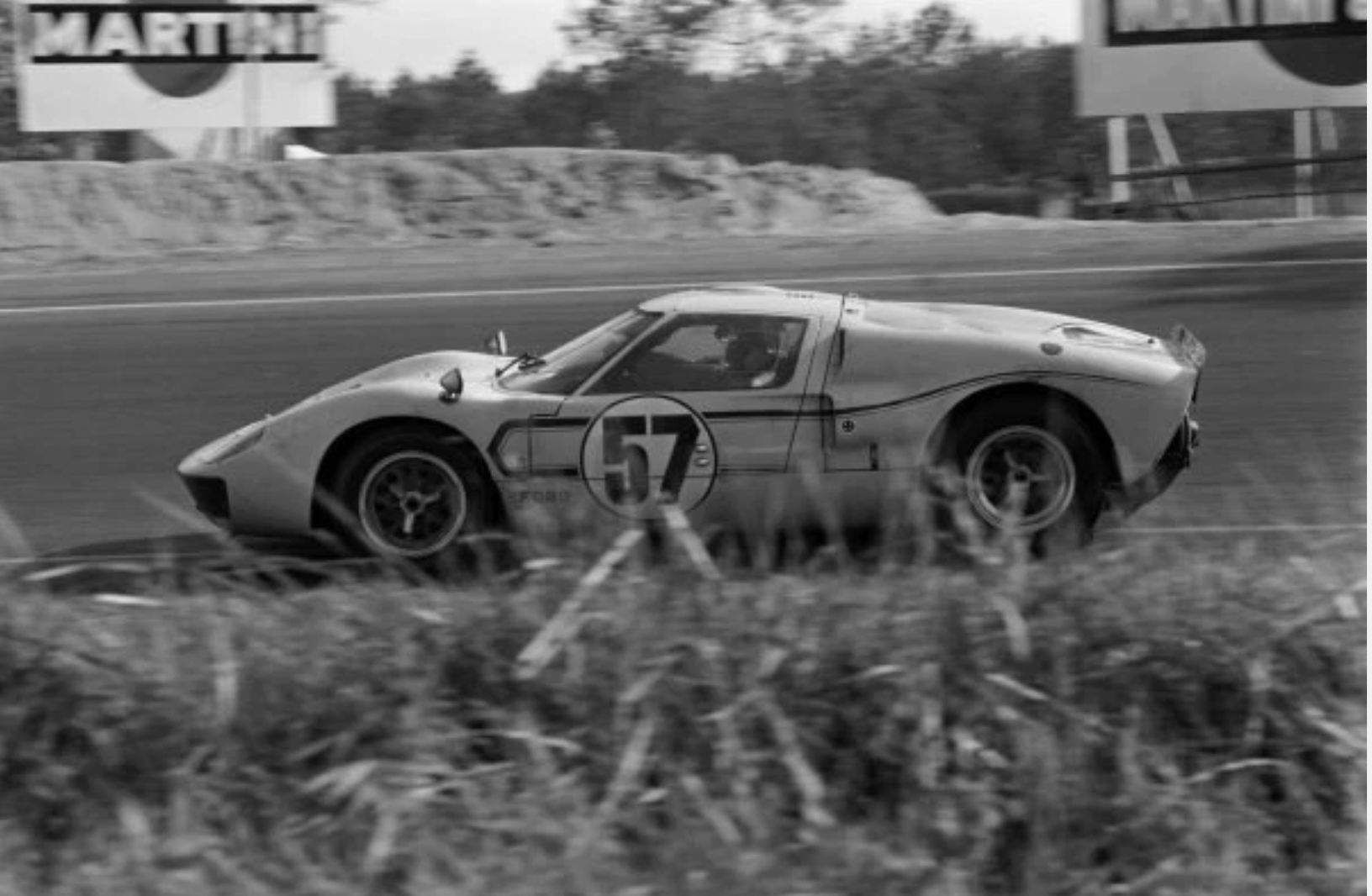
Paul Hawkins, at the wheel of the Shelby American Ford Mk2B he shared with Ronnie Bucknum during the race below. DNF at 6PM after 271 laps with a dropped valve. See here for a long feature on the race won by the Gurney/Foyt Ford Mk4:https://primotipo.com/2015/09/24/le-mans-1967/
(LAT)(Unattributed)
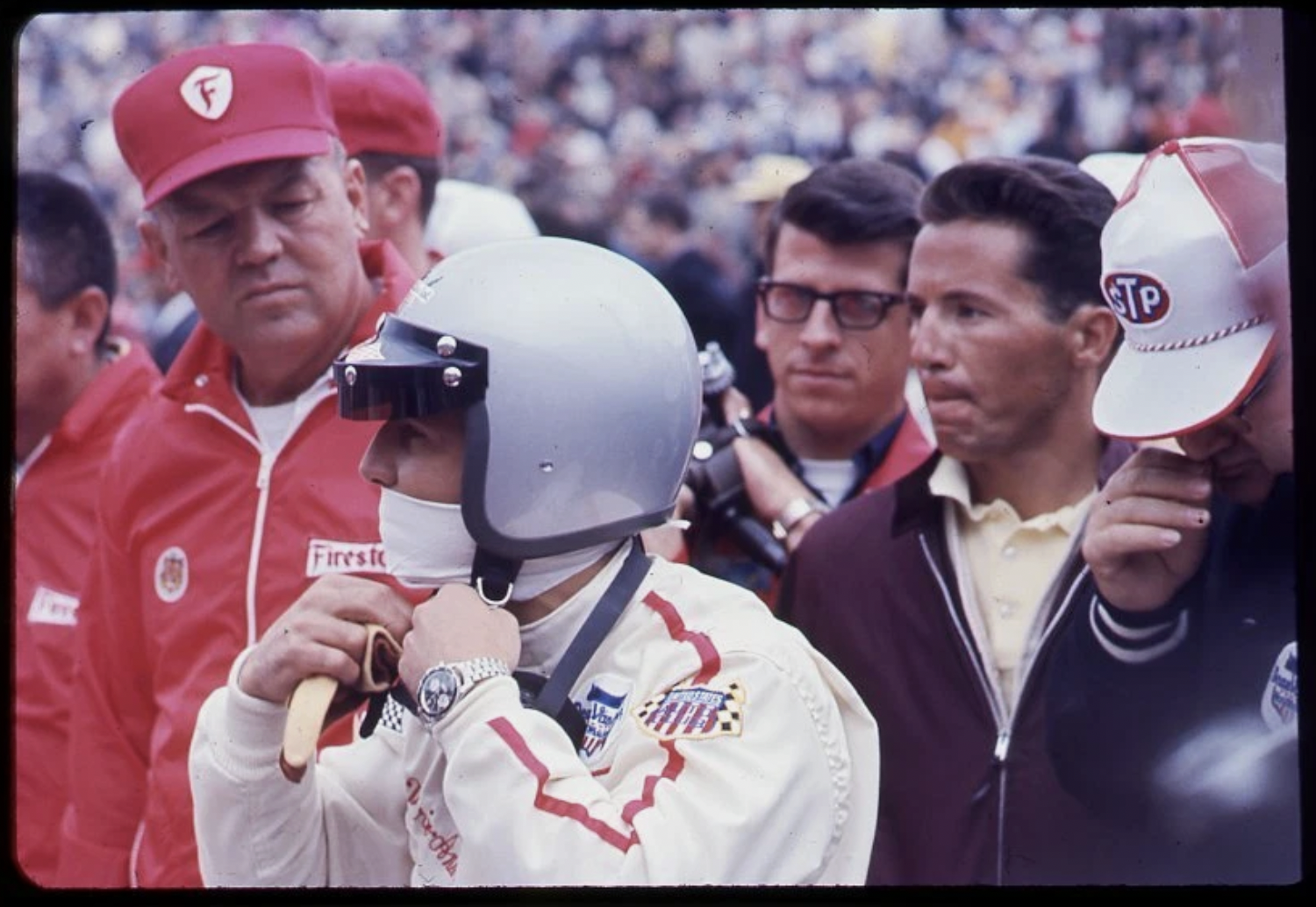
Mario Andretti togs up for the 1967 Indy 500: pole and DNF after 58 laps; lost wheel, Hawk 2 Ford V8. Nice watch. The bloke behind in the light yellow shirt has to be Mario’s brother, Aldo?
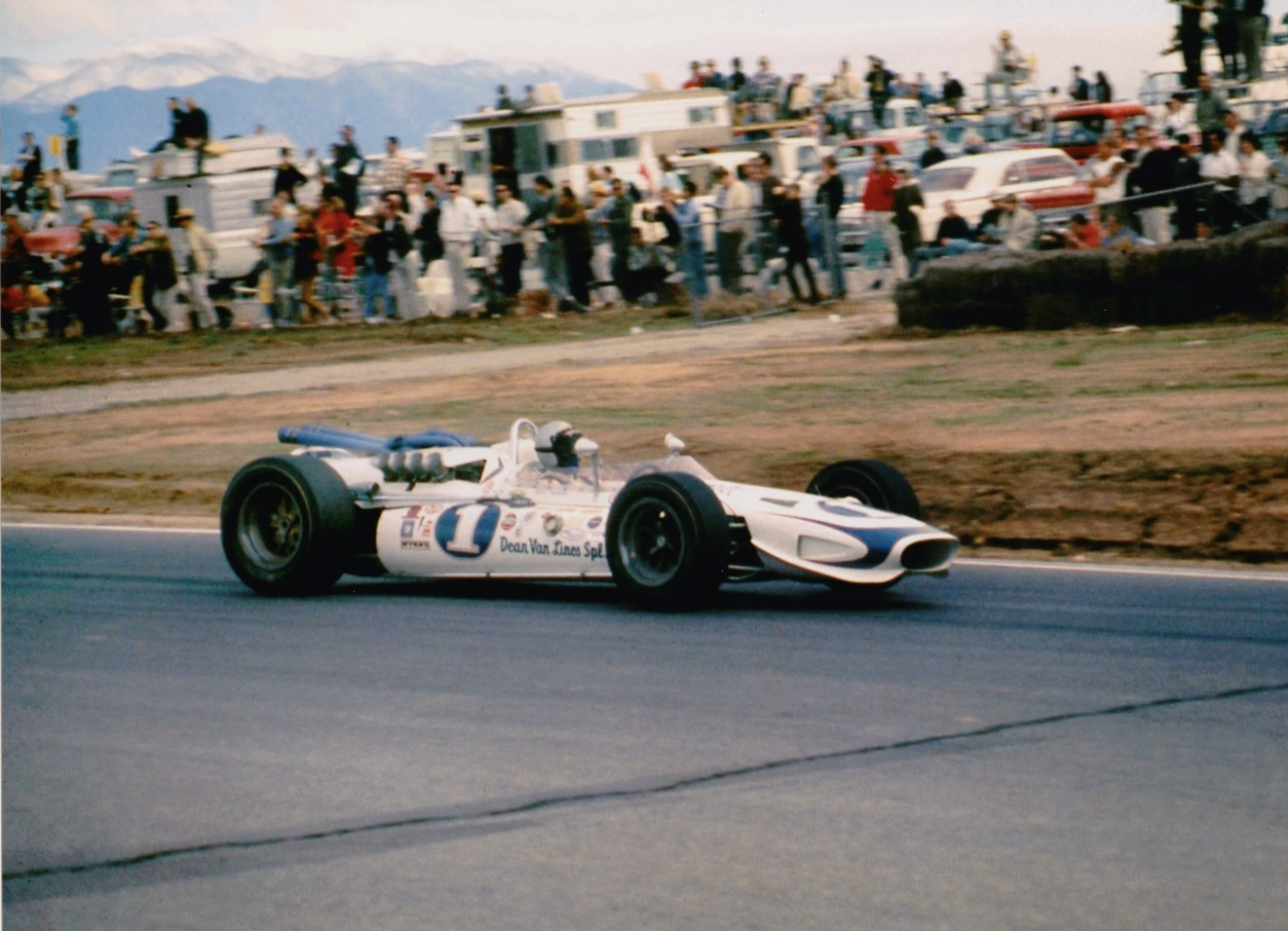
Andretti below on the way to third place in the Rex Mays 300 at Riverside on November 26, 1967.
Quick research of Allen Brown’s Old Racing Cars tells me Mario’s Indy chassis was a new for 1967 Hawk 2, whereas the chassis he mainly used on road courses that year was the Brawner Hawk Ford, one of two copies of Ron Tauranac’s Brabham BT12 commissioned of Clint Brawner, by BT12 owner John Zink after Jim McIlreath crashed it badly at Trenton in October 1964. So, on the balance of probabilities, Mario is in the Brawner Hawk Ford below. What a shot it is too…
(Unattributed)(MotorSport)
Jack Brabham raced BT19-1 – his 1966 championship-winning chassis – into 1967, fitted with Norman Wilson’s RB740 3-litre V8s until Ron Tauranac’s BT24 was ready. Brabham tested his BT24 740 at Zandvoort but elected to race ye-olde-faithful BT19 (above).
BT19-1’s final in-period race netted Jack third place in the November 12, 1967, non-championship Spanish Grand Prix at Jarama.
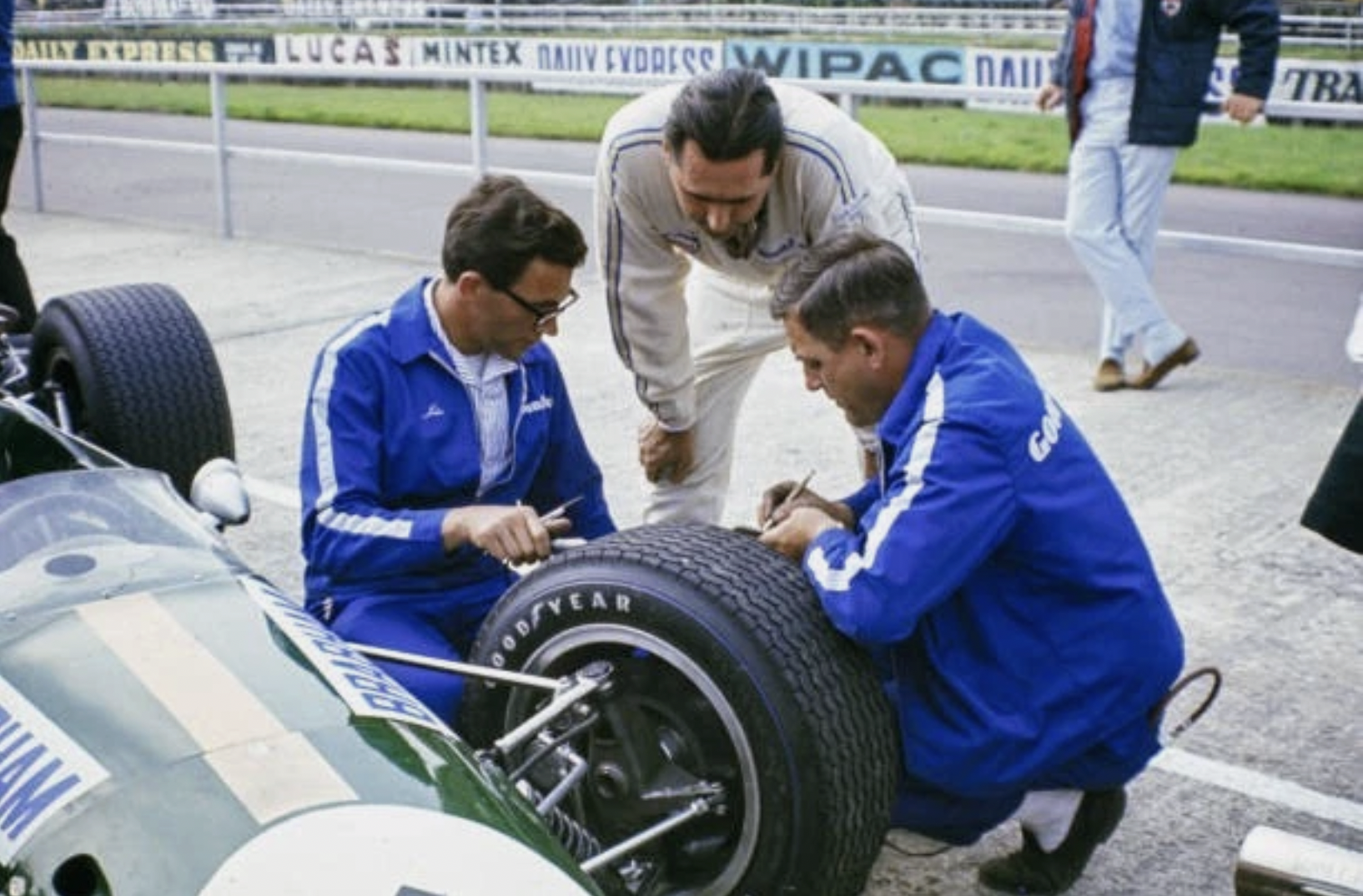
Below, Jack is working with two Goodyear technicians on his BT24 Repco 740 during the British Grand Prix weekend in July. Clark won from Hulme and Amon: Lotus 49, Brabham BT24 and Ferrari 312. Jack was fourth, having started from pole. More on the BT24 here:https://primotipo.com/2017/12/28/give-us-a-cuddle-sweetie/
(Unattributed)(LAT)
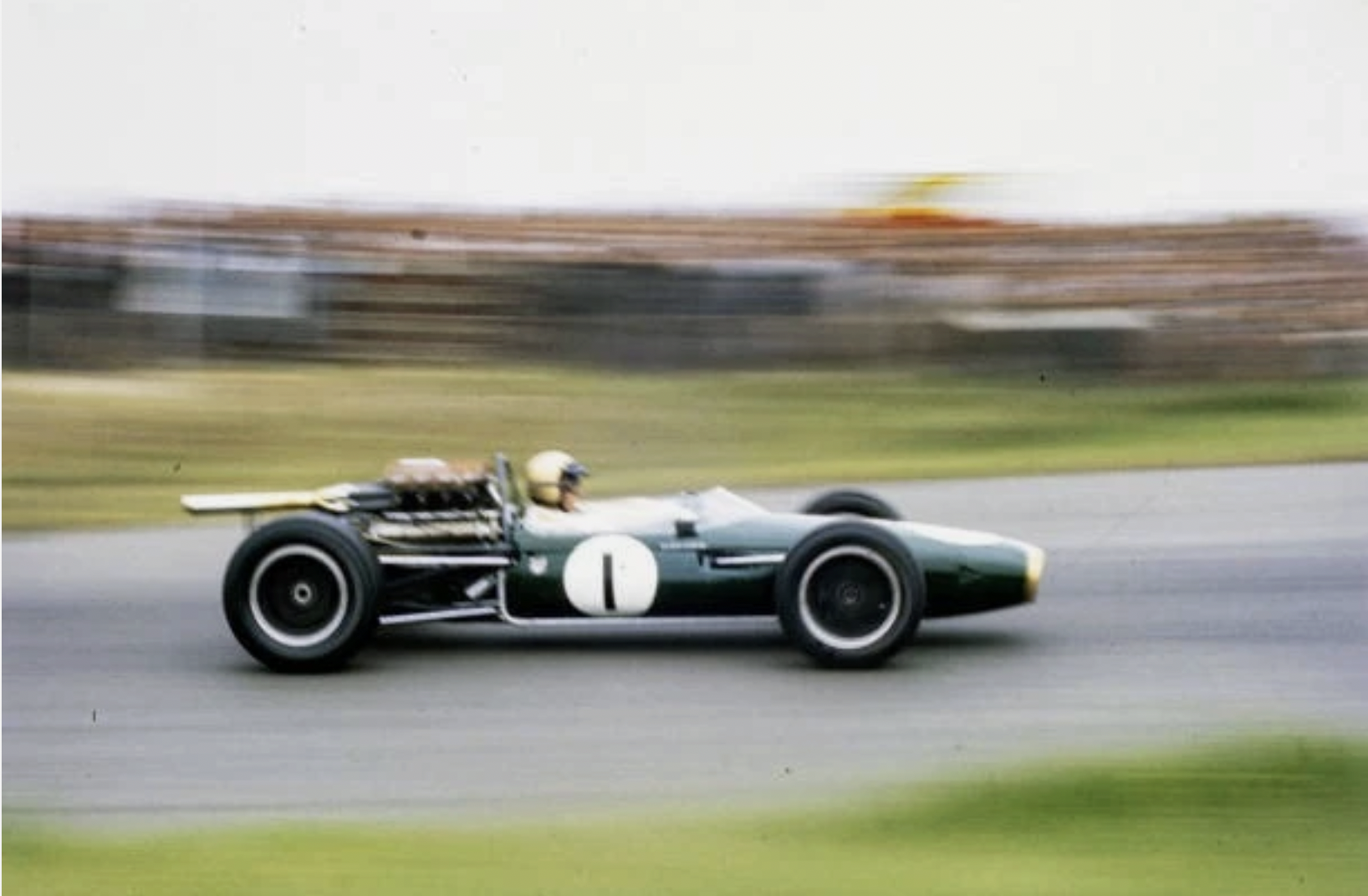
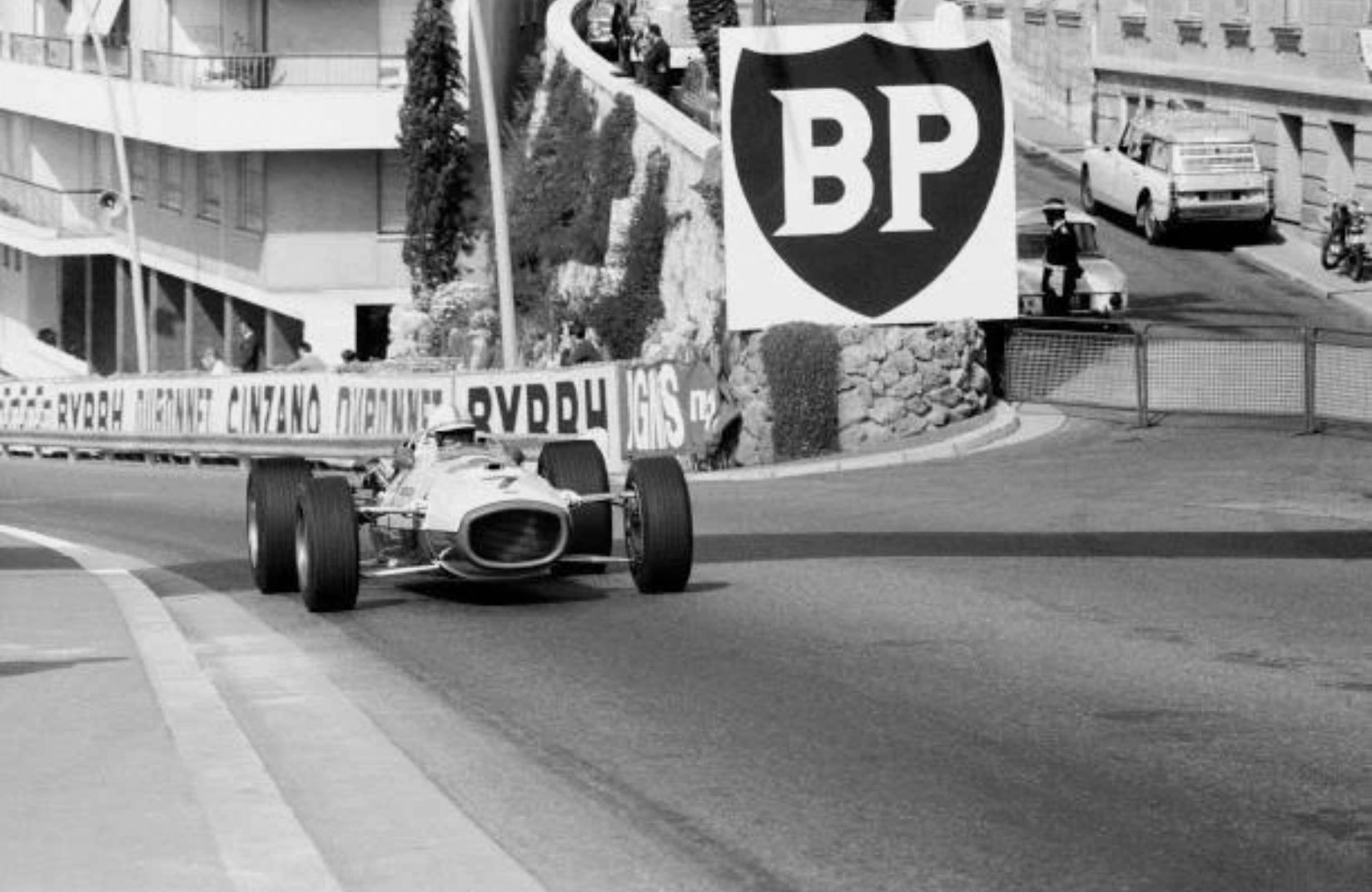
John Surtees blasts his hefty Honda RA273 V12 up the hill from St Devote during the tragic May 7, 1967 Monaco Grand Prix. Q3 and DNF engine after 32 of the 100 laps completed by the victorious Denny Hulme; Denny’s first championship GP victory.
Credits…
Andy Granatelli, David Friedman, eBay, from whence the rest of these unattributed photographs were sourced. In some cases, I’ve guessed the organisation from which the shot came, David Fox
Tailpiece…
(LAT-MBisset-WordPress)
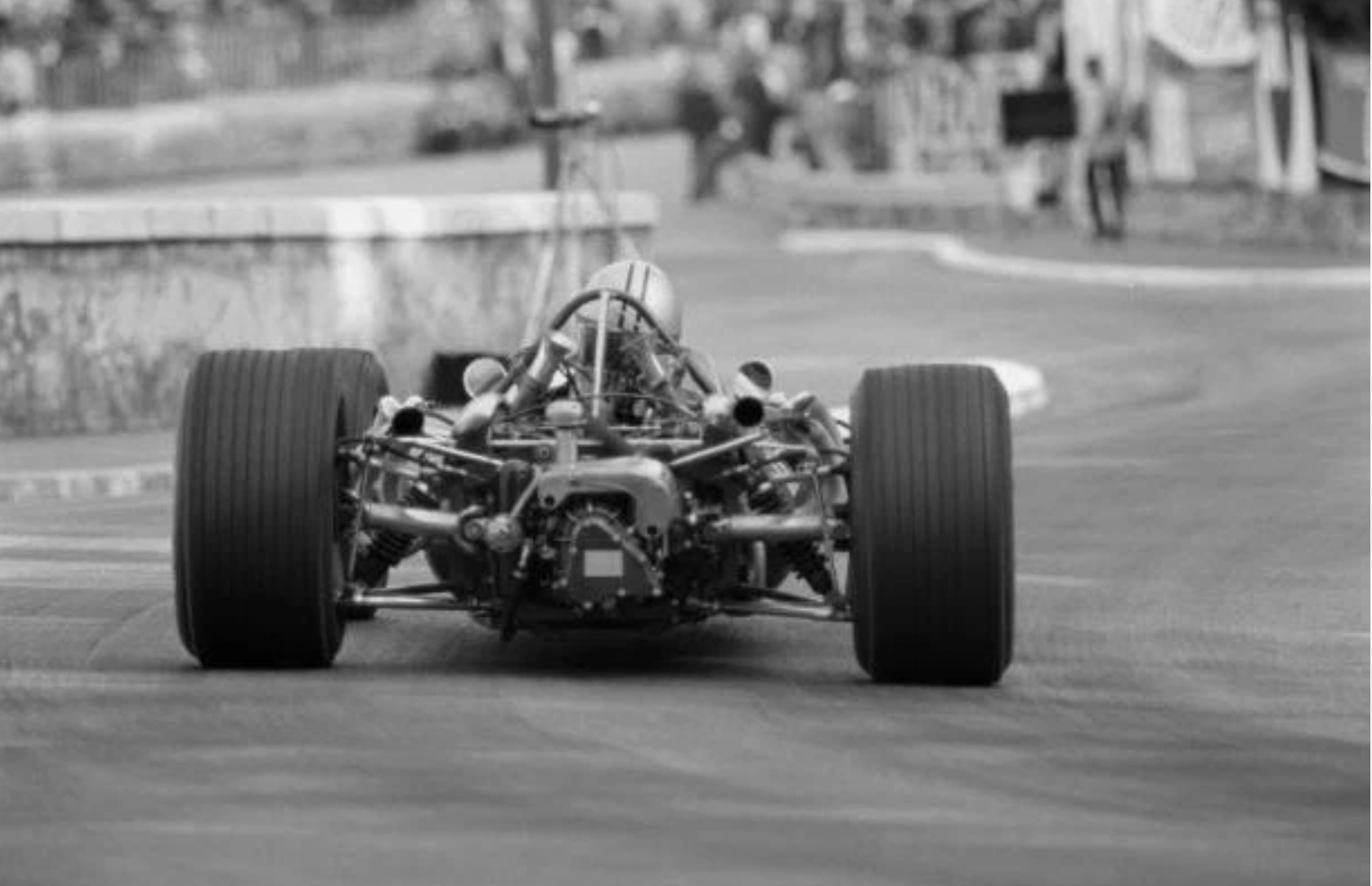
The final F1 championship race win for the first of Repco’s F1 V8s, the Phil Irving-designed and drawn RB620, was in the back of Denny’s BT20 #F1-2-66 – his regular ’66 car – when the Kiwi won the 1967 Monaco GP (above). His first win of the season on the way to the 1967 World Championship.
Pedro Rodriguez blasts off Long Bridge in his 2.5-litre BRM P126 #01 V12 during the South Pacific Trophy, Tasman Cup meeting over the March 4, 1968 weekend at Longford.
Montgomery Dunn (a King Street, Sydney snapper I’ve not heard of) took this ripper shot on March 2, ‘Rodriguez in the V12 BRM before it blew up in Saturday’s supporting race.’ Graham Hill won from Jim Clark and Chris Amon: Lotus 49 Ford DFW by two, and Ferrari Dino 246T.
Len Terry’s new Grand Prix design was blooded in the 1968 Tasman Cup, where P126/01 and P126/02 were shared by Pedro, Bruce McLaren and Richard Attwood. Bruce got the better of it with a victory in the Teretonga International.
Pedro raced P126/01 at Levin DNF fuel-pickup, Wigram sixth, Teretonga DNF engine, Surfers Paradise tenth, and Sandown DNF engine. But he spent most of his time, when Tim Parnell was out of sight, looking at the 2.1-litre V8 P261, which was fully sorted, to say the least! It was the tour spare, but Pedro raced it at Pukekohe for a DNF clutch, Warwick Farm, sixth and a splendid second at Longford where he nicked the spot from Frank Gardner’s Brabham BT23D Alfa Romeo 2.5 V8 in the streaming, atrocious rain on the last lap.
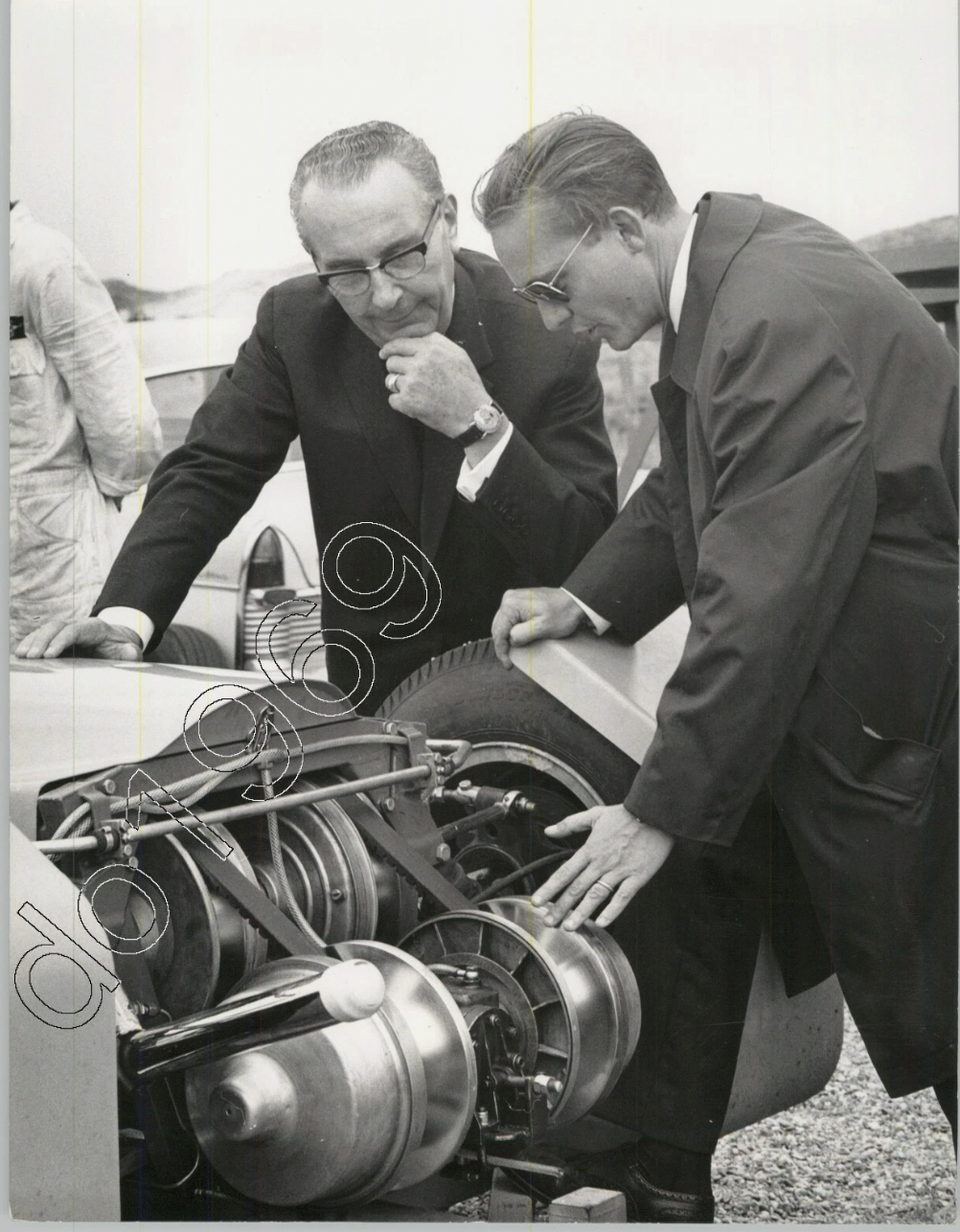
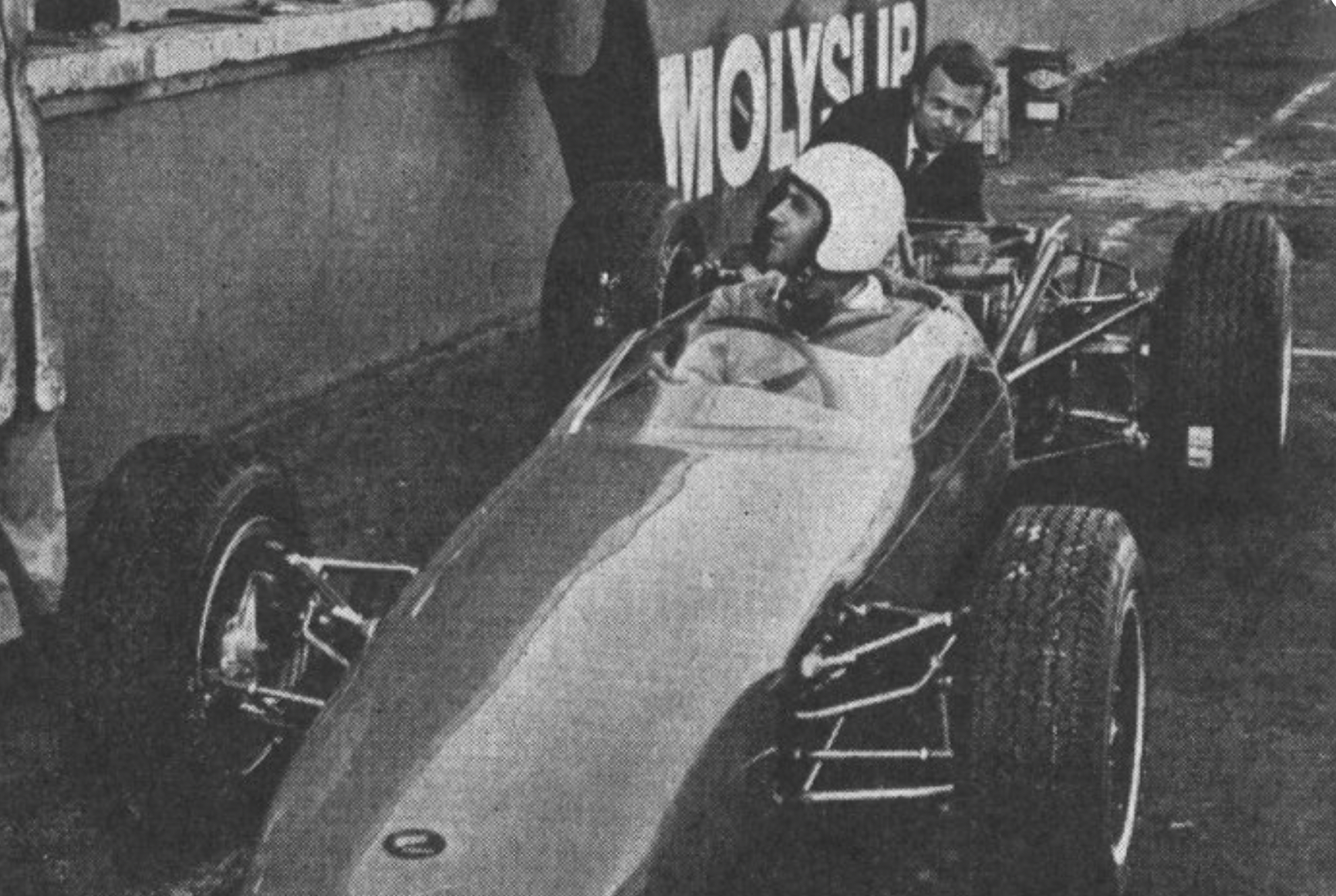
‘Hub van Doorne (left), founder of the DAF Automobile Company, Eindhoven/Holland, and his son Martin van Doorne. The two car experts are discussing the Variomatic transmission of their Brabham BT15 DAF F3 car at Zandvoort,’ the photo records, in early May 1965.
‘The DAF Co produces Daffodil cars (140 per day), which have a fully stepless transmission, lorries, and last but not least the DAF Pony for the US Army.’
Zandvoort Trophy weekend in August 1965, Slotemaker, BT15 (E Wayenberg)
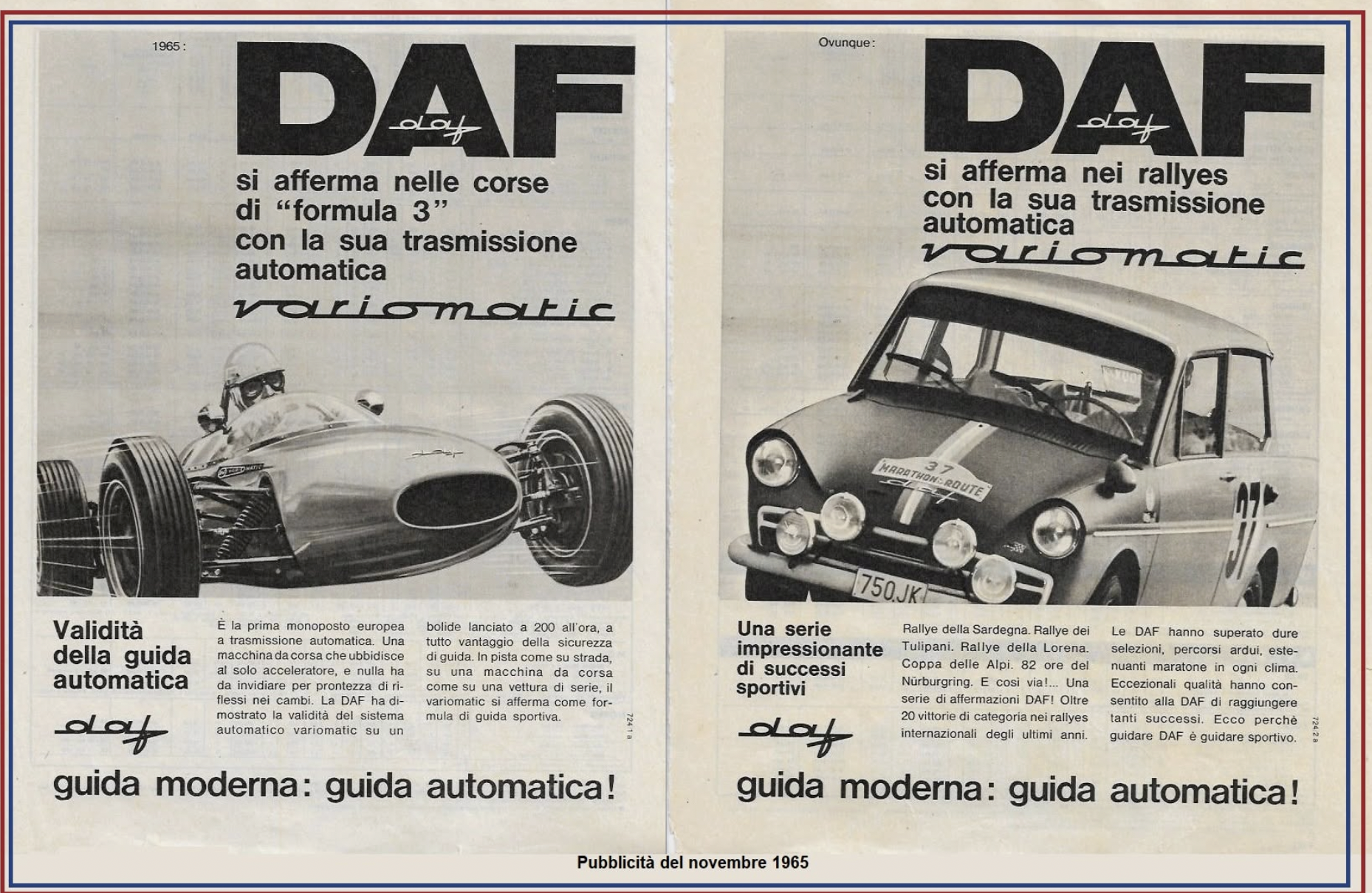
One of the countless racing improves the breed projects of the 1960s was DAF’s involvement in 1-litre Formula Three from 1965-68, with Alexis, Brabham, DAF (Gemini) and Tecno chassis, all of which were fitted with DAF’s signature stepless ‘variomatic’ continuously variable transmissions (CVT).
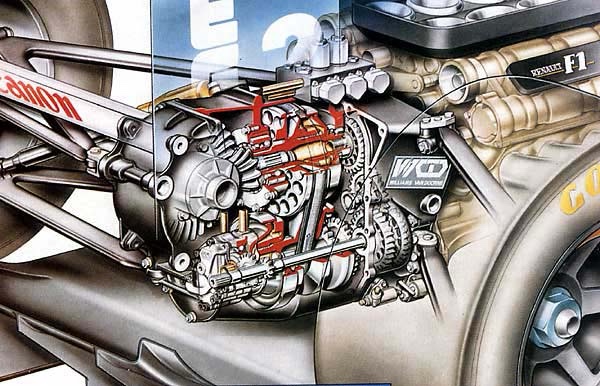
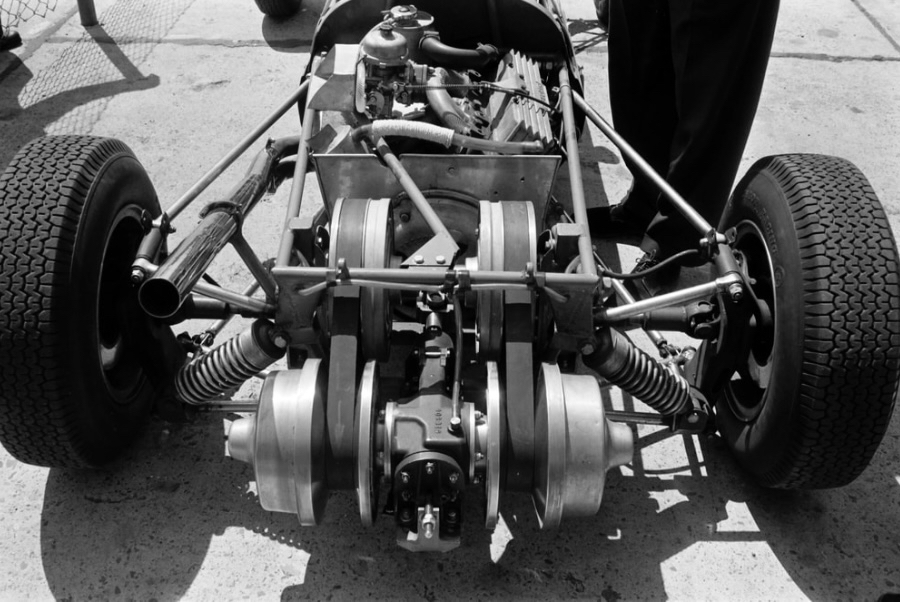
The device had infinitely variable ratios, so there weren’t discernible gear changes. The pulleys in the transmission expanded and contracted depending on speed, load and driver demand. Final drive to the rear wheels was provided by rubber composite drive belts.
Dutch racers Rob Slotemaker and Henk van Zalinge (HVZ) formed the Rensportschool Zandvoort race driving school in 1955 and delivered countless racing drivers in the process. Van Zalinge (1922-5/2/2006), in addition to his talents behind the wheel, was also an automotive engineer of note.
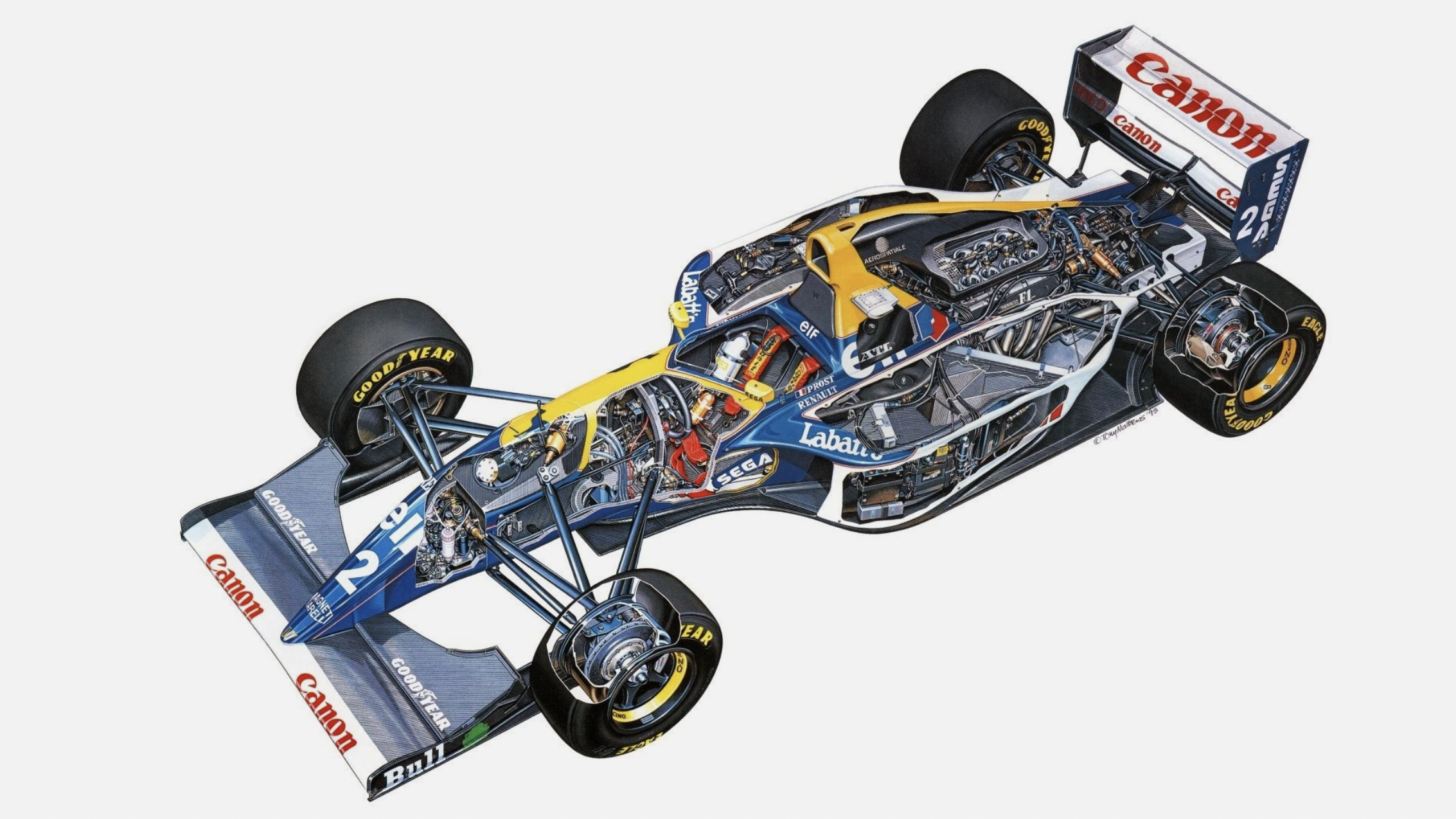
It was his idea to harness DAF’s transmission to handle greater power/torque than their contemporary small-car range. In essence, the Variomatic transmission potentially provided an Unfair Advantage by keeping an engine perpetually in its optimum power band. They proved rather successful too; the technology made it into road cars, and the pace of a CVT-equipped F1 Williams FW15C Renault 3.5 V10 was quick enough for the FIA to ban it…but we are getting ahead of ourselves.
Design and Development…
DAF quickly embraced HVZ’s pitch, and its execution was thrown to the head of DAF Research & Development, Wim Hendriks, the man who designed and built the first Variomatic for the DAF 600 in 1967.
DAF bought a British Alexis Mk5 chassis (#HF501) and the usual Ford Cosworth MAE 1-litre engine over the winter of 1963-64, then proceeded to adapt their unique technology for this most competitive of classes.
Hendrik’s challenge was re-engineering the rubber belts, heavy-duty pulleys and ratios to survive 100bhp tearing away at components built for half the power.
Much initial work on the car was carried out in Martin van Doorne’s home garage. Further attempts at privacy included testing the car at De Peel Air Base rather than DAF’s test track at Sint-Oedenrode. Eventually, De Telegraaf covered the news on its front page.
In the early Alexis stage, Slotemaker and Van Zalinge shared the test-driving work, albeit HVZ was the primary bridge between the cockpit and engine bay; the racer/mechanic diagnosed what the transmission was doing under load, then Van Zalinge fine-tuned the centrifugal weights and vacuum ratios trackside.
After a steep learning curve with the Alexis, competition manager Rob Koch approached Jack Brabham to partner with what was, by then, the pre-eminent manufacturer of production racing cars. DAF bought a more sophisticated Brabham BT15 (F3-25-65), and it was with this chassis that the DAF Racing made its F3 debut at Zolder on May 9, 1965, that circuit, the site of much of the development testing.
Brabham BT15 Ford Cosworth DAF (R Koch)
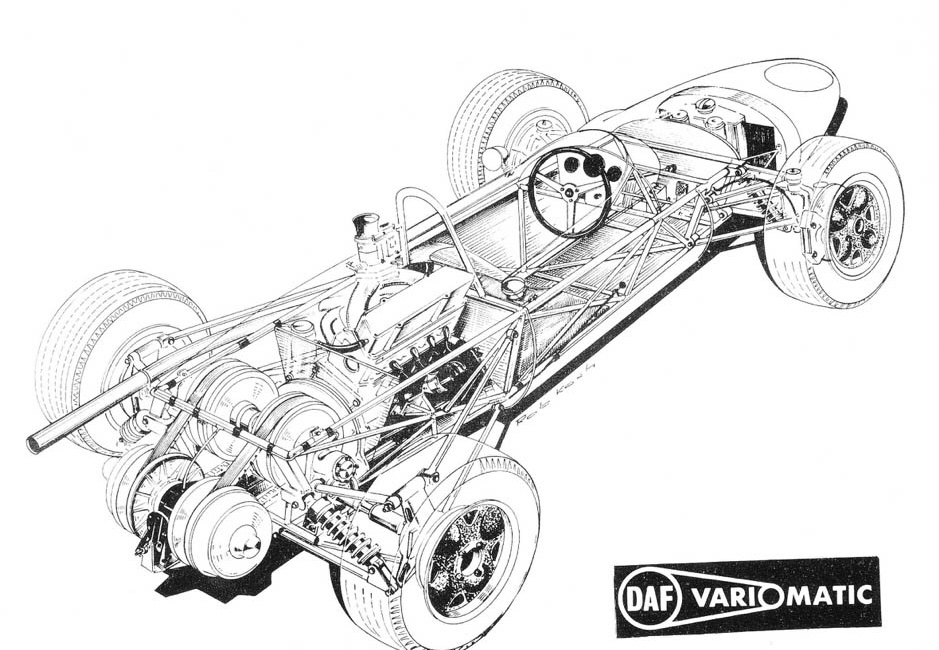
Art Macoran’s tale of how this BT15 cutaway came about is a beauty. ‘The story goes that the car was to be announced in the Dutch paper De Telegraaf, and one of the team members mentioned that it would be good to have a technical drawing to accompany the story “DAF builds a racer”. Rob Koch, DAF Development Engineer with the racing team, said he would spend the weekend on the drawing!’
The FJ Zolder GP on May 9, 1965 wasn’t a great one for poor Rob Slotemaker, who failed to complete a lap with fuel starvation problems.
Not long after, Jack Brabham met the DAF team at Zandvoort and tested the car, amongst his recommendations was the use of a single-belt setup with a conventional racing differential to eliminate the bulk understeer being caused by the ‘dual belt layout fighting itself in high-speed corners’
Three weeks later the DAF Racing Team fronted for the Big One, the Monaco F3 Grand Prix held on May 29.
There, for reasons unclear to me, they raced the Alexis, which overheated throughout the weekend, its nose already heavily cut away. Slotemaker was fourth in heat 1 and seventh in the final, in front of several later F1 drivers. The man up front was Peter Revson in a works/Ron Harris Lotus 35 Ford-Holbay.
The only other outing for the year was at home in the August 29, Zandvoort Trophy, where Slotemaker was eighth in the BT15; the podium all raced Brabham BT16s: Kurt Ahrens, Trevor Blodyk and Chris Irwin.
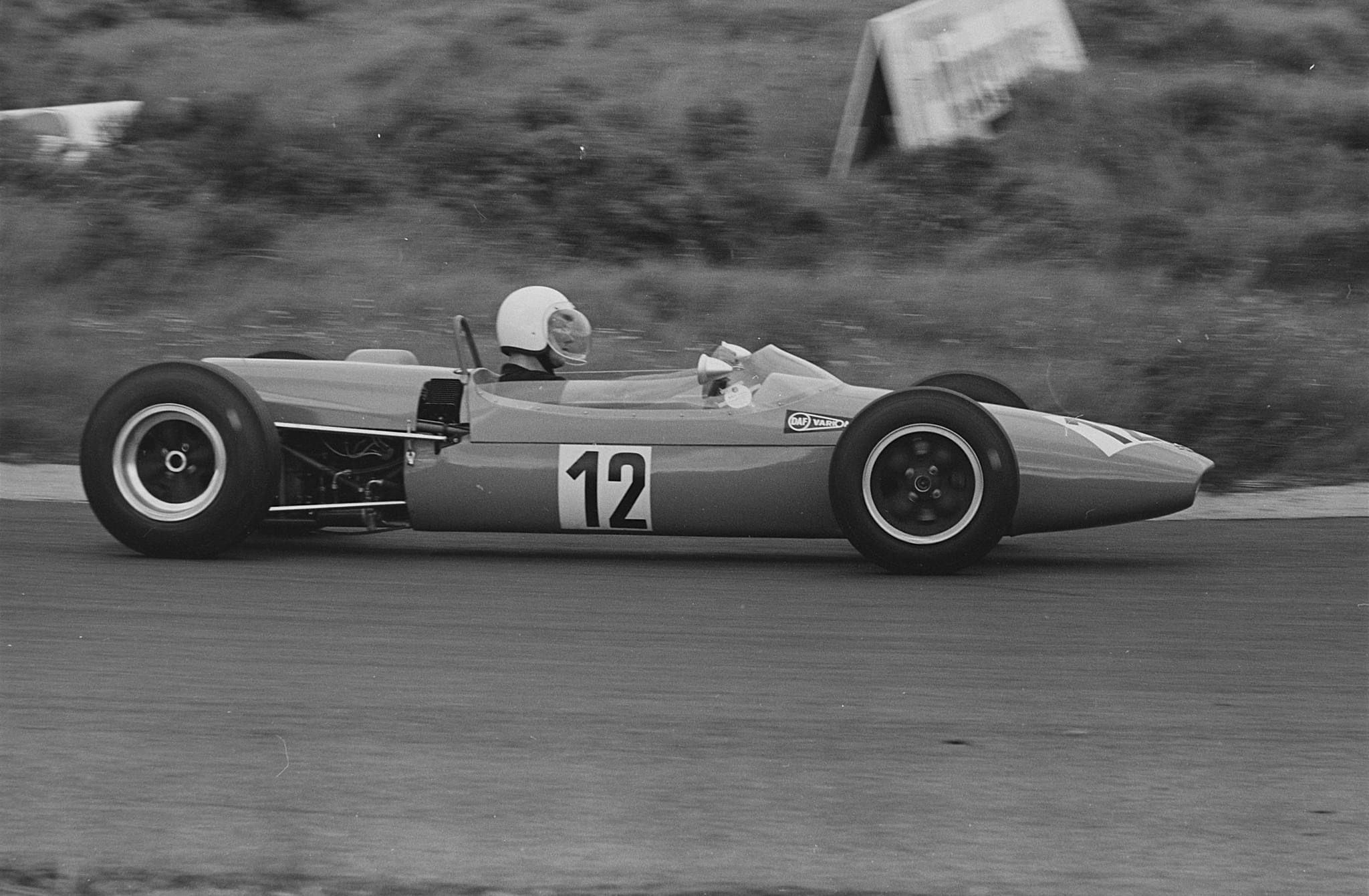
Slotemaker, Brabham BT15 Ford DAF, Zandvoort Trophy, August 29, 1965. Eighth in the race won by Kurt Ahrens’ BT16 Ford(P Demeyer)
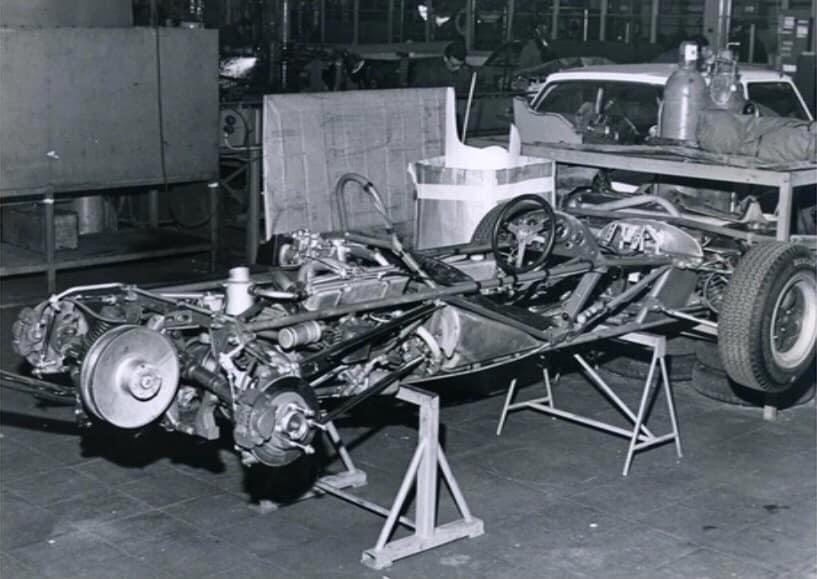
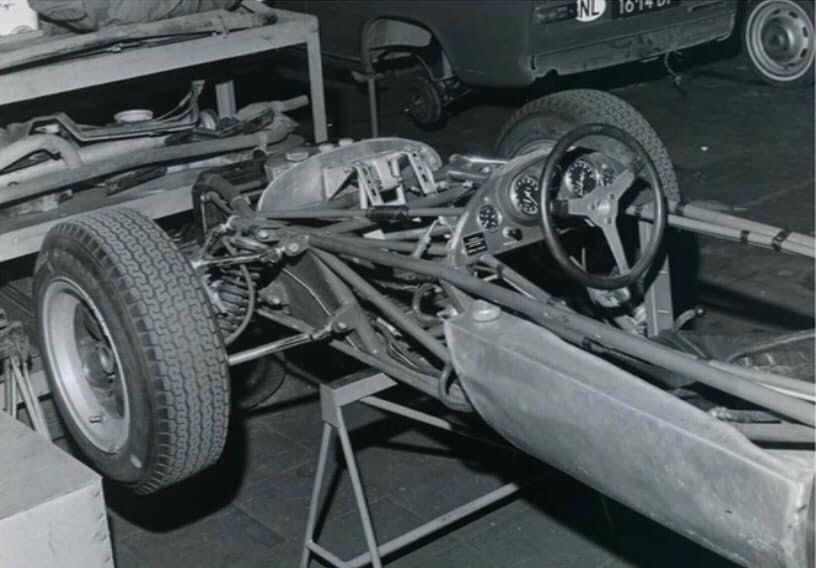
The BT15 Ford chassis #F3-25-65 in the DAF factory during 1965.
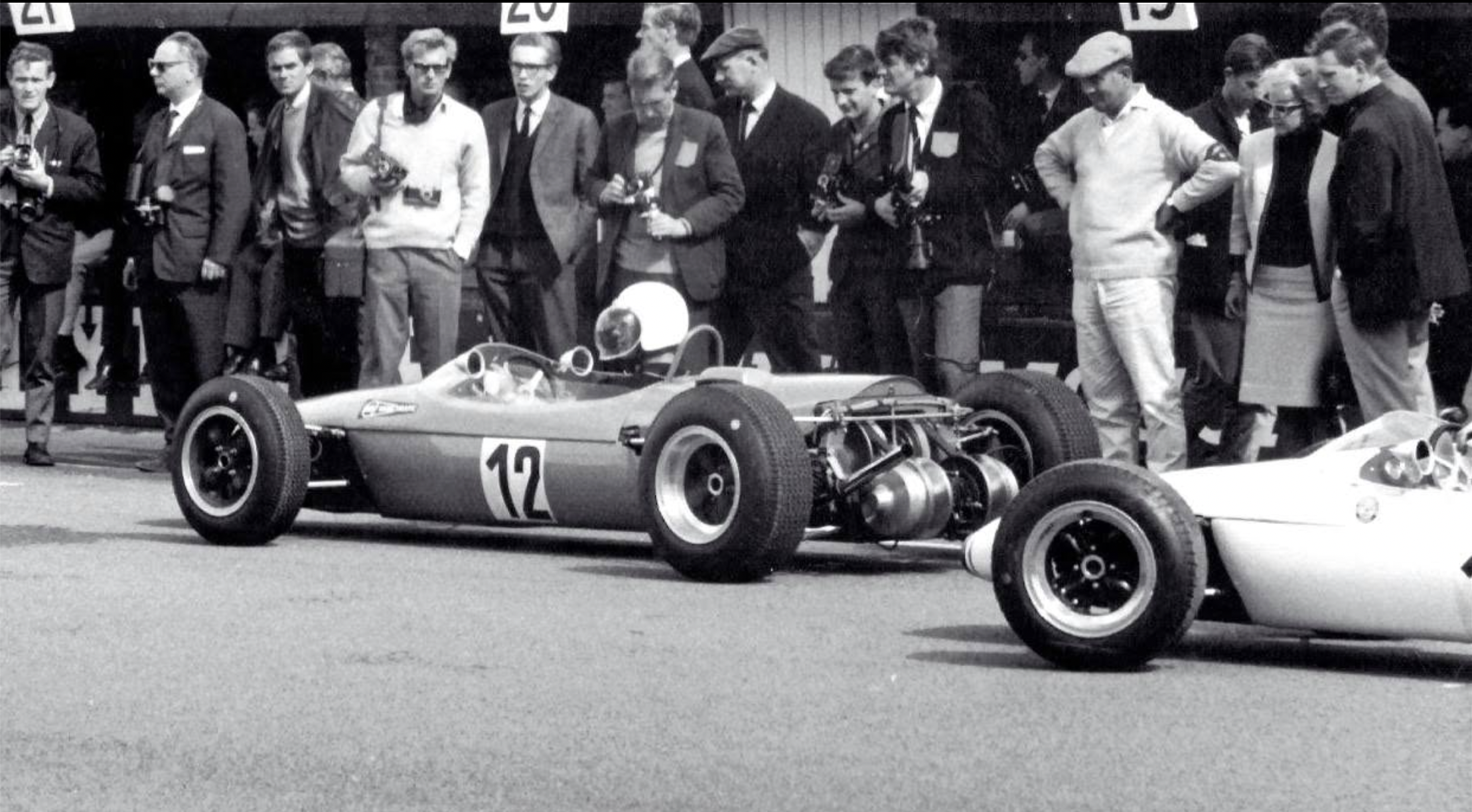
The relative bulk of the CVT setup and its location, components thereof, well aft of the rear axle line is clear. The Cosworth MAE screamer 1-litre pushrod engines gave circa 100bhp.
The drivers soon mastered the art of left-foot braking, momentum driving, and the somewhat hypnotic effect of the engine revving hard within its upper limits all the time; watch the Williams YouTube footage linked later in the piece to experience that. Interesting is that the BT15 is fitted with two Smiths tachs, why I’m intrigued to know?
(P Demeyer)Jack Brabham tests one of the Brabham BT18 Ford DAFs. One of Jack’s recommendations was to adopt a differential (F3History.co.uk-MBisset-WordPress)
1966-68 Racing Program…
In 1966 a pair of Brabham BT18s were acquired and raced by seasoned Brit, Mike Beckwith, and promising Dutch young-thruster, Gijs van Lennep, in his first year of single-seaters.
Progress was made with some top-six finishes for both drivers; Mike Beckwith’s third at Zolder in September was the standout.
I can’t give you further insights on 1966 as the relevant F2 Register pages, my much valued refererence site, won’t load. Fuggit.
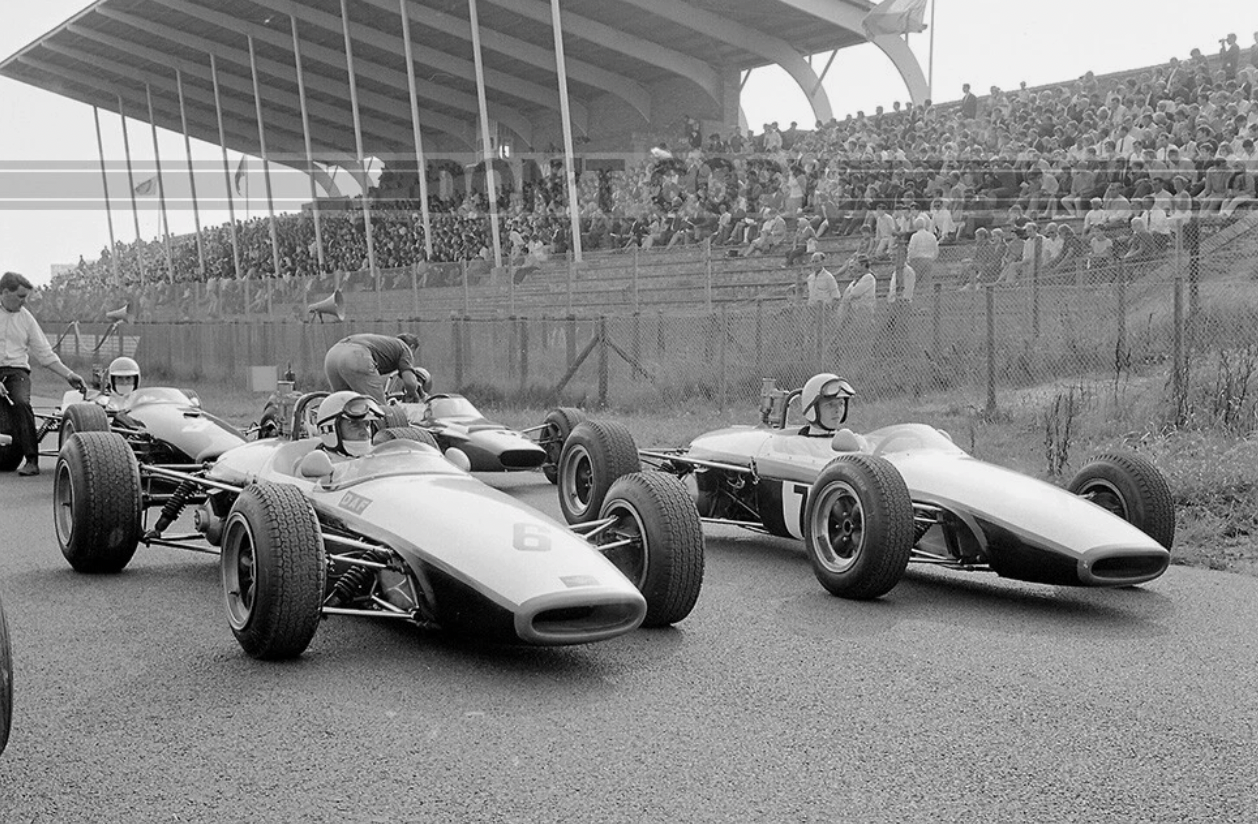
Zandvoort Trophy, August 27, 1967. The DAF-Gemini Ford Cosworths of #6 Mike Beckwith, eighth, and Gijs van Lennep who isn’t listed in the results. The race was won by Henri Pescarolo’s Matra MS6 Ford Cosworth (Unatt-MBisset-WordPress)
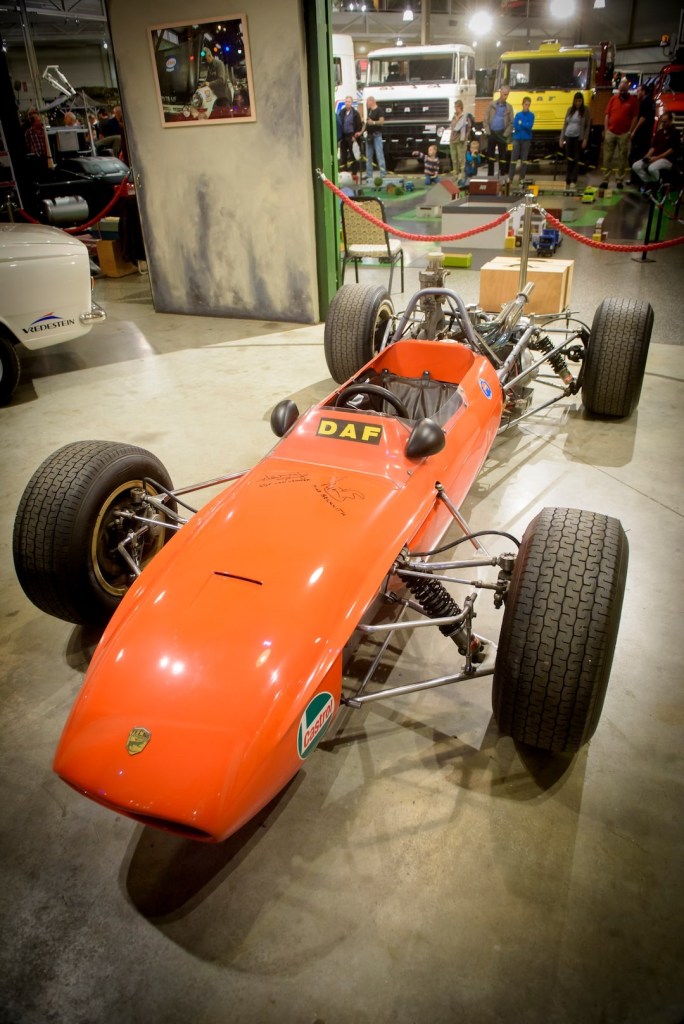
For 1967, DAF approached The Chequered Flag to build them a bespoke DAF. Chas Beattie’s Gemini-DAF was a slinky Brabhamesque design that was only let down by the power losses of the Variomatic pulley system relative to a good-ole bulletproof Hewland dog-box.
Still, the cars could be very good in the wet – depending upon the behaviour of the belts – where the power delivery was advantageous and took two wins that year: Mike Beckwith in the ER Hall Trophy at Brands Hatch in October, in front of a top class field including at least 12 later F1 drivers, and Gijs van Lennep at Skarpnack in September in front of Ronnie Peterson, Dave Walker and Howden Ganley amongst others.
One of the 1968 Tecno 68 Fords raced by Beckwith and Van Lennep that year (DAF Museum)
For 1968, their final year, DAF reverted to a pair of Brabham BT21s to kick off the season before switching to Tecno 68s after the Monaco F3 Grand Prix in May.
Van Lennep was seventh in Barcelona in March, then eighth in Monte Carlo. Mike Beckwith took a fantastic win in heat 2 at Monaco in front of Van Lennep, Francois Cevert, Peter Gethin,- Jean-Pierre Jabouille and others; it was a measure of just how much progress DAF had made, but he had piston failure in the final. Jean-Pierre Jaussaud’s Matra MS6 Ford won that year.
While Wim Hendriks still had to modify the rear of the Tecno chassis to accommodate the Variomatic hardware, it was a better fit than the more slender cars that went before. In its final iteration, the primary and secondary pulley discs were cast magnesium, while critical internal shafts were machined in titanium.
The Tecno 68 had a more compact layout in that the transmission was still located aft of the engine, but the belts ran sidways/transversely, rather than up the back. This got the weight lower and within the wheelbase, reducing the polar moment of inertia.
The final tweak was an electro-vacuum override switch on the dash that allowed the drivers to manually ‘trick’ the transmission into a ‘lower ratio’ instantly when approaching the corner providing some engine braking and a more conventional corner approach, before the CVT took over on corner exit.
VL was then third at Skarpnack in September in his Tecno, before Beckwith took a splendid second behind Roy Pike’s Titan Mk3 Ford at Zolder in the same month. He followed up with third place at Roskilde the following weekend (Sept 22).
Then the Racing Team Holland boys made monkeys of themselves at their final meeting of the year at Montlhery in October when, while in a winning position, they ran into each other…
It wasn’t a great way to end the program, but it was mission accomplished from DAF’s perspective, plenty had been learned.
(DAF)The DAF 44 raced by Claude Laurent and Jacques Marche finished 43rd and first in class of the 1968 Monte Carlo Rally (Unatt-MBisset-WordPress)
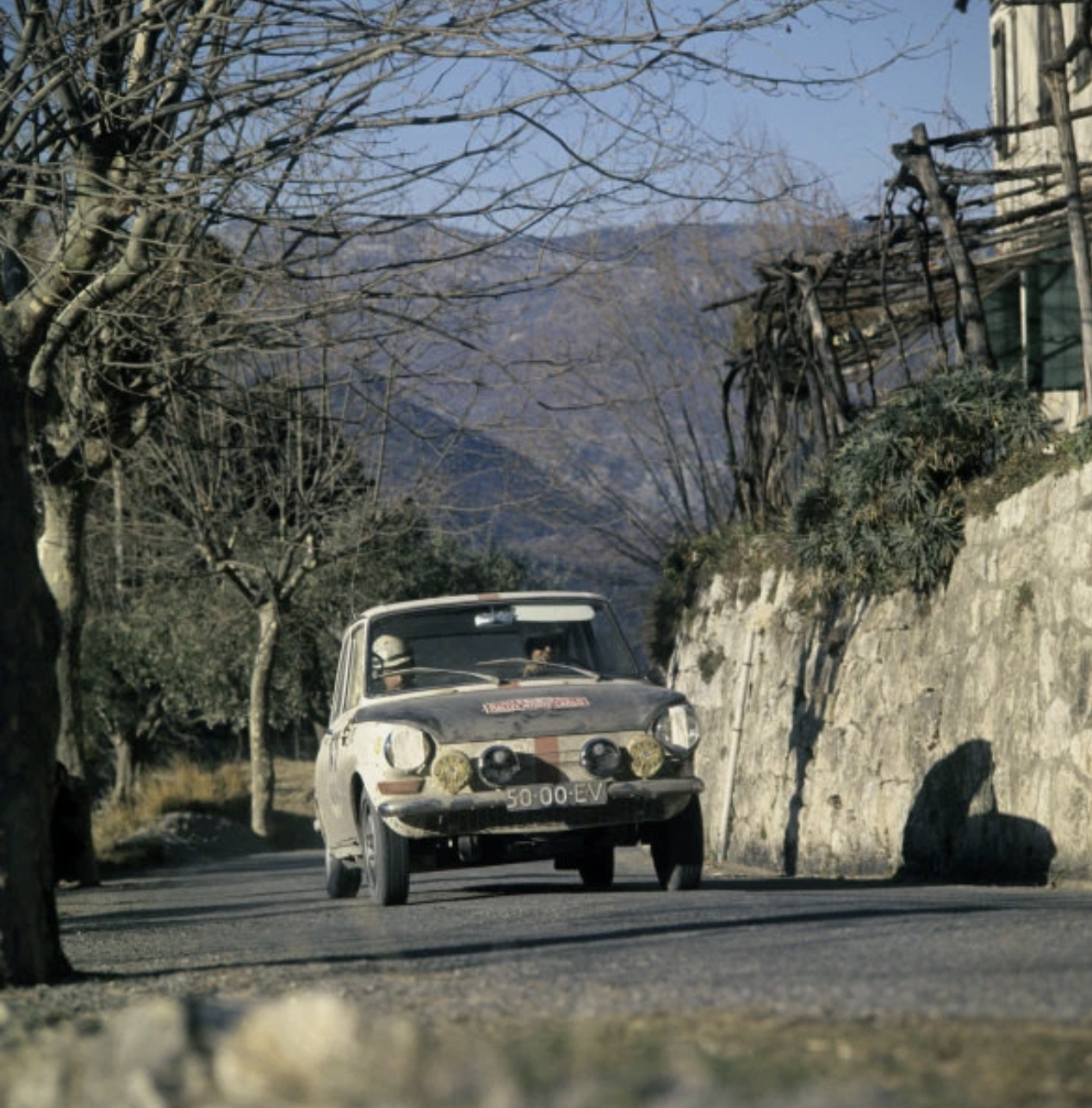
It wasn’t the end of the competition program either. DAF had an ongoing presence in rallying, rallycross, and a Huron 2-litre Ford BDA-powered sports car, the DAF 555 4WD, twin-engined Paris-Dakar car and the rest…
While DAF cars was sold by the Van Doorne’s to Volvo in 1975, DAF Trucks continued and so too did Van Doorne’s Transmissie b.v. That company continued to develop CVT technology and sold it to various of the major manufacturers.
Watch this fantastic video about the development of VDT’s CVT technology and its F1 pace and potential when used in the Williams FW15C Renault in 1993. https://youtu.be/b84mFiXWsog?si=7UvPMLamsqqkdSJD
Peter Wright wrote about the Williams CVT experiment in ‘Formula 1 Technology’.
‘Step-less gear ratio changing permits the engine to operate within a narrow rpm band, or even at a discrete rpm, instead of requiring an operating band of approximately 200 rpm. The engine designer can then tune the engine for that rpm, avoiding any compromises in intake and exhaust lengths or valve timing. The increase in available power (the integral of power throughout a cycle of accelerating through the speed range) must outweigh any loss in efficiency or increase in weight.’
‘Williams started research into CVTs in the late 70s, initially with a system based on the Perbury system. At the time, Williams was developing the Cosworth DFV and was seeking ways to achieve a power advantage over other DFV users. The Perbury proved to be too heavy and was encumbered with IPR problems. Some years previously, Van Doorne had raced an F3 version of its rubber belt and cone CVT, based on a system sold in DAF road cars. It was reasonably competitive but unable to take the power of an F1 engine.’
Williams Grand Prix Engineering/Alain Prost’s 1993 F1 Championship-winning Williams FW15C Renault 3.5-litre V10 fitted with its usual Williams transverse, 6-speed semi-automatic gearbox and below with the Williams Van Doorne CVT transmission. The difference in packaging between 1965 and 1993 is marked! (Tony Matthews)
‘Williams decided to work with Van Doorne to develop a steel belt version, suitable for F1. The issues of engine starting, engaging drive, reverse, and the hydraulic and electronic control integration with the engine all had to be solved. The gearbox was mounted in a Williams FW15, powered by a specially tuned Renault 3.5-litre engine, weighed 6 kg more than the six-speed one it replaced and was approx. 93% efficient compared to 96% for the spur gear variant.’
‘This appeared in testing in 1993 but was banned as part of a package of control system regulations at the end of the year, before its performance advantages could be demonstrated. History does not relate whether the ban was the result of the fear of having to develop competing systems, when Williams had been working on the principle for so long, or the thought of 24 F1 cars, all with their engines continuously at peak rpm.’
Etcetera…
(R Schlegelmilch)
Rainer Schlegelmilch’s shot of the Brabham BT15 Ford DAF was taken at the Nurburgring during the May 23, 1965 1000km weekend.
There wasn’t an F3 race at the Ring that weekend, so perhaps the DAF Racing Team took it there to showcase their project to Ferrari, Porsche, Ford, Alfa Romeo and the rest.
Frustrating is that I have plenty of shots of the transmission in its early form but not in ultimate 1968 spec, if any of you can oblige I’d love to hear from you.
During the research process for this article I dived down and down with the Google-Gemini AI tool to generate this response, ‘recorded verbatim’ to questions about the developmental challenges the DAF team faced in 1964-65.
‘The primary mechanical challenges Wim Hendriks and the engineering team had to solve when adapting the road-car Variomatic transmission for the Formula 3 cars boiled down to handling unprecedented power, heat, and physical space constraints.
The specific mechanical issues they faced included:
Belt Slippage and Shredding: The standard road-going DAF rubber V-belts were designed for modest 30-horsepower commuter engines. The high-revving Cosworth MAE Formula 3 engines produced close to 100 horsepower. Under sudden acceleration and track loads, the standard belts would instantly slip, overheat, and violently disintegrate or shred. Hendriks had to test and source reinforced, heavy-duty belts capable of gripping under high torque.
The Lack of a Differential: The original road Variomatic layout used two independent belts (one for each rear wheel), effectively acting as a limited-slip differential. However, in sharp, high-speed racing corners, this caused severe understeer and uneven belt wear. As mentioned previously, Jack Brabham strongly advised using a single-belt drive coupled to a conventional racing differential. Van Zalinge had to redesign the entire rear casing to integrate a differential into a single-seater layout.
Heat Dissipation: Because the Variomatic relied entirely on friction between the rubber belts and the metal pulleys (sheaves), it generated massive amounts of heat under racing conditions. If the pulleys got too hot, the rubber softened and failed. The team had to engineer custom cooling air ducts and use ventilated, lighter pulley materials to keep operating temperatures down.
Weight and Packaging: The Variomatic unit was bulky and heavy compared to a standard, compact racing gearbox. Placing it at the very rear of an Alexis or Brabham chassis severely ruined the car’s weight distribution and centre of gravity. Hendriks had to modify the rear frames, pushing the heavy pulleys as far forward into the wheelbase as possible, while redesigning the rear suspension to clear the spinning belts.
Vacuum and Centrifugal Calibration: The Variomatic shifted ratios using a combination of centrifugal weights (engine speed) and engine vacuum load. Racing engines operate at high RPMs almost constantly and have very different vacuum profiles than road cars. Van Zalinge spent endless test sessions swapping out springs, diaphragm valves, and internal weights to ensure the transmission “upshifted” and “downshifted” at the exact optimal powerband of the Cosworth racing engine.’
Track Test…
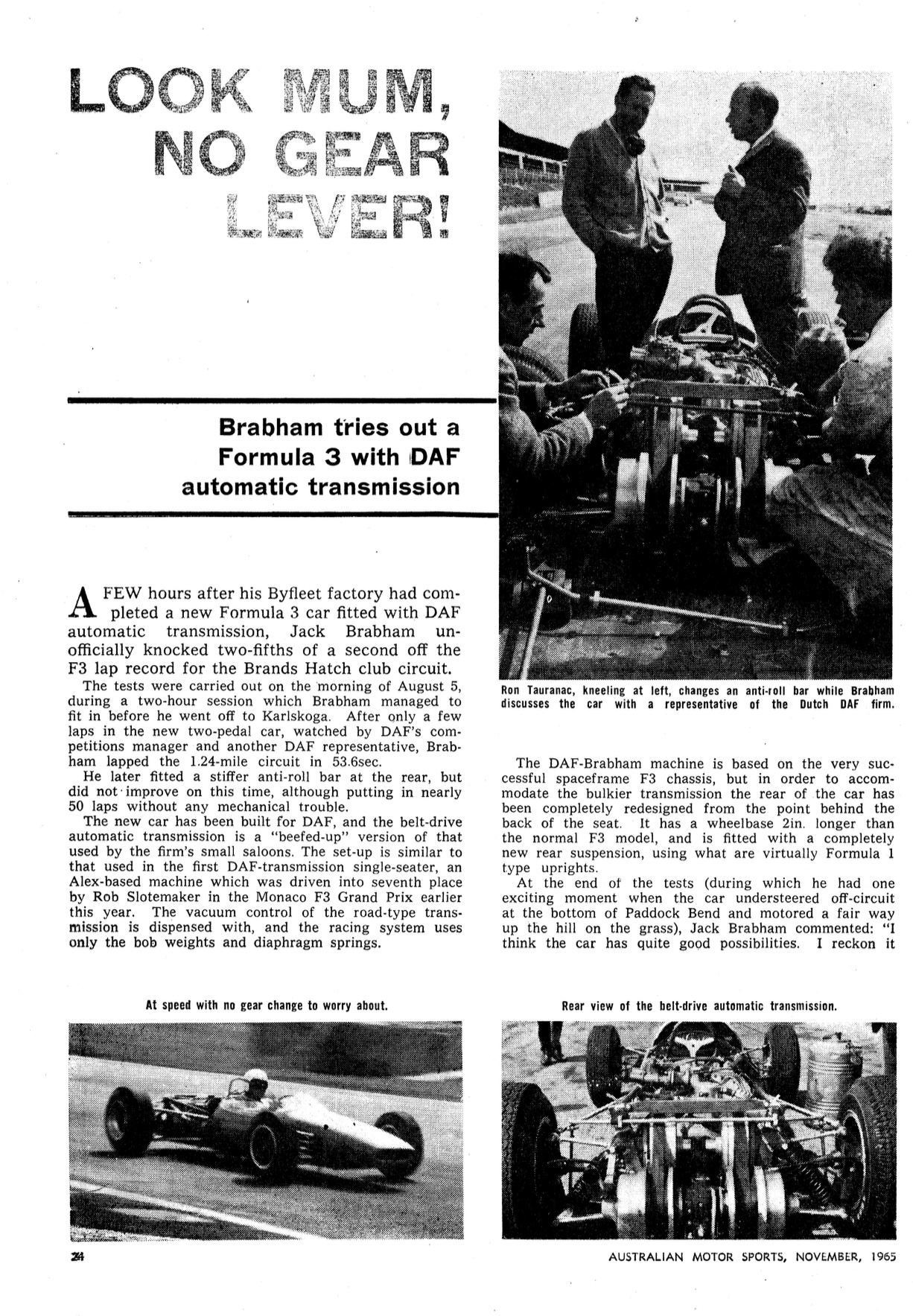
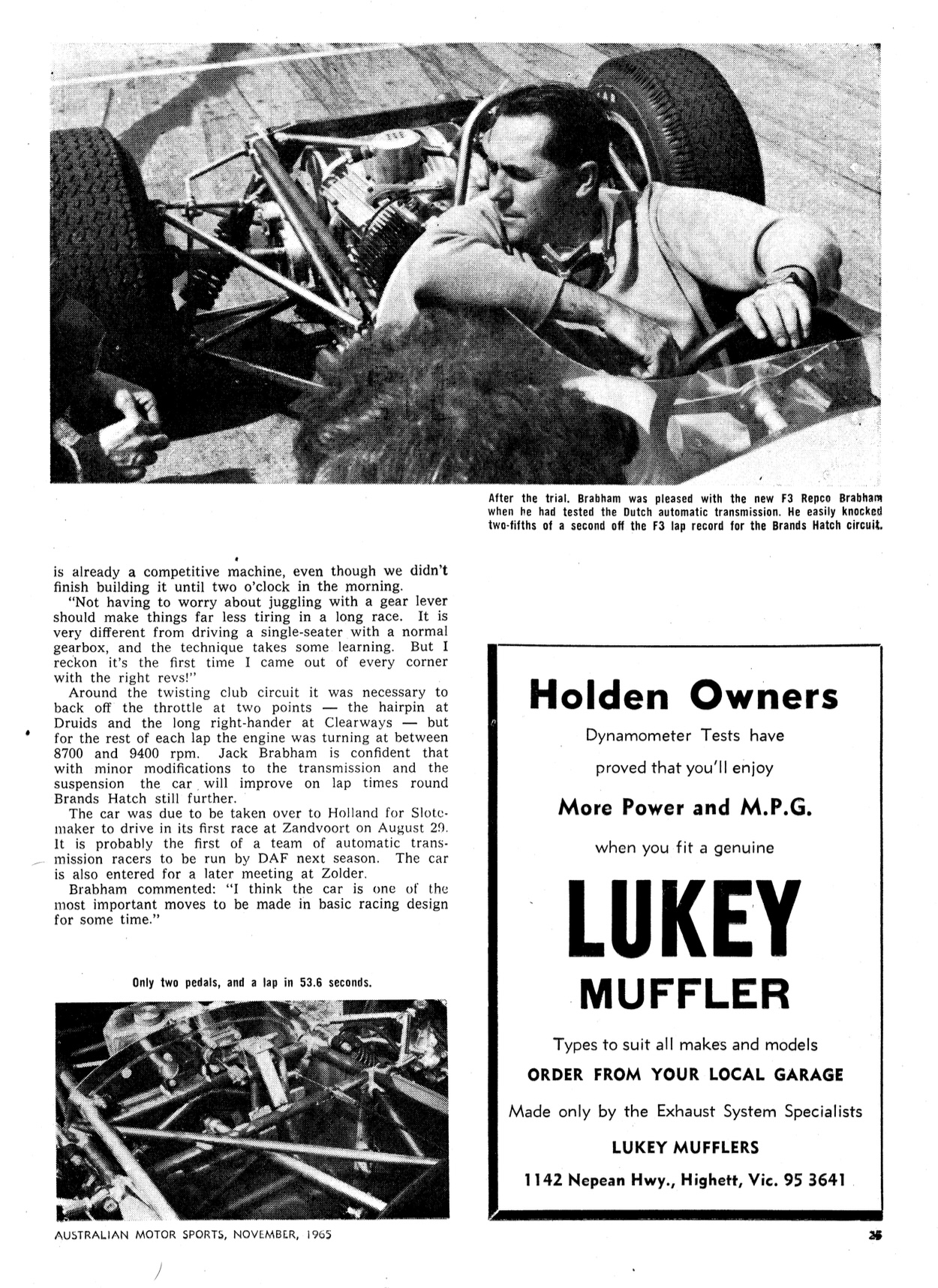
A couple of days after publishing this piece, Paul Best sent me this track test article published by Australian Motor Sports in their November 1965 issue.
It makes clear that MRD made the changes to incorporate the DAF hardware into the Brabham BT15 frame. I imagine the truth is somewhere in the middle.
Credits…
Gunter Reitz, DAF, F2 Register-Fastlane, Google Gemini, E Wayenberg via Romain Moorman, Phil Demeyer, F3history.co.uk, ‘Formula 1 Technology’ Peter Wright, Tony Matthews, F2Register, Rainer Schlegelmilch, De Telegraaf, Paul Best Collection-Australian Motor Sports
Tailiece…
(DAF)
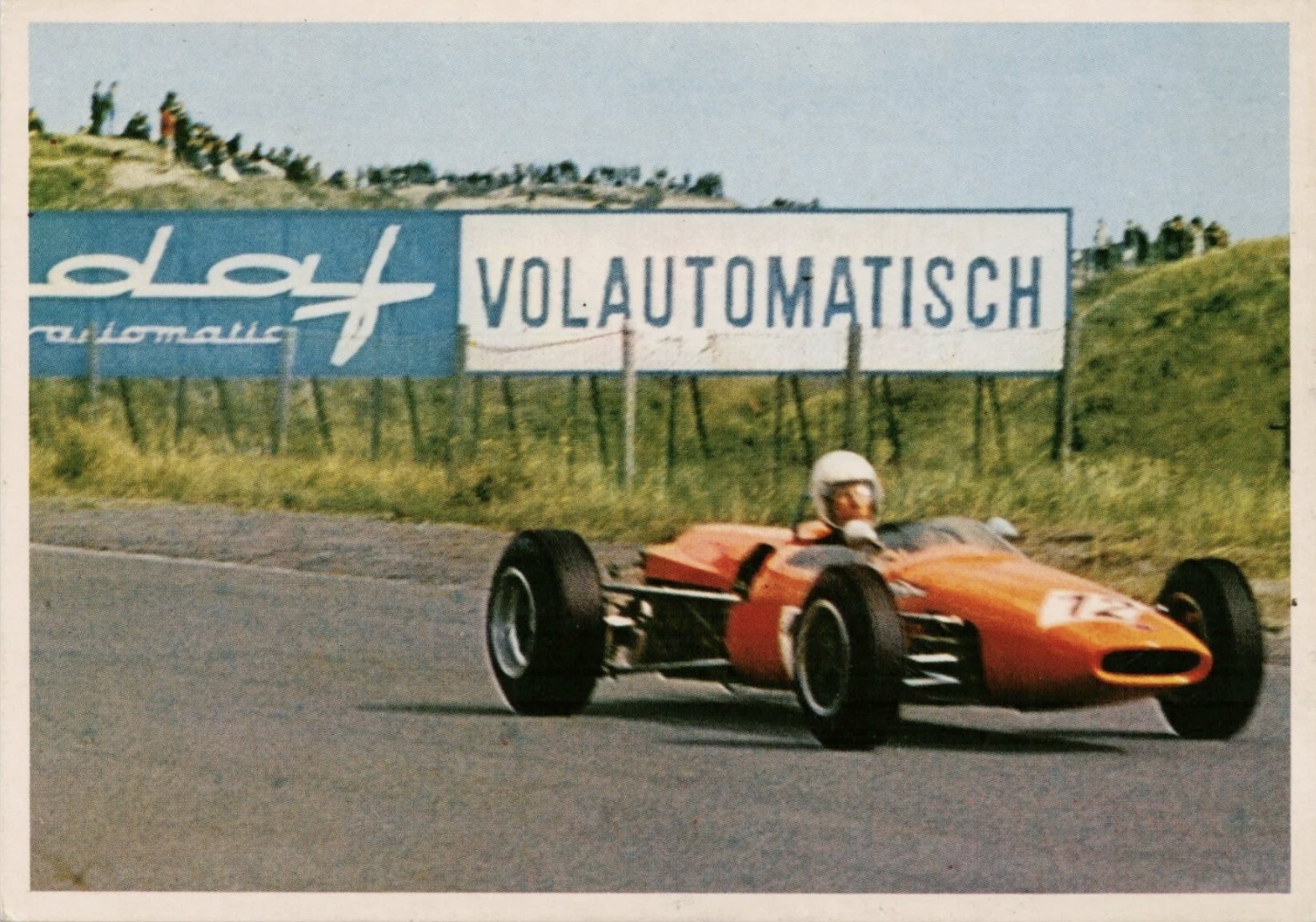
This 1965-66 DAF Postcard shows Rob Slotemaker in the DAF Brabham BT15 Ford during the August 29, 1965 Zandvoort Trophy. Volautomatisch translates as fully automatic…